Sainz Won’t Criticise 2026 Rules Anymore — But Still Says They’re “Not Good Enough”
The Miami tweaks helped the race. For qualifying, Carlos Sainz believes there is still a long way to go — and his team-mate Alex Albon demonstrated exactly why with an incident that exposed a software quirk nobody had fully anticipated.
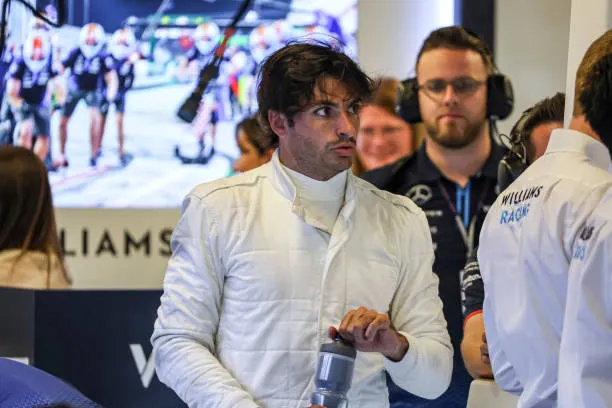
Carlos Sainz has been among the most consistent and articulate critics of Formula 1’s 2026 energy management regulations since the season began. At Miami, having seen the FIA’s first package of tweaks applied and raced under them, he adopted a different tone — not recanting, not endorsing, but choosing a deliberate change of approach. He is done complaining publicly. He is not done insisting that the problem remains unsolved.
“For qualifying, there is still a long way to go. As I said, I’m not going to criticise it anymore. I’m just trying to be productive and continue insisting that this is not good enough for F1. But it seems like, at the very least, the racing was a bit better.”
— Carlos Sainz, Williams, post-race Miami
What Miami Fixed — and What It Didn’t
The FIA’s Miami package made two targeted changes: it reduced the maximum energy that could be harvested during qualifying from 8MJ to 7MJ per lap, and raised the super-clipping power limit from 250kW to 350kW, allowing batteries to charge faster when drivers are flat to the floor. Wet-weather procedures were also adjusted, with blanket temperatures for intermediate tyres raised from 60°C to 70°C and revised rules on where and how much power could be deployed in damp conditions.
- Racing — closing speed differentials slightly reduced
- Wet-weather procedures — clearer, safer protocols
- Less super-clipping danger at race speed
- Sainz: “the racing was a bit better”
- Qualifying — drivers still can’t go flat out everywhere
- Battery software state sensitivity in traffic
- DRS-train equivalent on straights when lead car is in straight mode
- Sainz: “still a long way to go”
The race improvement is real and acknowledged by most drivers. The qualifying problem, however, surfaced again in Miami — and did so in a particularly visible way through an incident involving Sainz’s Williams team-mate Alex Albon.
The Albon Incident: Software, Traffic, and a Ruined Lap
Albon qualified 15th in Miami — significantly below his usual standard. The explanation he gave afterwards illustrated precisely the kind of quirk that the Miami tweaks were supposed to address, but didn’t fully resolve. During his qualifying lap, Albon had to back off the throttle to let Sainz through on a push lap. That small action — entirely routine under normal conditions — was enough to throw the car’s battery management software into an incorrect state.
“The pack, the battery likes to be in a certain position, the software likes to be in a certain position starting a lap. So when you go down the back straight there’s a lot of stuff that you need to do to optimise it, to make sure that it’s all ‘happy’ basically. You can do it, it’s possible — but when you have to let cars past down the straight before the last corner and you’re not doing a timed lap, that confuses everything. And then you’re starting a lap when the battery is in the wrong state and the software is in the wrong state. And then it’s very, very difficult to get a lap together.”
The incident encapsulates the core qualifying problem that no software limit adjustment can easily fix. The 2026 power unit management requires a precise sequence of preparation steps before the flying lap begins. Any disruption to that sequence — a car slowing to let a faster driver through, unexpected traffic in the final sector, a moment of imprecision — can corrupt the battery state and make a fast lap almost impossible to achieve, regardless of the driver’s raw skill or the car’s underlying pace.
Sainz’s Next Concern: The Straight-Mode DRS Train
Beyond qualifying, Sainz also flagged a new problem that he believes needs to be added to the regulatory agenda. In Miami, the active aerodynamic system — designed to compensate for the extra drag generated by the larger, heavier 2026 cars — created a dynamic on the straights that felt uncomfortably familiar: a train of cars unable to overtake a leader running in straight mode, because the aerodynamic assistance made passing essentially impossible.
“I think we just need to find a solution to when the car in front is in straight mode, as overtaking is impossible. It is very similar to the DRS train, and maybe we could find something. But the racing has never really been the problem of these regulations.”
— Carlos Sainz, Williams
The DRS train was one of the most criticised aspects of the post-2011 era — a phenomenon in which following cars would catch the leader and then be unable to pass despite having a speed advantage, because both cars gained and lost the same aerodynamic advantage simultaneously. The 2026 straight-mode equivalent is different in mechanism but similar in effect. Sainz is pointing to it now, early enough that the regulatory conversation can incorporate it before it becomes a systematic race-day problem.
The Tone Shift: Productive Rather Than Critical
Sainz’s decision to stop criticising publicly reflects a pragmatic calculation. He has made his views known clearly and repeatedly. The Miami tweaks — and the agreement in principle to move to a 60/40 ICE-electric split for 2027 — show that his concerns, and those of fellow drivers, have been heard. Continuing to attack publicly risks becoming noise. The more effective position, he has concluded, is to stay constructive, keep flagging specific problems, and trust that the regulatory process will continue to respond.
- Norris: “Get rid of the battery” — the most radical prescription, acknowledged as years away
- Sainz: Racing improved, qualifying still broken, DRS-train effect on straights next issue
- Albon: Software state sensitivity in traffic making qualifying laps almost impossible to optimise
- Antonelli: Closing speeds still massive, active aero makes direction changes “lazy”
- Piastri: Speed differentials so large that a 1-second gap can be erased in a single straight
- 2027 plan: +50kW ICE, −50kW electric — a step towards the ICE-dominant formula drivers prefer
The picture that emerges from Miami is of a sport that has begun its journey away from its most problematic regulation, but is travelling slowly. The tweaks are real. The problems that remain are also real. And the drivers who have chosen to stop complaining — like Sainz — have not stopped noticing.
Discover more from f1liveupdates.com
Subscribe to get the latest posts sent to your email.