Bearman Reveals the Biggest Lesson from His Rookie F1 Season
In junior categories, the job is to drive fast. In Formula 1, it is something more complex — and Ollie Bearman has reflected candidly on how long it took him to understand what his team actually needed from him.
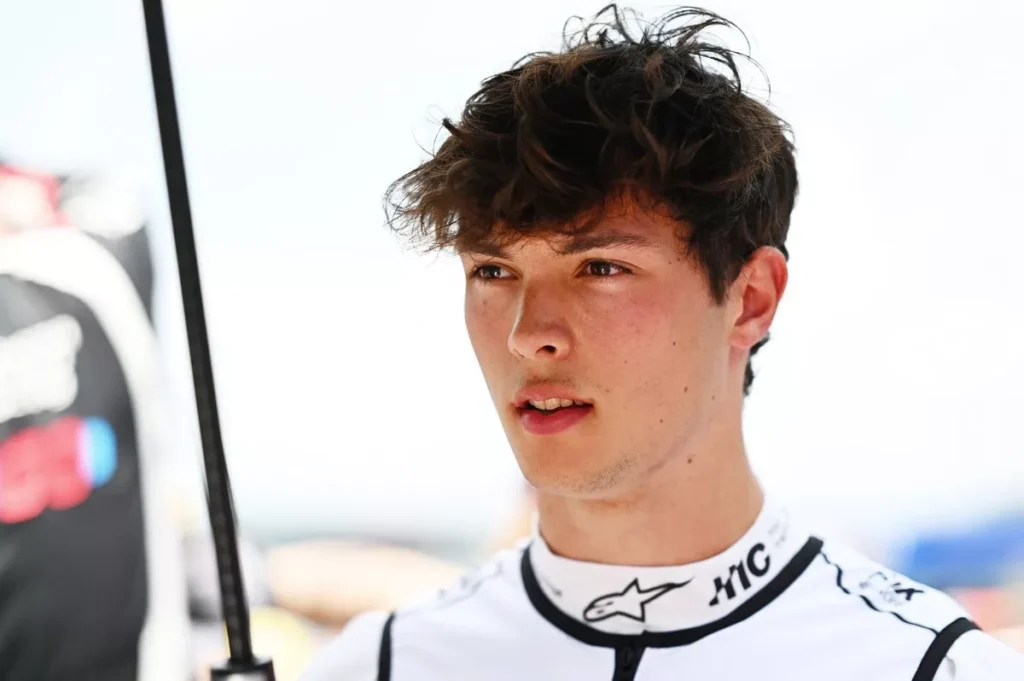
Ollie Bearman walked into his first full Formula 1 season in 2025 with something most rookies do not have: prior F1 experience. Three substitute appearances in 2024 — the most famous of which was a seventh place on debut for Ferrari at the Saudi Arabian Grand Prix — gave him a head start that few drivers in history have enjoyed. And yet, looking back from a position of greater experience and confidence, Bearman says the transition into a full-time seat revealed something that no practice session or one-off start can teach: what it actually means to be a Formula 1 driver within a team.
The Lesson: You Are Not Just a Driver
The shift Bearman describes is a fundamental one. In junior categories — Formula 2, Formula 3, Formula 4 — a driver’s primary job is performance. You turn up, you qualify, you race. The engineers handle the development direction. The driver delivers the lap times. In Formula 1, that relationship is inverted. The car’s development — the upgrades, the setup direction, the future evolution of the package throughout a season — depends directly on the quality and precision of what the driver tells the engineers after every session.
“The developments we make on the car directly come as an influence of what we’re saying as drivers. I think it’s not necessarily a big weight. You need to understand that that’s your role because I was not in that role ever before, and it’s tough to assume it automatically. It takes a while. And I think I took the position well, but it’s not overnight that it happens — and it definitely took a good few races to understand my position within the team.”
— Ollie Bearman, Haas F1 Team video
The shift is not just technical. It is also psychological. A young driver arriving in Formula 1 for the first time carries the natural insecurity of feeling like the newest, least experienced person in the room. Offering strong opinions about the car’s behaviour to engineers who have spent years developing it requires a particular kind of confidence — one that has to be earned, and one that does not arrive automatically with the seat.
“Now I’m someone who’s more outgoing, less afraid to speak up and to give my opinion. Because I think it’s tough to feel like your opinion will be valued straight away.”
— Ollie Bearman
From 20 People to 500 — the Scale of F1
The technical role was not the only culture shock. Bearman also reflected on the sheer scale of a Formula 1 team compared to anything he had previously experienced. In Formula 2, a team brings perhaps 20 people to a race weekend. A Formula 1 outfit like Haas operates with hundreds — engineers, strategists, data analysts, communications staff, logistics coordinators — all of whom need to function as a single organism across a race weekend.
- Team size: From ~20 people at a Formula 2 round to hundreds across Haas’s trackside and factory operations
- Driver role: From “be fast” to “shape the car’s development through precise technical feedback”
- Communication: Learning to speak up, articulate specific sensations, and influence engineering decisions
- Regulations: 2026 is his first regulation change — veteran rivals have been through two, three, or four
- Energy management: Described the new 2026 driving style as “far from instinct” and “far from natural”
A Season That Built Its Own Arc
Bearman’s 2025 season is the backdrop to these reflections. It was not a smooth rookie campaign. Early mistakes — a red flag infringement at Monaco, a crash in qualifying at Silverstone — cost him grid positions and points. Difficult weekends at Budapest and Spa tested his consistency. But the second half of the year, from Singapore onwards, told a different story: five consecutive points finishes, capped by a remarkable fourth place at the Mexico City Grand Prix where he held off Verstappen, Russell, Antonelli and Piastri across three stints. He finished the season 13th in the drivers’ championship, one place and three points ahead of his far more experienced team-mate Esteban Ocon.
Monaco red flag penalty, Silverstone qualifying crash — consistency the main challenge. Fast in flashes, struggling to put a whole weekend together.
First weekend where everything clicked. Komatsu: “Singapore is a tough track and he’d never raced there before — but that was the weekend where we said, ‘Okay, right.'” Bearman fought from the pit lane to sixth.
Fourth place — Haas’s joint-best result under Komatsu. Held off Verstappen in the first stint, Russell and Antonelli in the second, Piastri in the third. A statement performance.
First regulation change. New 2026 driving style described as “far from natural” — but Bearman is eighth in the standings with 17 points after four rounds, already well clear of Ocon on one point.
2026: A Second First Year
The arrival of the 2026 regulations means Bearman is, in a sense, experiencing a second rookie year. His competitors who have been through previous regulation changes — some on their third or fourth — have an institutional memory he simply does not have. But Bearman is choosing to frame that as an opportunity rather than a disadvantage.
“I still have a lot to learn. This is my first regulation change and some of my competitors have been through two, three or four of them. So this will also be a very new experience for me — and that excites me because it’s a great opportunity to learn. Hopefully throughout my career, there’ll be lots of these changes. It means that I’ve been there for a while.”
— Ollie Bearman
The results so far suggest he is adapting quickly. Eighth in the drivers’ standings after four rounds, with 17 points, Bearman is the stronger of the two Haas drivers by a margin of 16 points. His feedback on the new regulations is measured and specific: the 2026 driving style feels “far from instinct,” energy management is something you learn rather than feel, and the launch procedure in qualifying — where drivers must crawl to the line before deploying power — is “quite annoying.” None of which sounds like someone who has stopped learning.
Team principal Ayao Komatsu has been consistent in his reading of Bearman throughout: the speed was never in question, the maturity was what needed to develop, and by the end of 2025 it had. “The amount of improvements he made, maturity as a human being — amazing guy,” Komatsu said after Mexico. The lesson Bearman himself has identified — that being a Formula 1 driver means being a technical partner to your team, not just a fast lap time on legs — is, in retrospect, the lesson that eventually made all those late-season results possible.
Discover more from f1liveupdates.com
Subscribe to get the latest posts sent to your email.