Championship Leader — But Antonelli Has One Weakness He Must Fix
Two poles, two wins, and a nine-point lead at 19 years old. Yet Kimi Antonelli is the first to point out that his race starts have been consistently poor — and that it could cost him dearly before the season is out.
In any other context, a driver winning two of the first three Formula 1 grands prix of the season — and leading the championship at 19 years old — would face nothing but praise. But Kimi Antonelli left Japan with something on his mind. Not the title, not the records, not the acclaim. His race start. The one thing that has gone wrong every single time he has lined up on a 2026 grid — and the one thing, he says, that he simply cannot afford to keep getting wrong.
A Pattern Across Every Race Weekend
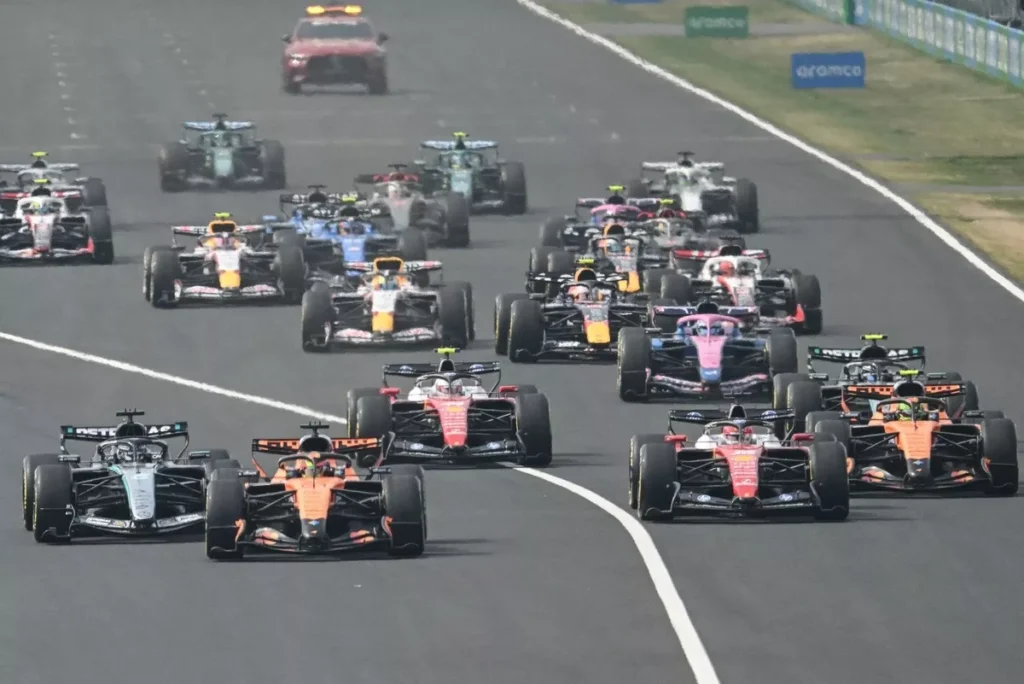
The numbers tell a clear story. In four timed starts across 2026 — Melbourne, the China sprint, the China race, and Suzuka — Antonelli has lost an extraordinary number of positions on the opening lap. In Australia, he dropped from second on the grid all the way to seventh. In the Shanghai sprint, he fell from second to eighth. In the China main race, he surrendered the lead to Hamilton. In Japan, he slipped from pole position to sixth.
| Race | Grid position | Position after lap 1 | Positions lost |
|---|---|---|---|
| Australia | P2 | P7 | −5 |
| China (Sprint) | P2 | P8 | −6 |
| China (Race) | P1 | P2 (lead lost) | −1 |
| Japan | P1 | P6 | −5 |
In total, Antonelli has lost 18 positions on the opening laps of the four starts where data is available. His team-mate George Russell, by comparison, has lost five — 13 fewer. The championship leader is starting every race in a hole of his own making, and then relying on his pace and the car’s performance to dig himself back out.
“Completely My Fault” — Antonelli Takes Full Responsibility
After Sunday’s race in Suzuka, Antonelli was candid and self-critical in equal measure. Despite having just won his second grand prix of the season and taken the championship lead, he immediately flagged the start as the area he needed to address most urgently heading into the Miami break.
“It was nice to be back on the top step. A very special win and a very special track. But on one side I’m very happy, on the other side I’m a bit disappointed with how the start went. It’s an area where I need to work a lot, because it’s definitely not good enough and I’m just making my life a lot harder.”
— Kimi Antonelli, Mercedes, post-race Suzuka
When pressed on the specific cause at Suzuka, Antonelli was precise: he released the clutch too deeply, at a moment when the tyres were still cold and grip was limited. The wheelspin that followed sent him backwards through the field in seconds. He confirmed it was entirely his own error — “completely my fault” — rather than a mechanical or setup issue.
“I think I dropped the clutch a bit too deep, deeper than what I should have. The tyres were also a bit colder, so obviously I went beyond the grip that was available and just lost a lot of places.”
— Kimi Antonelli, Mercedes
He added that his priority over the five-week break before Miami would be focused on this single area: “I’ve got three weeks, so I can practise some clutch drops to get a better feel, because it has definitely been a weak point so far this year.”
Why 2026 Starts Are Harder Than Before
Antonelli’s struggles are not happening in a vacuum. The 2026 regulations have made race starts significantly more complex for all drivers following the removal of the MGU-H. To spool up the turbocharger, drivers must now hold high engine revs for at least ten seconds before the lights go out, while simultaneously managing battery charge levels in cars that are far more electrically dependent than their predecessors. The margin for error at the moment of clutch release has narrowed considerably.
- No MGU-H: drivers must rev much higher for longer to spool the turbo
- 50/50 ICE-electric split means battery state management is critical at launch
- Clutch release timing is more sensitive to tyre temperature and grip level
- McLaren’s Piastri — also using Mercedes HPP power — launched brilliantly at Suzuka, suggesting execution rather than hardware is the differentiating factor
That last point was not lost on Mercedes. The fact that Piastri’s McLaren, powered by the same HPP unit as the W17, stormed to the lead from third on the grid at Suzuka demonstrated that the power unit itself is capable of excellent starts. Mercedes deputy technical director Simone Resta was direct about it: “We know, for example, looking at the McLaren start in Suzuka, that our power unit can start well.” The team has acknowledged starts as “probably one of the weakest performance characteristics of our car at the moment” and says it is working on the issue with “very high priority” ahead of Miami.
Toto Wolff: A Joke — and a Serious Point
Mercedes team principal Toto Wolff was supportive of his driver while acknowledging the recurring problem. In a characteristically dry remark to Sky Sports, he offered a light-hearted explanation — while making a real point about the generational shift in car technology.
“A botched start. These kids learn in the driving school with automatics, so we need to teach them how you release a clutch slowly, steadily and not too quick.”
— Toto Wolff, Mercedes Team Principal
Behind the humour lies a genuine challenge. Wolff also acknowledged Antonelli’s broader progression, from the mistakes of his rookie season in 2025 to back-to-back wins in 2026. For a team that hoped for this trajectory but could not have predicted two wins from three races, the starts issue is the one variable that threatens an otherwise dominant start to the season.
The Risk Ahead
At Suzuka, the Safety Car masked the damage. At Melbourne, Antonelli’s eventual recovery was impressive but came at a cost. At Miami — a circuit where track position and wheel-to-wheel racing will be different in character — there may be no such reprieve. As the field closes up and rivals bring upgrades, the championship leader’s self-diagnosed weakness becomes more pressing, not less. Antonelli knows it. He said so himself, the moment the chequered flag fell.
Discover more from f1liveupdates.com
Subscribe to get the latest posts sent to your email.