
What to Expect from F1 Power Unit Rules Talks on Thursday
Following 2026’s first three races and some of the pain points they laid bare, Formula 1 teams, power unit manufacturers and the FIA have a first opportunity for a course correction.
Formula 1’s technical directors will gather virtually on Thursday, April 9, for the first in a series of crucial meetings that could reshape the sport’s controversial 2026 regulations. The gathering, which will include representatives from the FIA, all 11 teams, and the five power unit manufacturers, marks the beginning of a structured review process designed to address the shortcomings exposed during the opening rounds in Australia, China, and Japan.
The cancellation of the Bahrain and Saudi Arabian Grands Prix—originally scheduled for early April—created a five-week window before the Miami Grand Prix. This unexpected break has given stakeholders time to analyze real-world data and formulate potential solutions rather than rushing through reactive fixes.
The Thursday Session: Technical Deep Dive
Thursday’s meeting is explicitly technical in nature. Team principals will not attend, nor will senior FIA or FOM leadership figures such as Mohammed Ben Sulayem or Stefano Domenicali. Instead, the focus falls on senior technical figures who can evaluate the complex engineering implications of proposed tweaks.
The goal is for technical experts to propose concrete adjustments that address three primary concerns: the dangerous speed differentials between cars in different energy modes, the counterintuitive nature of qualifying sessions dominated by energy management rather than flat-out performance, and the dramatic speed drop-offs drivers experience at the end of long straights.
“I think for everybody, going into Q3 is not the nicest feeling because we want to be at the limit of those cars. Whenever you play with those limits, not only do you pay the price of a small snap, but also pay triple the price on the straight and this is very frustrating because qualifying is all about us trying to find the limit and to play with the limit.” — Charles Leclerc, Ferrari
What’s on the Table
Several specific technical adjustments have emerged as likely discussion points. The most prominent involves increasing the energy harvesting limit during “super clipping”—the technique where drivers harvest battery power while maintaining full throttle—from the current 250kW to 350kW, matching the allowance for lift-and-coast scenarios.
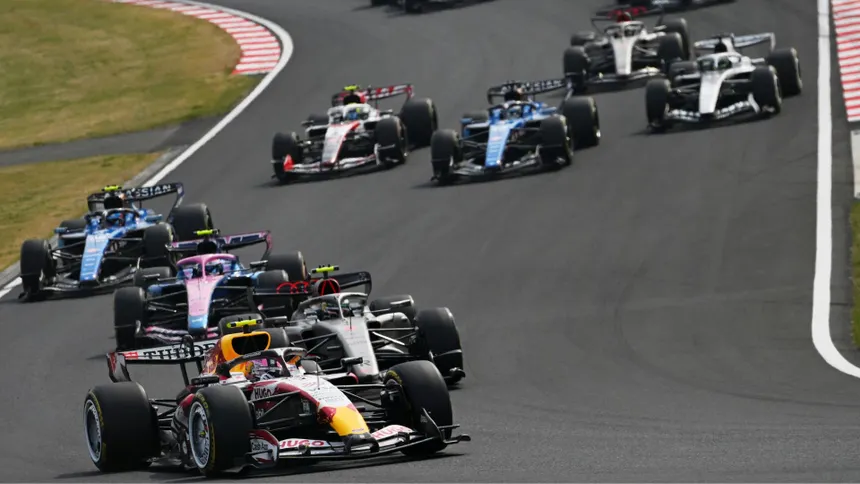
This change would theoretically make super clipping the preferred energy management strategy, reducing the frequency of lift-and-coast maneuvers that create dangerous speed differentials. The issue gained urgent attention after Oliver Bearman’s heavy crash at Suzuka, where a 50 km/h speed differential between his boost-mode Haas and Franco Colapinto’s energy-saving Alpine created a hazardous closing speed.
Proposed Regulation Tweaks
• Increase super clipping harvest limit from 250kW to 350kW
• Reduce qualifying energy recharge limit from 8MJ (already reduced from 9MJ at Suzuka) to as low as 6MJ
• Expand or eliminate defined zones for “straight mode” active aero deployment
• Software changes to prevent accidental overtakes caused by battery deployment algorithms
• Standardized energy deployment rules to prevent heavy harvesting when cars are in close proximity
The Qualifying Conundrum
Qualifying has become perhaps the most visible symptom of the regulation challenges. The current 50/50 split between internal combustion and electrical output means drivers must carefully manage energy deployment, often lifting and coasting before braking zones to recharge batteries. The result is a counterintuitive spectacle where drivers cannot push to the absolute limit without paying a severe penalty on the following straight.
The FIA has already taken preliminary action. At Suzuka, the maximum energy recharge per lap in qualifying was reduced from 9.0 megajoules to 8.0 megajoules in an attempt to reduce super clipping. Thursday’s discussions may consider pushing this limit even lower—potentially to 6.0 megajoules—which would force less energy recovery and theoretically reduce the strategic complexity that has frustrated drivers.
However, as one technical observer noted, “good luck if you’re the one at the governing body who has to tell Charles Leclerc the 2026 rule changes might make him even slower in qualifying.”
The Road Ahead: April 20 and Beyond
Thursday’s technical session is preparatory rather than decisive. The heavy lifting will occur on April 20, when team principals join power unit manufacturers, FIA officials, and F1 CEO Stefano Domenicali for a decisive meeting where concrete proposals will be debated and potentially voted upon.
Under F1’s 2026 governance structure, immediate rule changes require what is known as “super majority” support. If the FIA and F1 back a motion, seven of the 11 teams must support it for chassis changes, or four of the five engine manufacturers for power unit modifications. This threshold should be sufficient to pass technical tweaks even if some teams resist, though competitive self-interest may still create voting blocs that prevent more comprehensive revisions.
“I perfectly understand that we have to fine-tune. It’s for the benefit of everybody, and the benefit of the show, but what we have to keep in mind… is that each time that you will make a small change, it will go in the direction of someone or against someone.” — Frédéric Vasseur, Ferrari Team Principal
Miami: The Target for Change
The Miami Grand Prix on May 1-3 represents the earliest realistic opportunity for implemented changes. However, sources caution that while energy deployment adjustments can be made relatively quickly, more substantial modifications will require additional time—potentially pushing major revisions toward later in the season or even 2027.
The FIA has been clear that any adjustments, particularly those related to energy management, require careful simulation and detailed analysis. In a statement following Bearman’s crash, the governing body emphasized that “safety will always remain a core element of the FIA’s mission” while noting that “any potential adjustments… require careful simulation and detailed analysis.”
For now, speculation about the precise nature of changes remains premature. Thursday’s meeting will begin the process of transforming driver complaints and fan concerns into actionable technical solutions—but the path from discussion to implementation remains long and politically complex.
Sources
- Motorsport.com: What to expect from F1 power unit rules talks on Thursday
- RacingNews365: Crucial FIA meeting dates revealed to discuss F1 regulations
- The Race: What to expect from F1’s crunch 2026 rules meetings
- Sky Sports: Teams to meet on Thursday to begin talks over possible tweaks
- GPFans: How the FIA can fix F1 at crunch talks
Discover more from f1liveupdates.com
Subscribe to get the latest posts sent to your email.