
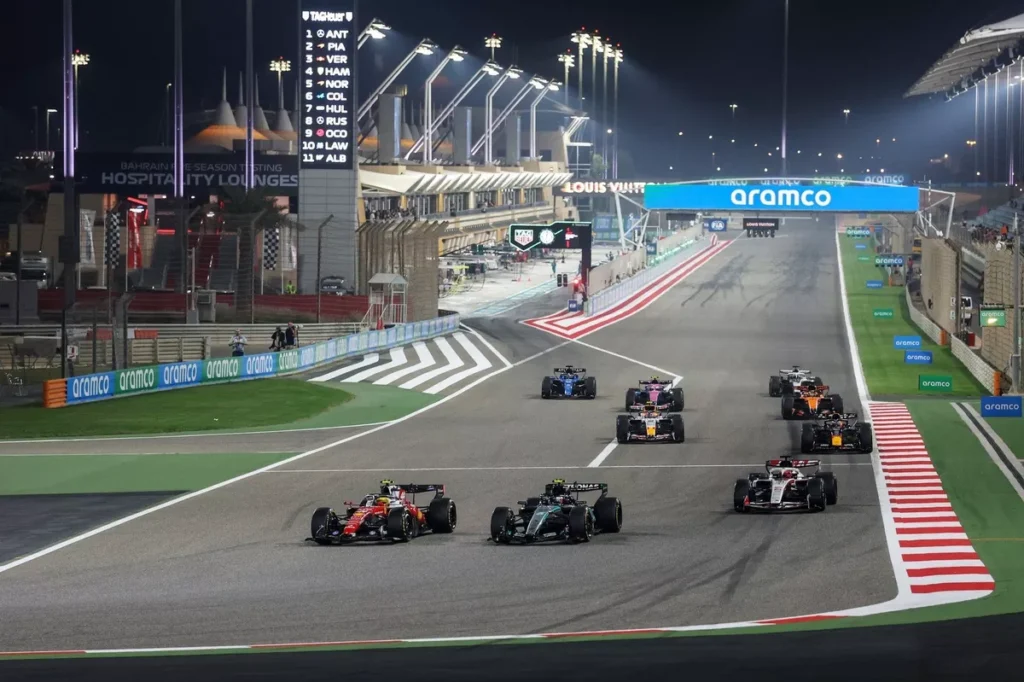
Will Pure Driver Talent Still Matter in 2026? The F1 Revolution Explained
How the most radical regulation overhaul in F1 history is reshaping the battle between man and machine
The 2026 Formula 1 regulations represent the most dramatic technical shift in the sport’s history. But does this mean driver skill becomes less relevant—or actually more important than ever?
Formula 1 is undergoing its most profound transformation since the World Championship began. The 2026 regulations don’t just tweak existing rules—they completely redefine what it means to drive an F1 car. With lighter, more nimble machines, a 50/50 split between electric and thermal power, and active aerodynamics, the sport is entering uncharted territory.
The FIA has clearly stated its intention: these regulations were designed to prioritize driver skill. But as the first pre-season tests in Bahrain have revealed, the reality is far more nuanced—and perhaps more complex than the purists had hoped.
The Cars Are Lighter, But Driving Them Is Harder
Starting in 2026, F1 cars will drop from 798kg to just 768kg—a 30kg reduction that makes them significantly more responsive and easier to handle through corners. Combined with narrower dimensions (100mm less width, 200mm shorter wheelbase) and 18-inch wheels, these machines are designed to be more “driver-friendly” than the ground-effect beasts that dominated recent seasons.
However, this simplicity comes with a trade-off. As former F1 driver and current Sky Sports analyst Karun Chandhok explained, the flatter underbody design removes much of the automatic downforce generated by the floor. This places far greater emphasis on mechanical grip and driver feel. “The cars slide more,” he noted. “The role of the driver, if anything, is even more involved in extracting the most out of the car.”
This increased sliding actually rewards a particular driving style—one that many veterans have been honing for years. The reduction in aerodynamic grip means drivers must be more precise with throttle application, more delicate with braking, and more adaptive to changing track conditions.
The Energy Management Paradox
Perhaps no aspect of the 2026 regulations has generated more controversy than the new power units. With the MGU-K now delivering up to 350kW (nearly triple the previous output) and energy recovery nearly doubling to approximately 8.5 MJ per lap, the battery has become the centerpiece of performance.
“Not Formula 1. Ridiculously complex.”
The challenge: the battery empties in just 10-11 seconds of full-power deployment. This means drivers must constantly harvest and deploy energy throughout every lap—a task that has nothing to do with traditional racing skills and everything to do with electronic bookkeeping.
McLaren team principal Andrea Stella, who has worked extensively with Michael Schumacher, Kimi Räikkönen, and Fernando Alonso, offered a more nuanced perspective after Bahrain testing: “What we’ve seen in Bahrain definitely confirms that it’s the ultimate challenge. The cars slide quite a lot more and the role of the driver, if anything, is even more involved in extracting the most out of the car.”
But this “ultimate challenge” is fundamentally different from what made F1 legendary. Drivers now must decide when to lift off earlier to harvest energy, when to brake slightly sooner to recharge the battery, and when to deploy precious electrical boost for overtaking or defense. This creates what many describe as “unnatural techniques”—like choosing not to accelerate at full speed out of a corner until halfway down the straight, or reserving energy for exit speed rather than top speed.
Active Aero: A New Dimension of Control
The introduction of active aerodynamics represents another seismic shift. For the first time in F1 history, drivers can actively adjust their car’s aerodynamic profile in real-time. Through “Straight mode” and “Corner mode,” front and rear wing elements adapt dynamically to maximize either top speed or downforce.
This shifts aerodynamic performance from static engineering to live driver control. Rather than simply pushing a button for DRS, drivers must now manage load transitions as part of their every lap. The penalty for getting it wrong? Reduced braking stability in Straight mode, or compromised exit speed in Corner mode.
Who Benefits Most From These Changes?
Early analysis suggests several groups could gain competitive advantages:
Potential Winners
- Veteran drivers with precision, adaptability, and refined feel—Hamilton and Alonso could experience a renaissance
- Mercedes may find redemption in regulations that reward mechanical ingenuity and smooth chassis dynamics
- Drivers who thrive with unstable cars requiring mid-corner rotation and throttle modulation
Potential Challenges
- Red Bull, kings of aero exploitation under Adrian Newey, may lose their competitive advantage
- Drivers dependent on rear stability who rely on planted rear ends may struggle with cars that demand more rotation
- Energy-starved circuits like Albert Park will require extensive lift-and-coast techniques even in qualifying
The Verdict: Talent Matters, But It’s Different
The question isn’t whether driver talent matters in 2026—it absolutely does. But the nature of that talent is evolving. The pure, raw speed that defined the sport’s greatest moments still matters, but it’s now accompanied by a layer of complexity that rewards different skills.
Drivers must blend traditional racecraft with sophisticated energy management. They need to think several laps ahead, constantly balancing the equation between harvesting and deploying. They must develop an intuitive feel for active aero transitions while maintaining the precision braking and throttle control that has always separated the good from the great.
The Final Answer
Will pure driver talent determine championships in 2026? Yes—but “pure” now encompasses a broader skill set than ever before. The driver who masters energy strategy, adapts quickly to changing grip levels, and extracts performance from cars that slide more will be the one standing atop the podium. The era of the complete driver has arrived. Those who can balance machine management with traditional racing excellence will write the next chapter of F1 history.
Sources
- BBC Sport – F1 in 2026: Will drivers still make a difference after rules reset?
- Formula 1 – FIA unveils Formula 1 regulations for 2026 and beyond
- Formula 1 – 7 things to be excited for in the 2026 Formula 1 season
- Sky Sports – F1 2026 rules explained
- Coffee Corner Motorsport – F1 2026 Rules Explained
- TSN – 2026 F1 rules: What’s new and how changes affect racing
- Honda Global – 2026 Formula 1 Regulations Overview
Discover more from f1liveupdates.com
Subscribe to get the latest posts sent to your email.