
Williams Confirms “Sizeable” Upgrade Package Planned for the Canadian GP
Miami delivered a double points finish and thirty performance projects in one hit. James Vowles says the pipeline doesn’t stop there — but Sainz is tempering expectations: a proper turnaround is still months away.
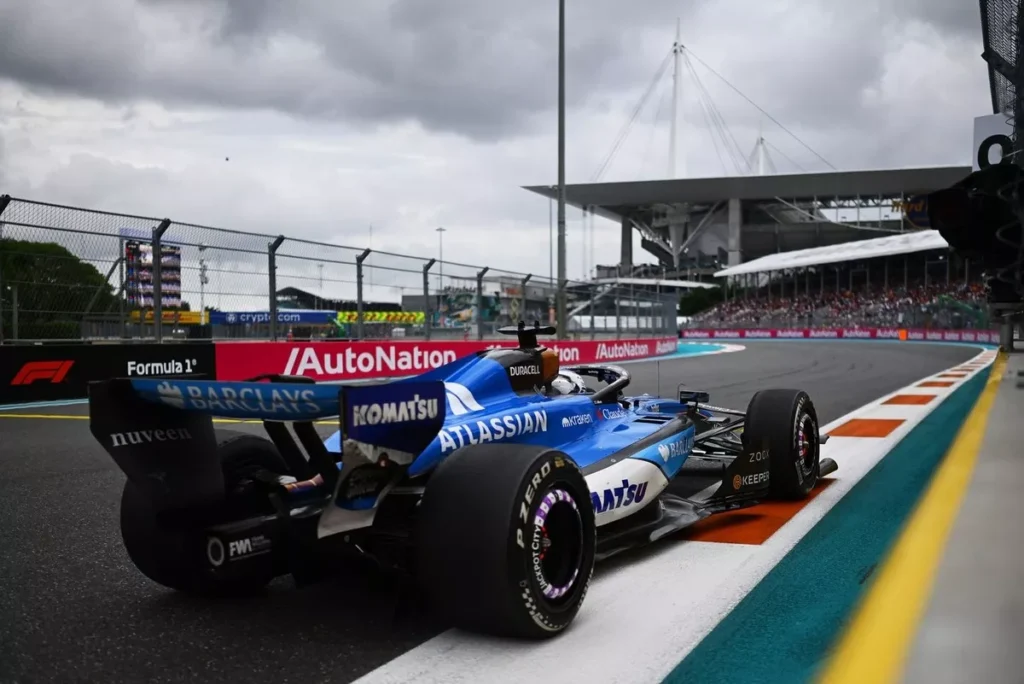
Williams left Miami with five points on the board, a double-points finish in the grand prix, and the first tangible signs that the FW48’s early-season struggles are being addressed. Carlos Sainz crossed the line ninth, Alex Albon tenth — their best combined result of 2026. Two weeks before the Canadian Grand Prix, team principal James Vowles has confirmed that the upgrade pipeline is still moving. There is more performance coming to Montreal, and it could be, in his own words, “sizeable.”
What Miami Actually Delivered
The five-week break between Japan and Miami gave Williams an unusually generous window to address the FW48’s well-documented problems — principally an overweight car that has been compromising performance since pre-season. Vowles described the Miami package as the product of approximately thirty separate performance projects run in parallel during the break, spanning aerodynamic, mechanical, and operational domains.
- New floor — aerodynamic development
- Revised bodywork
- Front wing modifications
- Modified rear suspension
- Exhaust blowing development
- Weight reduction — small but meaningful reduction achieved
- ~30 performance projects in total, including non-visible operational improvements
“A better weekend for us in Miami. We’ve used the last five weeks to bring a good number of improvements to the car. Part of those was aerodynamic development — a new floor, new bodywork. There were some more elements on the front wing, modified rear suspension, exhaust blowing. Some elements behind the scenes that you won’t see, but just on ways of working, how to get data out, how to maximise the performance of the car.”
— James Vowles, Williams Team Principal
Vowles was careful to add that the Miami circuit itself offered Williams some natural advantages — it performed well there last year too — and that the track-specific contribution to the improvement was “minor” in the broader context. The point was important: this was a genuine step forward for the package, not a flattered result at a circuit that happened to suit the car.
Canada: More Is Coming
The team principal’s post-Miami Vowles Verdict video contained a headline confirmation: a further upgrade package is being prepared for Montreal, and the ambition is for it to be meaningful rather than incremental.
“We have more performance coming from Montreal. Again, it’s an odd situation where we’ve got these two weeks and we want to maximise these two weeks to the best of our ability — or three before the grand prix. The pipeline is a little bit still up in the air as to what we can 100% deliver for that, but there could be a nice sizeable amount of performance.”
— James Vowles, Williams Team Principal
The caveat — “still up in the air” — is significant. Vowles is not overpromising. The manufacturing and logistics window before Montreal is tight, and not every planned upgrade will necessarily be ready in time. But the direction of travel is clear: Williams intends to keep pushing, race by race, rather than consolidating on a single update and waiting to see where it lands in the competitive order.
Sainz’s Reality Check: “Last Third of the Season”
Where Vowles is cautiously optimistic, Carlos Sainz is even more measured. The Spaniard welcomed the Miami progress but was direct about the broader timeline: a genuine competitive turnaround for Williams is still several months away. He is not unhappy — he is simply calibrating expectations against the reality of where the car still is.
“It’s going to take some months to finish the turnaround. I think we’re going to need to get to the last third of the season to see a proper turnaround. But at least the upgrades work. The weight of the car came a bit off, but we still know there’s a bit to go. We have a few bits and pieces coming for the next couple of races, so we’re going to keep the positives and make sure we keep focusing on the negatives.”
— Carlos Sainz, Williams Racing
Sainz also referenced the Miami-spec car directly: “This is the car we should have had from the opening race.” The implication was clear — the FW48’s launch specification was not the package Williams intended, and the overweight situation meant the car spent the first three rounds operating well below its potential operating window. The Miami upgrades have begun to close that gap. But closing it entirely is a process measured in grands prix, not in weekends.
Where Williams Sits — and Who Is Ahead
With five points, Williams sits eighth in the constructors’ standings — nine points behind Racing Bulls, the team it needs to overtake to climb into meaningful midfield territory. Vowles has framed the next three or four races as a critical relative performance test: not just how much performance Williams brings, but how that compares to what rivals are bringing simultaneously. Every team is developing. The question for Williams is whether its rate of improvement can outpace that of the teams directly in front.
Montreal is a circuit that should suit the FW48’s characteristics — high traction demand, heavy braking, and relatively low average speeds that reduce the penalty for an aerodynamically overweight car. If Vowles’s sizeable package arrives in time, Canada could be the weekend where Williams begins to answer Sainz’s own timeline — the first tangible step towards that last-third turnaround, a few races early.
Discover more from f1liveupdates.com
Subscribe to get the latest posts sent to your email.