From $200 Million to $2.5 Billion: Inside Williams Racing’s Extraordinary Formula 1 Resurrection
Six years ago, Dorilton Capital bought a wounded giant for roughly $200 million. Today, Forbes values Williams at $2.5 billion — and chairman Matthew Savage insists the greatest turnaround in modern motorsport is only getting started.
In the middle of a global pandemic, with Formula 1 parked in its garages and its own future hanging by a thread, Williams Grand Prix Engineering changed hands for an enterprise value of €152 million — roughly $180 million at the time, and now universally remembered as the $200 million deal. Six years on, that same team carries a valuation of around $2.5 billion. It is, by any measure, one of the shrewdest franchise purchases in modern sports business — and, according to the man who signed the cheque, the story has barely begun.
The Sale That Saved a Dynasty
By the spring of 2020, the team that Frank Williams and Patrick Head had built into a nine-time constructors’ champion was fighting for its life. Williams had finished dead last in three of four seasons, scored zero points that year, lost its title sponsor, and watched COVID-19 freeze its revenue overnight. On May 29, the board launched a formal sale process. Less than three months later, on August 21, the team announced its acquisition by Dorilton Capital, a New York-based private investment firm co-founded by Matthew Savage and Darren Fultz.
The terms told their own story: €152 million of enterprise value, with €112 million reaching shareholders once debt and transaction costs were cleared. Sir Frank Williams, holding 52% of the company, gave the deal his irrevocable backing. His daughter Claire, who had run the team as deputy team principal, framed the moment with characteristic grace.
“This may be the end of an era for Williams as a family-owned team, but we know it is in good hands. The sale ensures the team’s survival but most importantly will provide a path to success.”
— Claire Williams, August 2020
Survival was not a figure of speech. Savage had done the math before buying: across Formula 1’s seven-plus decades, some 154 teams have folded. Williams — the outfit of Mansell, Prost, Piquet, Hill and Villeneuve, winner of 114 grands prix and seven drivers’ titles — came dangerously close to joining them.
The Cost-Cap Lifeline and the Long Game
Timing, as ever in F1, was everything. Days before the takeover was announced, all ten teams signed the new Concorde Agreement, locking in the sport’s first budget cap. Savage has since admitted the cap was effectively a condition of the deal: before it, he estimates the spending gap between a midfield team and the giants ran to roughly $5 billion across a decade — a deficit no investor could realistically bridge. The cap didn’t just make Williams buyable; it made the sport investable.
Dorilton’s approach since has been the opposite of a quick flip. Savage — an Oxford-trained physicist who spent 22 years as an M&A banker before founding Dorilton in 2009 — was introduced to the opportunity by former racing driver James Matthews, and what seduced him was precisely what couldn’t be replicated: one huge legacy name, and a history money can’t manufacture.
“This has always been a long-term investment for us. We recognised it would be a long road… it was always a 10- to 20- to 30-year investment horizon for us, and we’re still on that pathway.”
— Matthew Savage, Dorilton Capital chairman, speaking to The Race, July 2026
That patience is being tested weekly. Savage says he fields calls something like twice a week from would-be buyers — institutional investors, high-net-worth families, the occasional car manufacturer — all drawn to a sport he now ranks alongside the NFL, the NBA, the Premier League and cricket’s IPL as one of global sport’s five great league properties. The answer never changes: Williams is not for sale.
Rebuilding Grove From the Inside Out
What Dorilton found behind the heritage facade was sobering. Williams lacked what Savage calls “basic processes and systems” — at one point, it wasn’t even clear what the F1 car itself cost to build. The team had famously been tracking the construction of its grand prix cars on Microsoft Excel spreadsheets.
The rebuild was methodical rather than theatrical:
- Leadership: commercial director James Bower arrived from McLaren in 2021; team principal James Vowles was poached from Mercedes in early 2023; chief technical officer Pat Fry followed from Alpine in 2024.
- Infrastructure: sustained capital investment in Grove’s facilities, systems and people, replacing survival-era improvisation with championship-grade process.
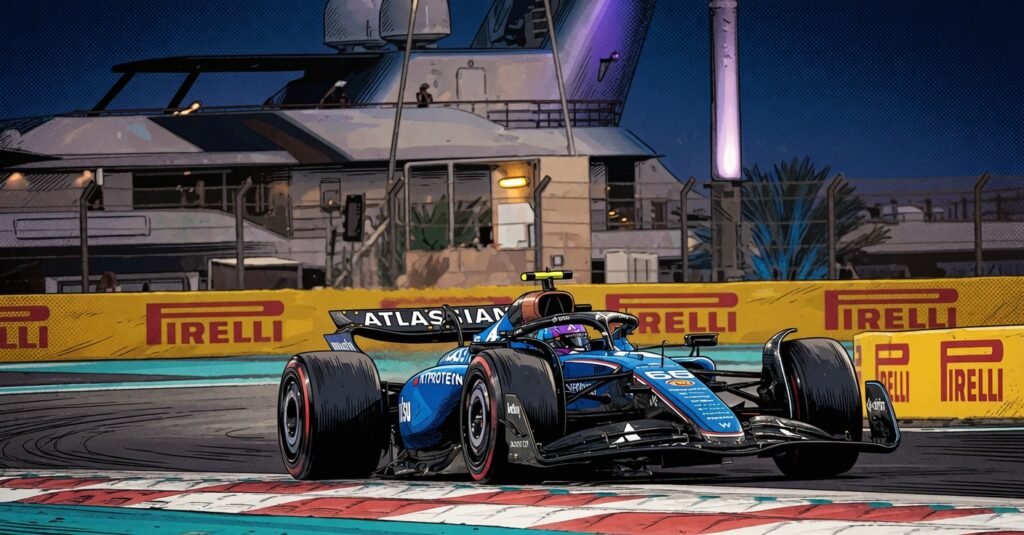
- Commercial firepower: a record multi-year title partnership with software giant Atlassian, announced in February 2025 — the team’s first title sponsor in five years and the biggest deal in its history — followed by blue-chip names including Santander, Barclays, Nuveen and AI firm Anthropic.
The commercial logic is structural: roughly two-thirds of a modern F1 team’s revenue comes from partnerships. Williams’ sponsorship income doubled in 2025 and is projected to jump more than 60% again this year, pushing total revenue toward $300 million — up from $245 million in 2024, when Forbes estimates the team still lost $36 million. Profitability, Savage concedes, hasn’t arrived yet. “We’re going to get there in a couple of years, I think,” he told Sports Business Journal.
The On-Track Proof
Balance sheets don’t stir the soul; stopwatches do. In 2024, Williams finished ninth in the constructors’ championship with 17 points. Twelve months later, the same team closed out 2025 in fifth — its best championship finish since 2016 — with 137 points and a driver pairing the paddock openly envies.
Carlos Sainz, signed from Ferrari in 2024, delivered the milestone moments: a third place in Azerbaijan that ended Williams’ four-year podium drought, a sprint podium in Austin, and a nerveless P3 under the lights of Qatar to seal fifth in the standings. Alex Albon — now the longest-serving Williams driver of the modern era and, as of this spring’s Miami Grand Prix, the driver with the most starts in team history — matched him for consistency, finishing eighth in the drivers’ championship, one place ahead of his teammate.
“Fifth would have been a dream come true just 12 months ago, when we were languishing in ninth in the constructors’ championship. We are still here to win championships. We are a long way away from that — but at least now the work we are doing is starting to pay off.”
— James Vowles, Williams team principal
Williams by the Numbers
- $200m — the 2020 takeover price (€152m enterprise value)
- $2.5bn — Forbes’ valuation of the team, November 2025
- 1,150% — Dorilton’s paper return in six years
- 17 → 137 — constructors’ points, 2024 to 2025
- P5 — 2025 championship finish, the team’s best since 2016
- 9 / 7 / 114 — constructors’ titles, drivers’ titles, grand prix wins
- ~$300m — projected revenue for 2026
What $2.5 Billion Really Means
Williams’ surge is part company turnaround, part rising tide. Formula 1 generated $3.9 billion in revenue in 2025 — up 14% year on year, and the best figure of the Liberty Media era — while the average team is now worth $3.42 billion according to Sportico, more than double the mark of two years earlier. Scarcity does the heavy lifting: there are only ten seats at the table, and Cadillac’s arrival as an 11th franchise in 2026 required a $450 million dilution fee. In that context, Forbes’ $2.5 billion estimate for Williams — sixth on the grid — and Sportico’s more conservative $2.14 billion both point the same way: an asset worth more than ten times its purchase price.
Savage, characteristically, thinks the market is still underrating his team.
“I just think we’ve got another $1 billion or $2 billion to play for in value of the team. I’m happy to back ourselves. I’m happy to back our team to go get them.”
— Matthew Savage, speaking to Sportico, March 2026
The Hardest Part Is Still Ahead
Honesty demands the caveat: 2026 has been brutal so far. The FW48 arrived late and overweight, Williams missed the Barcelona shakedown entirely, and the opening flyaways exposed a car that was, in Sainz’s words at Silverstone, still two seconds off the pace. “We sacrificed 2025 to be ready for 2026 — time will tell if it pays off,” the Spaniard admits. Albon calls it a painful start but insists the faith is intact — and with Mercedes power, a reset regulation cycle and a development war still raging, the season’s verdict is far from written.
The ownership, meanwhile, is aiming far higher than midfield respectability. Asked on The Race F1 Podcast how many championships Williams should target in the next six years, Savage didn’t blink: “Two. Two. There we are. You heard it here first.”
From a €152 million distress sale to a $2.5 billion franchise that turns buyers away twice a week, Williams has already completed the hardest escape in sports business: from legacy to living asset. The next chapter — converting valuation into victories — is the one the whole paddock will be watching.
Sources
- The Race — Williams’s transformation from $200m takeover to $2.5b valuation
- The Race F1 Podcast — Race Business: How Williams went from $200 million sale to being worth $2.5 billion
- Sports Business Journal — Williams F1 owner Dorilton emerges from shadows to discuss team’s success
- Sportico — How Williams’ Owner Is Driving Value as F1 Rises in U.S.
- Sportico — F1 Team Values: Ferrari Leads, Average up 48% to $3.42 Billion
- Front Office Sports — PE Bought an F1 Team For Just $200M. It’s Not Selling
- Formula1.com — Vowles calls Williams’ P5 ‘a dream come true’
- Formula1.com — The state of play at Williams after three rounds of the 2026 season
Discover more from f1liveupdates.com
Subscribe to get the latest posts sent to your email.