Why Barcelona’s Long-Run Picture Is Harder to Read Than It Looks
McLaren topped FP2 in Barcelona, but the race-pace picture is far less straightforward, with compound differences, run lengths and tyre degradation making Friday’s long-run order difficult to decode.
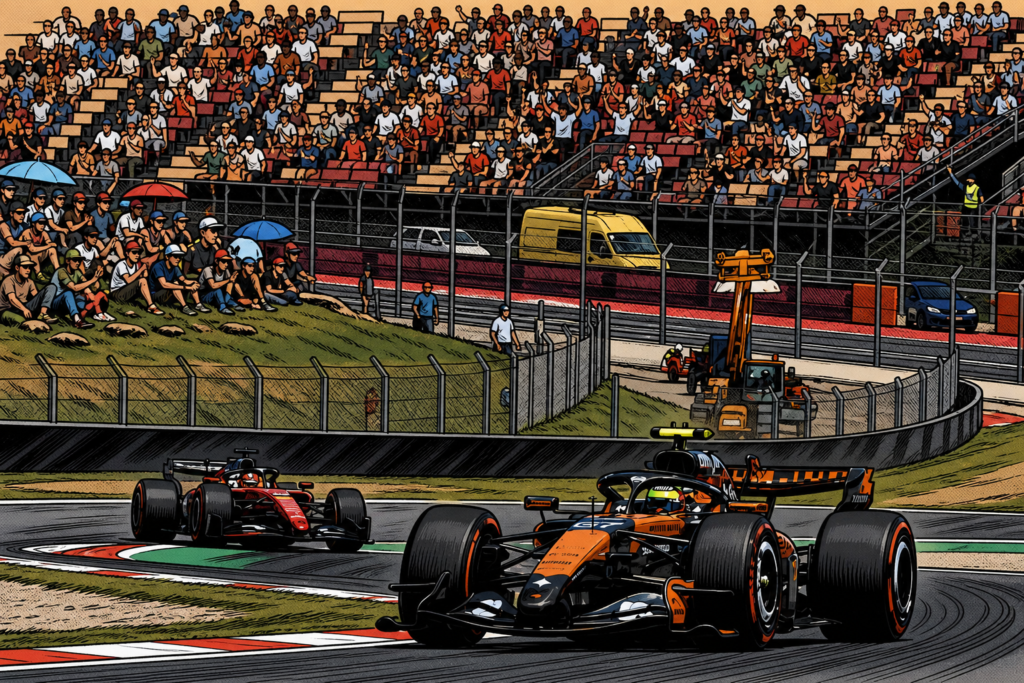
Lando Norris ended Friday on top in Barcelona, narrowly beating George Russell in FP2, but the headline times only tell part of the story. Once the focus shifts from one-lap performance to long-run pace, the competitive order becomes much harder to read.
Barcelona is one of Formula 1’s most revealing circuits because it tests tyre management, aerodynamic efficiency and car balance across a wide range of corners. That makes long-run data valuable — but also dangerous if read too quickly.
McLaren topped FP2, but long-run analysis suggests the picture is not as simple as the timing screens made it look. Based on The Race’s Barcelona practice analysis
McLaren Fast Over One Lap, Less Clear Over a Stint
Norris’ FP2 benchmark confirmed that McLaren had recovered strongly after recent difficult weekends. Oscar Piastri’s third place added more weight to the idea that the MCL40 has genuine pace around Barcelona.
But race pace raised more questions. The Race noted that McLaren still appeared to have work to do on long runs, especially when tyre degradation was factored into the comparison. That does not mean McLaren is weak, but it does mean Friday’s fastest lap should not be confused with race dominance.
The Core Problem
Long-run averages in practice can be misleading because teams use different fuel loads, compounds, run lengths and engine modes. Barcelona added another layer of confusion through visible tyre degradation across the field.
Mercedes’ Advantage May Also Be Overstated
Mercedes looked strong across the day, with Russell fastest in FP1 and only 0.009s behind Norris in FP2. On long runs, Russell’s pace also looked encouraging.
However, the comparison is not clean. Russell’s long run was shorter than some rivals’ stints, while Charles Leclerc completed a longer run on a different compound. The Race highlighted that the difference between a four-lap run and a seven-lap run matters when degradation is significant.
A shorter run can look artificially strong if the tyres have not yet reached the same level of drop-off as a longer stint. F1LiveUpdates analysis
Why Tyre Degradation Is Distorting the Order
Degradation was visible across compounds, which makes the long-run table especially sensitive. A driver on lap three of a stint may look much stronger than a rival on lap seven, even if the underlying race pace is similar.
That matters in Barcelona because Sunday is expected to place heavy demands on the tyres. Teams will need to understand not just who is fast at the beginning of a stint, but who can keep the tyre alive over a full race sequence.
- Norris topped FP2, but McLaren’s race pace remains harder to judge.
- Russell’s long-run pace looked strong, but his run length was shorter.
- Leclerc’s longer stint makes direct comparison more complicated.
- Tyre degradation appeared significant across compounds.
- Fuel loads and engine modes remain unknown, as always in practice.
Ferrari Still in the Picture
Ferrari did not dominate Friday, but Leclerc’s pace kept the team close enough to remain relevant. His longer run may look less spectacular on average, but it could prove more representative if Ferrari was testing race durability rather than chasing an eye-catching short stint.
That is the trap of Friday analysis. A slower average can sometimes hide a more realistic race simulation, while a faster average can be flattered by a shorter run or fresher tyres.
What to Watch Next
FP3 and qualifying will clarify one-lap performance, but Sunday strategy will depend heavily on who has best understood degradation over longer stints.
Red Bull’s Gap Remains a Concern
Max Verstappen ended FP2 nearly nine tenths behind Norris, which immediately raised questions about Red Bull’s competitiveness. Barcelona rarely hides weaknesses, and a large Friday gap on this circuit cannot be ignored.
Still, Red Bull has often improved overnight in recent seasons, and practice fuel loads can distort the picture. The bigger question is whether the RB22 can preserve tyres well enough to turn a difficult Friday into a more competitive race package.
Why Barcelona Makes the Puzzle Bigger
Barcelona is not Monaco. It offers a much broader test of Formula 1 performance. High-speed corners stress the aero platform, slower sections test traction, and the long race distance punishes poor tyre management.
That is why the long-run picture matters so much. A team can look excellent over one lap but struggle on Sunday if degradation is too high. Equally, a team that appears quiet on Friday may become dangerous if its tyres remain stable over a full stint.
Barcelona rarely gives a false answer, but Friday practice can still ask the question in a confusing way. F1LiveUpdates analysis
Friday Verdict
McLaren looks competitive. Mercedes looks strong. Ferrari remains close enough to threaten. Red Bull has work to do. But the long-run order is not yet clear.
The reason is simple: too many variables are overlapping. Different compounds, different stint lengths, visible degradation and unknown fuel loads mean Friday’s race-pace picture should be treated with caution.
Barcelona has given the paddock clues, not answers. The real order will only become clear when the tyres start to fade on Sunday.
Sources
→ The Race — What’s confusing the long-run order at F1’s Barcelona GP
→ The Race — McLaren back on the pace as Norris heads Russell in FP2
→ Formula1.com — Norris heads Russell and Piastri in FP2
→ Formula1.com — Russell sets the pace in FP1
→ Motorsport.com — Barcelona-Catalunya circuit overview and weekend context
Discover more from f1liveupdates.com
Subscribe to get the latest posts sent to your email.