McLaren Explains the Tyre Gamble That Ruined Its Canadian Grand Prix
McLaren’s bold decision to start Lando Norris and Oscar Piastri on intermediate tyres quickly collapsed in Montreal as rapidly improving conditions forced both drivers into costly early pitstops.
Formula 1 strategy can transform a race in seconds — and in Montreal, McLaren learned exactly how quickly a calculated gamble can unravel.
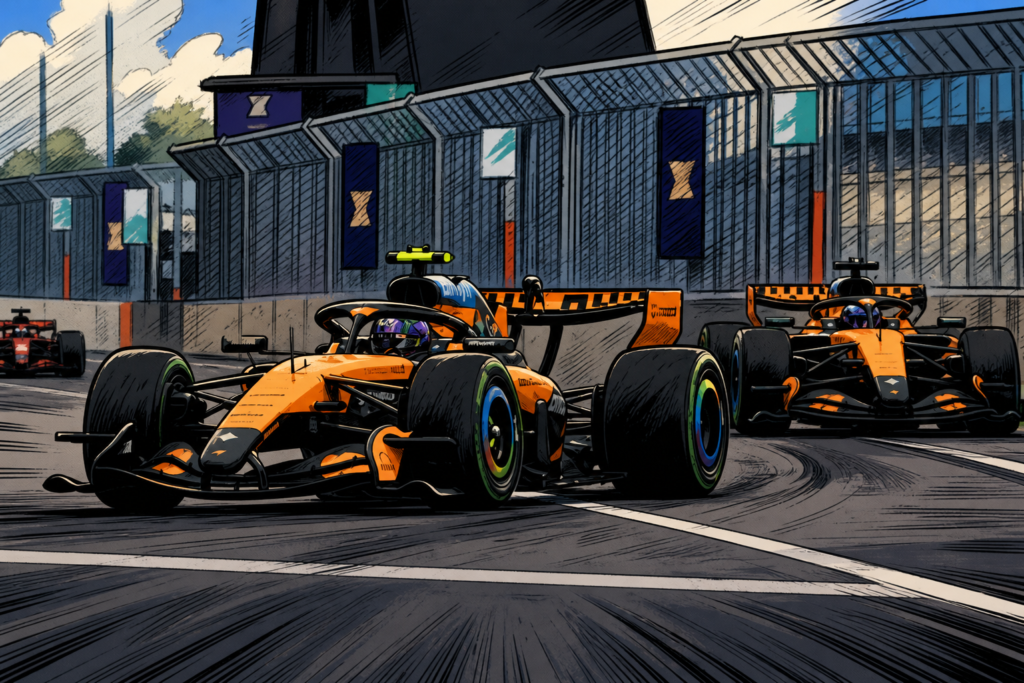
Hoping to gain an early advantage during uncertain weather conditions, McLaren elected to start both Lando Norris and Oscar Piastri on intermediate tyres at the Canadian Grand Prix. But as the Circuit Gilles Villeneuve dried faster than expected, the decision rapidly turned from opportunity into disaster.
McLaren gambled on the weather in Montreal — and the track answered almost immediately.
Why McLaren Chose Intermediates
The team’s initial thinking was understandable. Conditions before the start remained difficult to read, with damp sections still visible around the circuit and grip levels changing constantly.
In those situations, Formula 1 strategists often face a narrow decision window where one aggressive call can either create a major advantage or completely compromise a race before it properly begins.
McLaren chose aggression. Norris and Piastri lined up on intermediates, hoping the conditions would remain wet enough long enough to reward the risk.
- The circuit dried faster than expected
- Intermediate tyres overheated rapidly
- Grip levels collapsed within the opening laps
- Both drivers were forced into early pitstops
The Race Slipped Away Early
Once the racing line began drying, the intermediates immediately became vulnerable. The tyres overheated, performance dropped sharply and both McLaren drivers quickly lost valuable time compared to rivals on slick compounds.
The team had little choice but to react quickly, bringing Norris and Piastri into the pits earlier than planned. While the switch limited further damage, the strategic setback had already compromised both races.
In a tightly packed Formula 1 field, losing track position early can be devastating — especially at a circuit like Montreal where overtaking opportunities often come with significant risk.
What McLaren hoped would become a strategic masterstroke instead became a race defined by recovery.
Norris and Piastri Left Chasing
From that point onward, both drivers spent much of the Grand Prix attempting to recover positions rather than fighting at the front. Despite flashes of strong pace later in the race, the early tyre call remained impossible to fully overcome.
Norris and Piastri handled the situation professionally, but the frustration inside the McLaren garage was evident. The team had entered Montreal with genuine hopes of a strong result and instead found itself trapped by conditions that evolved too quickly.
Weather-driven races often reward boldness, but they also punish hesitation and imperfect timing more brutally than almost any other scenario in Formula 1.
A Risk McLaren Would Likely Take Again?
Despite the outcome, McLaren’s decision was not necessarily irrational. In modern Formula 1, teams increasingly accept that calculated strategic risks are necessary to challenge rivals over a long season.
Montreal simply became an example of how narrow the margin truly is between brilliance and failure. Had the track remained damp for only a few more laps, the narrative surrounding McLaren’s strategy might have looked completely different.
Instead, the Canadian Grand Prix became another reminder that Formula 1 strategy is often decided not by minutes — but by seconds.
Sources
- The Race — McLaren Canadian Grand Prix strategy analysis
- Formula 1 race coverage from Montreal
- Post-race comments from McLaren team personnel
Discover more from f1liveupdates.com
Subscribe to get the latest posts sent to your email.