McLaren Prepares Its Own Radical Rear Wing for Austria
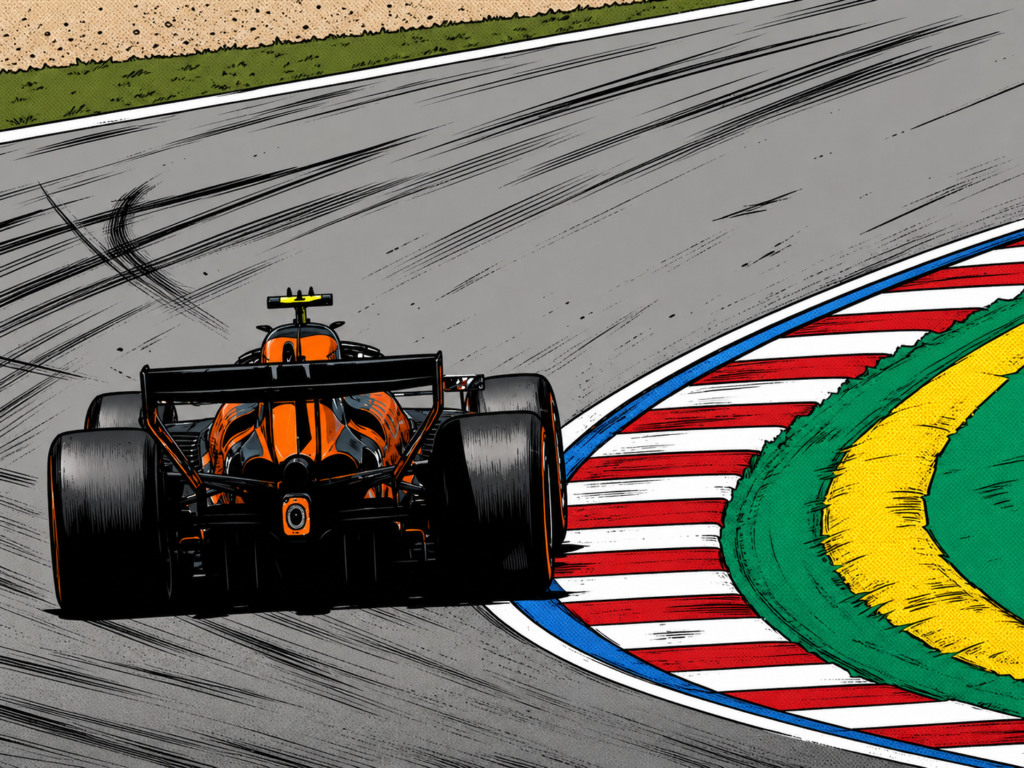
McLaren will introduce its own version of Formula 1’s striking “upside-down” rear wing concept at the Austrian Grand Prix, joining Ferrari and Red Bull in exploring one of the most eye-catching aerodynamic ideas of the 2026 season.
McLaren is preparing to bring a major aerodynamic talking point to the Austrian Grand Prix, with the team set to debut its own version of the so-called “upside-down” rear wing at the Red Bull Ring.
The concept has already attracted attention this season through Ferrari and Red Bull, but McLaren’s arrival into the same development direction confirms that the idea is not just visual theatre. It is becoming a serious part of Formula 1’s 2026 active-aero arms race.
Upgrade: McLaren’s own “upside-down” rear wing concept.
Debut venue: Austrian Grand Prix at the Red Bull Ring.
Context: Ferrari first shocked the paddock with the concept in pre-season testing.
Rivals: Red Bull has also developed its own version of the idea.
Purpose: Reduce drag on straights while maintaining useful downforce in cornering mode.
What Is an “Upside-Down” Rear Wing?
The nickname comes from how the wing behaves in its low-drag state. Under Formula 1’s 2026 active aerodynamic rules, rear wings can move between higher-downforce and lower-drag configurations. In this concept, the upper flap rotates so dramatically that it appears upside down when straight-line mode is activated.
Ferrari’s version was the first to make headlines during pre-season testing in Bahrain. Red Bull later introduced its own interpretation, and now McLaren is following with a solution tailored to its MCL40 package.
The “upside-down” wing looks strange because it is not trying to behave like a traditional fixed rear wing. It is designed for an active-aero era where the car must transform between cornering and straight-line efficiency. F1LiveUpdates analysis
Why Austria Is the Right Place to Try It
The Red Bull Ring is a logical venue for McLaren’s trial. Austria rewards straight-line efficiency, traction and strong aerodynamic balance through a short lap with several long full-throttle sections. A rear wing concept that can shed drag effectively could be particularly valuable there.
McLaren’s own Austrian Grand Prix preview describes the circuit as historically strong for the team, while still warning that the competitive field remains extremely tight. That makes a Friday test especially useful: the team can assess whether the concept delivers measurable gains without immediately committing to a full race deployment.
Why the Red Bull Ring Matters
Austria’s short lap means small speed gains can be amplified. If McLaren’s wing improves straight-line efficiency without sacrificing stability, it could become an important weapon for future high-speed circuits.
McLaren Joins Ferrari and Red Bull’s Development Path
McLaren’s decision is significant because it shows the team believes the concept has real potential. Ferrari’s original design was initially viewed by many as radical, even risky. But once Red Bull pursued a similar direction, the idea gained technical credibility.
Now McLaren’s entry suggests the development race has shifted. Teams are no longer only asking whether the concept works. They are asking how to make it work best within their own aerodynamic platform.
- Ferrari pioneered the concept during 2026 pre-season testing.
- Red Bull later introduced its own Ferrari-style interpretation.
- McLaren will now test its own version in Austria.
- The design is linked to F1’s new active-aero regulations.
- The main target is lower drag without compromising corner performance.
Why This Matters for McLaren’s Season
McLaren has had a complicated 2026 campaign. The team has shown race-winning potential at times, but reliability, integration issues and difficult weekends such as Monaco have raised questions about whether it can consistently match Mercedes and Ferrari.
That makes upgrades like this important. McLaren does not only need more downforce; it needs a broader operating window. A rear wing that improves efficiency across track types could help the team recover ground in the fight with Ferrari, Mercedes and Red Bull.
McLaren’s Austria wing is not just a visual upgrade. It is a test of whether the team can turn aerodynamic creativity into usable race-weekend performance. F1LiveUpdates analysis
The FIA Legality Question
Radical rear wings always attract regulatory attention. Ferrari’s original concept prompted immediate debate over how far teams could push the 2026 active-aero rules, but the design direction has continued to develop within the permitted framework.
Formula1.com has already compared Ferrari and Red Bull’s interpretations, underlining that teams are exploring different solutions while staying inside the active-aero regulations. McLaren’s version will now enter the same scrutiny zone.
The Technical Risk
The biggest challenge is not only making the wing fast. McLaren must make it reliable, legal, stable in transition and predictable enough for its drivers to trust at high speed.
Why Friday Will Be Crucial
The Austrian Grand Prix weekend will offer McLaren a first real-world comparison. The team can run the new wing against existing specifications, collect straight-line speed data, assess balance changes and judge whether the concept creates any unwanted instability.
The key question will be whether the wing works across a full lap, not just on the straights. A device that gains time in low-drag mode but costs confidence through fast corners will not be useful. The Red Bull Ring’s layout should quickly reveal whether McLaren has found a workable compromise.
A Sign of F1’s New Aero War
The bigger picture is clear: Formula 1’s 2026 rules have created a new kind of aerodynamic competition. The sport is no longer only about fixed-wing efficiency. It is now about how cleverly teams can manage the transition between different aero states.
That is why the “upside-down” wing has become such a fascinating symbol. It looks dramatic, but its importance is practical. Teams are trying to reduce drag, manage downforce and unlock straight-line performance in a ruleset where active aero has become central.
F1’s 2026 aero war is not about who has the strangest-looking part. It is about who can make the car change shape most effectively without losing balance. F1LiveUpdates analysis
What to Watch in Austria
McLaren’s debut will not necessarily mean an immediate race commitment. The first step is correlation: does the track data match the simulation and wind tunnel predictions? If it does, the wing could become part of McLaren’s package for Austria and future low-drag circuits.
If it does not, the team may treat Austria as an experimental session and refine the design before bringing it back later in the season. Either way, McLaren’s move shows it is not prepared to let Ferrari and Red Bull dominate one of the most intriguing development paths of 2026.
Austria may therefore be more than another upgrade weekend. It could be the moment McLaren reveals whether its own version of F1’s strangest rear wing idea is a genuine performance step — or simply a papaya-coloured experiment still searching for its final form.
Sources
→ The Race — McLaren to debut its own “upside down” F1 rear wing in Austria
→ Formula1.com — How Ferrari and Red Bull’s innovative upside-down rear wings compare
→ Autosport — How Ferrari’s 180-degree rear wing works and why it is legal
Discover more from f1liveupdates.com
Subscribe to get the latest posts sent to your email.