Max Verstappen: Red Bull Ignored My Setup Feedback in Canada
The four-time world champion reveals the team overruled his preferences for the Canadian Grand Prix, forcing a setup direction he knew would fail — and vows it will never happen again.
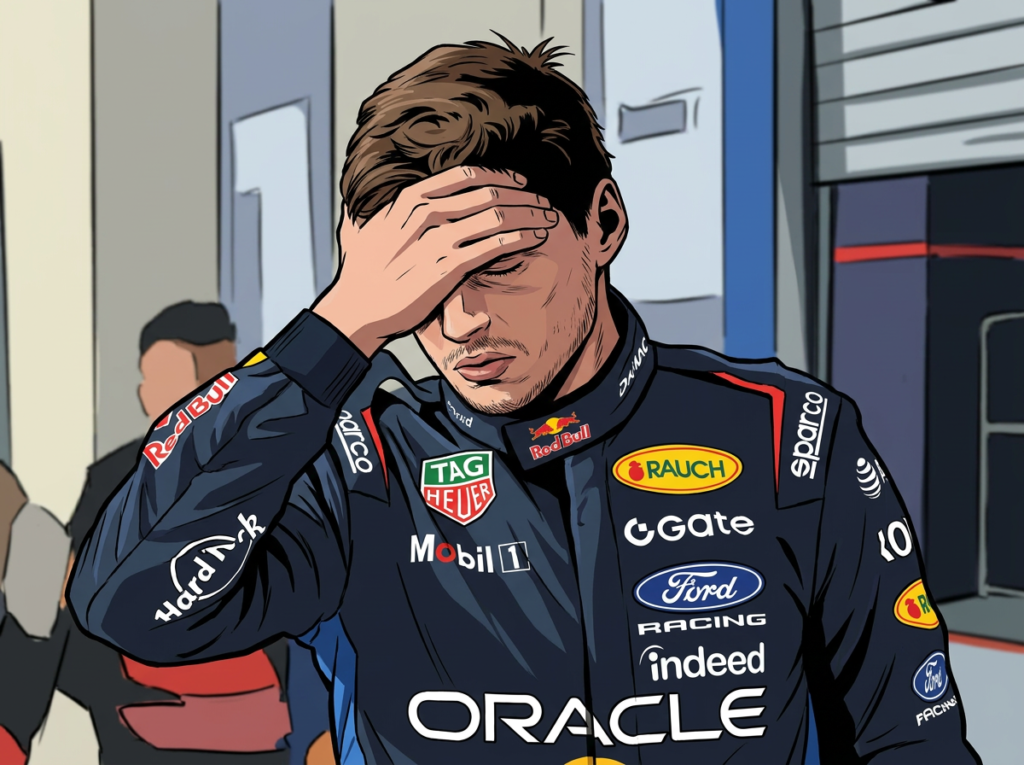
Max Verstappen has delivered a damning assessment of Red Bull’s decision-making after qualifying sixth for the Canadian Grand Prix, revealing that the team deliberately ignored his setup feedback and forced him to run a car configuration he knew would not work. The Dutchman, who has rarely been shy about criticizing his machinery, made it clear that the RB22’s struggles in Montreal were compounded by an internal disagreement that left him driving a car he fundamentally disagreed with.
The revelation casts a harsh light on Red Bull’s internal dynamics at a time when the team is already under immense pressure. With just 16 points from the opening four rounds — a paltry return for a squad that has dominated the sport for much of the past decade — the Milton Keynes outfit is grappling with both a performance deficit and what appears to be a breakdown in trust between its star driver and the engineering team.
“I Said, Go Ahead — If You Think This Is Going to Work”
Verstappen’s account of the weekend is striking for its candor. Speaking to Dutch media after qualifying, the four-time world champion explained that Red Bull had taken a setup direction on his car that he explicitly did not support. Rather than dig in his heels, Verstappen adopted a different strategy: let the team try their approach, knowing it would fail, and use the evidence to prevent a repeat.
“We did something different with my car, that’s what the team wanted. Clearly, that doesn’t work the way it should. But sometimes you also have to let the team do their thing and make clear that it doesn’t work. I said, ‘Go ahead, if you think this is going to work, then do it.’ And clearly, it doesn’t work.” — Max Verstappen, speaking to Dutch media
The scenario is almost unprecedented for Verstappen. Throughout his championship-winning years, the Dutchman has exercised enormous influence over Red Bull’s technical direction. His feedback has shaped the development of the RB16, RB18, RB19, and RB20, with the team routinely deferring to his judgment on setup and balance. For the engineers to overrule him in 2026 — and for him to acquiesce — suggests a relationship under strain.
Verstappen confirmed that this was a deliberate test of the team’s conviction. “I’ve pointed it out so many times already, but sometimes you just have to let them feel for themselves that it doesn’t work,” he said. “Of course they listen to me very often, but not this time, because they were convinced that it was going to work.”
A Qualifying Session “Going Nowhere”
The evidence on track supported Verstappen’s premonition. The Dutchman struggled throughout qualifying, complaining over team radio that he could not get temperature into his tyres and that he was lacking top speed. His final lap, which secured sixth place, came as a surprise even to him.
“A lot of things from this qualifying session are very difficult to understand. For example, I have no idea where that final lap suddenly came from. Throughout the session I had very little top speed and simply no grip.” — Max Verstappen
The top speed deficit was particularly puzzling. Verstappen appeared to derate — losing electrical power deployment — earlier than his rivals on the straights, a problem for which Red Bull had no explanation during the session. “I don’t know. I didn’t get any information from the team either, so it was clear that we couldn’t solve it during the session,” he said.
What makes the situation more remarkable is that a different setup choice was made on Isack Hadjar’s car. Verstappen explained: “That’s because they wanted to try it with me, that has been the case for years. A driver can also say, ‘Just leave it as it is because it already feels reasonably okay,’ but for me it didn’t feel okay beforehand and it still doesn’t. I’m not easily satisfied with a car. I want to fight for victory, not for seventh place.”
Final Position: P6
Gap to Pole (George Russell): +0.6s
Gap to Team-mate (Isack Hadjar): +0.1s
Key Complaints: Tyre temperature, top speed, ride over bumps
Sprint Qualifying Result: P8
Sprint Race Result: P7
Verstappen also complained after Sprint Qualifying that “my feet were flying off the pedals” due to severe bouncing over Montreal’s bumps.
“They Probably Don’t Know Themselves Either”
Verstappen’s frustration extended beyond the setup disagreement to a broader sense that Red Bull is struggling to understand its own car. Speaking to GPBlog, he described the qualifying session as “all very strange” and suggested the team was as confused as he was.
“With every lap I did, the more I drove, the slower I got on the straights. Of course, I often gained lap time in the corners. And then I basically lost more than I gained on the straights. I don’t know if we did everything right there, but I asked a few times and heard nothing. I got nothing, no feedback. So I just drove my laps. They probably don’t know themselves either.” — Max Verstappen, speaking to GPBlog
The lack of communication is particularly concerning. Verstappen’s radio messages during qualifying went unanswered, leaving him to drive blindly through a session where the car’s behavior was deteriorating lap by lap. For a team that has prided itself on giving Verstappen whatever he needs to perform, the silence is deafening.
A Vow for the Future
When asked whether he would prevent such a setup disagreement from happening again, Verstappen’s response was unequivocal. “Yeah, I think that’s pretty clear,” he said. The implication is unmistakable: the Dutchman will not allow Red Bull to overrule him on setup direction in the future, regardless of the team’s conviction.
The episode raises fundamental questions about Red Bull’s internal hierarchy. Verstappen is not merely the team’s lead driver; he is the architect of its success, a four-time world champion whose feedback has been the cornerstone of every championship-winning car since 2021. For the engineers to disregard his input — and for that disregard to produce exactly the result he predicted — undermines the very dynamic that made Red Bull dominant.
The Broader Context
Verstappen’s setup frustration is the latest chapter in a season of discontent. The Dutchman has been openly critical of the 2026 regulations, describing the current driving style as “mentally not doable” and renewing his threat to walk away from Formula 1 if the sport’s direction does not change. The proposed shift to a 60-40 engine split for 2027 has offered some reassurance, but the immediate reality remains bleak.
Red Bull’s struggles are not limited to setup philosophy. The RB22 has suffered from reliability issues with the new Red Bull Ford Powertrains unit, bouncing over bumps that leave drivers unable to put power down, and a fundamental lack of pace compared to Mercedes, McLaren, and Ferrari. Verstappen’s sixth-place qualifying was actually an improvement on his Sprint Qualifying performance, where he started eighth.
Team Principal Laurent Mekies has acknowledged that the team has “a lot of work to do” and that there is “not just one area we can pinpoint as being the cause of our difficulties.” But the setup disagreement suggests that even within the team, there is no consensus on how to move forward.
Hadjar’s Perspective
Isack Hadjar, Verstappen’s rookie team-mate, appeared more comfortable with the RB22 in Montreal, qualifying just behind the Dutchman in seventh. The Frenchman had suffered his own nightmare in Miami, crashing out after a pit-lane start, and seemed relieved to be closer to Verstappen’s pace in Canada.
However, Hadjar was not immune to the car’s vices. After Sprint Qualifying, he reported that the team was “struggling massively with bouncing and the track state is not good, we’re losing a lot of time. Even if the grip is there we can’t use it.” The comments echo Verstappen’s observation that “my feet were flying off the pedals” — a vivid illustration of how poorly the RB22 is riding Montreal’s bumps.
What Happens Now
Verstappen’s public declaration that he will not tolerate another setup overrule puts Red Bull in a difficult position. The team must now choose between deferring to its star driver’s judgment or risking further public fallout. Given that Verstappen’s prediction about the failed setup proved entirely correct, the case for listening to him has never been stronger.
The Dutchman has always been a driver who demands control over his environment. From simulating different brake pedal setups in his motorhome to dictating car development priorities, Verstappen’s success has been built on an obsessive attention to detail. When that control is removed — as it was in Canada — the results speak for themselves.
For Red Bull, the lesson is clear. The team that built its empire on Verstappen’s feedback cannot afford to ignore it. The Canadian Grand Prix setup experiment has failed, expensively and publicly. The only question now is whether the team has learned from it — or whether Verstappen will be forced to remind them again.
Sources
- Motorsport.com — Max Verstappen: Red Bull didn’t follow my set-up feedback in Canada
- GPBlog — Verstappen blasts lack of Red Bull feedback: ‘This clearly never works’
- Yahoo Sports — Verstappen blasts lack of Red Bull feedback: ‘This clearly never works’
- Formula1.com — Verstappen and Hadjar complain of bouncing with Red Bull
- Sky Sports — Verstappen renews F1 quit threat as he says current regulations are ‘not mentally doable’
Discover more from f1liveupdates.com
Subscribe to get the latest posts sent to your email.