How McLaren Helped Trigger Antonelli’s Late Barcelona Penalty
Kimi Antonelli’s Barcelona Grand Prix ended with retirement, but the Mercedes driver still received a post-race five-second penalty after McLaren helped draw attention to a missed track-limits infringement.
Kimi Antonelli’s Barcelona weekend was already painful enough. The Mercedes driver was running near the front before an electrical issue ended his race just four laps from the finish, bringing his five-race winning streak to a sudden stop.
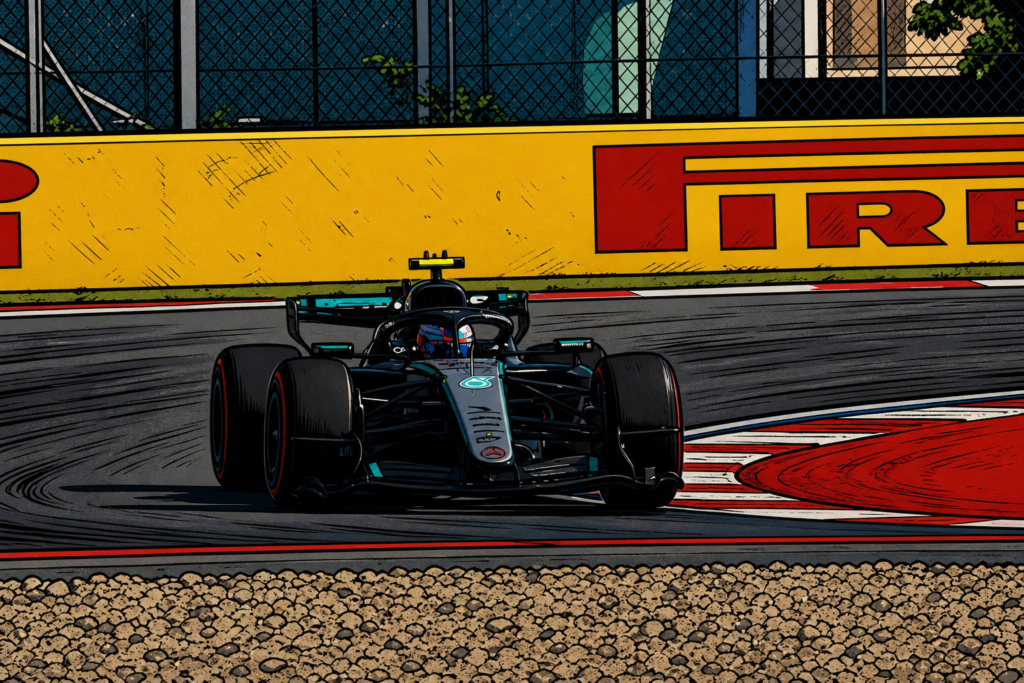
But the story did not end with the retirement. After the race, Antonelli was handed a five-second time penalty for repeatedly exceeding track limits at Turn 10. The twist was that McLaren played a role in the process by drawing attention to evidence of an earlier infringement that had not initially been counted.
Penalty: Five seconds added post-race.
Reason: Four track-limits infringements without justifiable reason.
Corner: Turn 10.
McLaren’s role: McLaren flagged evidence of an earlier missed infringement.
Sporting impact: Antonelli remained classified 16th, five laps down, so the penalty did not change the podium.
Why Antonelli Was Penalised After Retiring
Under Formula 1’s track-limits system, four infringements during a race normally trigger a five-second time penalty. Antonelli had already been noted for three Turn 10 offences, meaning he was on the edge of a penalty before the stewards identified an additional earlier breach.
The Race reported that three infringements were recorded at 3:31pm, 3:38pm and 3:42pm local time, while the earlier Turn 10 infringement was timed at 3:16pm. That earlier incident was later brought to the stewards’ attention through race control, with The Race understanding that McLaren had spotted and flagged it.
“The car left the track four times during the race without justifiable reason.” FIA stewards’ decision, quoted by The Race
McLaren’s Role: Sharp Monitoring, Not Dirty Tricks
McLaren’s involvement was not a protest in the dramatic sense. It was a classic example of modern Formula 1 race operations: teams monitor rivals constantly, searching for anything that could influence strategy, penalties or final classification.
RaceFans also reported that Lando Norris’s race engineer told him during the race that McLaren believed Antonelli had already exceeded track limits four times. That matters because, had the penalty been recognised earlier, Antonelli should have received it before his final pit stop.
The McLaren Angle
McLaren did not create Antonelli’s penalty. Antonelli created the risk by repeatedly leaving the track. McLaren’s role was spotting the missing evidence and making sure the stewards looked at it.
Why the Timing Created Confusion
The controversy comes from when the breaches were identified. Antonelli did not receive the black-and-white warning flag after his third actual infringement. Instead, the warning arrived only after his fourth, because the first offence had not yet been detected.
The stewards acknowledged that sequence but still decided it did not exempt Antonelli from respecting track limits. They also recommended that the FIA revisit the current procedures and guidelines because of possible ambiguity.
Antonelli’s case was not about whether track limits exist. It was about whether the enforcement process gave the driver clear enough warning at the right time. F1LiveUpdates analysis
The Penalty That Could Have Mattered Much More
In practical terms, Antonelli’s penalty did not reshape the final podium because his Mercedes had already retired. He remained classified 16th, five laps down, with five seconds added to his race time.
But the case is still important because it could have mattered enormously. RaceFans reported that Antonelli’s fourth breach happened 12 minutes before his second pit stop, and had he served the penalty at that stop, he would have lost position to Norris.
- Antonelli committed four track-limits infringements at Turn 10.
- The first offence was detected only later in the race.
- McLaren helped flag the missing evidence.
- The warning flag came after Antonelli’s fourth actual breach, not his third.
- The penalty had little final effect because Antonelli retired late.
- Had he finished near the podium, the controversy would have been much bigger.
Why This Matters After the Gasly Monaco Case
The timing of Antonelli’s penalty is especially sensitive because Formula 1 had just been dealing with the fallout from Pierre Gasly’s Monaco penalty reversal. That case already raised questions about post-race decisions, delayed evidence and how fairly results can be corrected after the flag.
Barcelona added a different version of the same problem. This time, the issue was not a timing-loop error but a missed track-limits infringement that was only identified later. Once again, F1 found itself dealing with a penalty that should arguably have been processed earlier.
The Bigger FIA Problem
Formula 1 can accept strict track-limits rules. What teams and drivers struggle with is delayed enforcement, especially when the timing of a penalty can change pit-stop strategy and race position.
Mercedes Escapes a Bigger Sporting Disaster
From Mercedes’ perspective, the penalty became a secondary frustration rather than a decisive sporting blow. Antonelli’s retirement had already caused the real damage, ending what had looked like a strong points finish and cutting his championship lead after Lewis Hamilton’s Ferrari victory.
Had Antonelli completed the race in second, the five-second penalty could have created a much bigger row. It might have changed the podium, affected Norris directly and turned McLaren’s evidence into one of the biggest post-race talking points of the season.
Mercedes lost Barcelona through reliability. The penalty was the footnote — but it was the kind of footnote that exposes a much bigger procedural weakness. F1LiveUpdates analysis
A Case That Should Push the FIA to Act
The stewards’ recommendation for the FIA to revisit its procedures is the most important takeaway. If a driver is only warned after already committing the penalty-triggering offence, the system risks creating confusion for teams, drivers and fans.
Track limits are always unpopular, but they are much easier to accept when the enforcement is immediate, transparent and consistent. Antonelli’s Barcelona case showed how quickly that confidence can erode when evidence emerges late.
Final Verdict
Antonelli’s post-race penalty did not change the headline result of the Barcelona Grand Prix. Hamilton still won for Ferrari, Russell and Norris still completed the podium, and Antonelli still left Spain with the pain of a late retirement.
But the penalty still matters. It showed how closely teams like McLaren monitor rivals, how delayed evidence can complicate enforcement and why the FIA needs clearer procedures for track-limits cases.
In Barcelona, McLaren did not decide Antonelli’s race. But it did help reveal the mistake that turned a quiet DNF into another uncomfortable FIA process story.
Sources
→ The Race — Antonelli’s post-race Barcelona penalty and McLaren’s role in it
→ RaceFans — Stewards reveal Antonelli should have received penalty before second pit stop
→ Motorsport.com — Kimi Antonelli receives post-race penalty despite retirement in Barcelona
→ GPblog — Why Antonelli received a five-second penalty after Barcelona GP DNF
→ Formula1.com — Antonelli out of the race just four laps from the end
Discover more from f1liveupdates.com
Subscribe to get the latest posts sent to your email.