
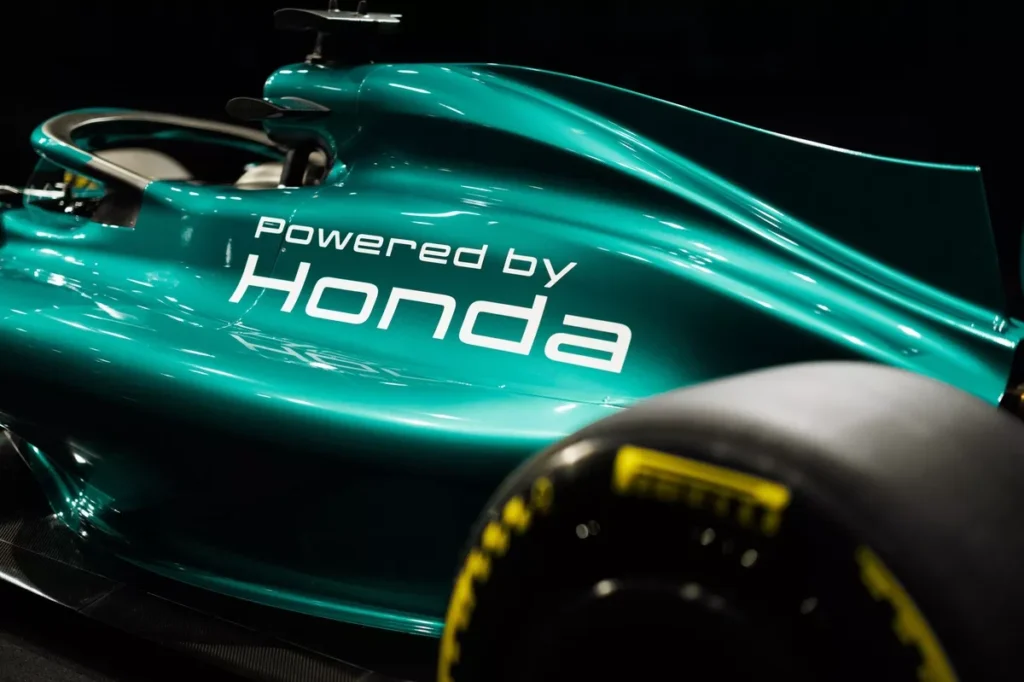
Honda Reveals Its “Important Target” for the Canadian Grand Prix
After a nightmare start to 2026, Honda is finally shifting its attention from survival to performance — with Montreal and the ADUO mechanism both in focus.
Honda’s 2026 Formula 1 campaign was supposed to mark the beginning of a new era. A works partnership with Aston Martin, Adrian Newey on board, and genuine title ambitions — the ingredients were all there. Instead, the season opened with vibration problems that damaged batteries, raised driver health concerns, and left Fernando Alonso and Lance Stroll watching from the back of the field. Montreal represents the latest opportunity to turn that story around.
From Reliability to Performance
The early rounds of 2026 were dominated by one question for Honda: would the power unit survive the race? Persistent vibration issues caused collateral damage to the battery systems and generated enough concern for the drivers’ physical wellbeing that the problem became a talking point beyond the paddock.
Progress began to emerge during Formula 1’s unexpected five-week break in April. One of the Aston Martin AMR26 cars remained in Japan after the Suzuka round, staying at Honda’s Sakura facility for detailed analysis by the engineering team. The work paid dividends in Miami, where Aston Martin recorded a double finish in both the sprint and the main race — their first of the season.
“At the Miami Grand Prix, we confirmed our battery vibration improvements and our overall power unit reliability. It was also a key opportunity to learn on the energy management side under the updated 2026 regulations, and this will continue in Canada.” — Shintaro Orihara, Honda Trackside General Manager & Chief Engineer
The Target for Montreal: Driveability
With reliability concerns now at least partially addressed, Honda’s focus for the Canadian Grand Prix is shifting to a more nuanced challenge: giving the drivers the confidence to push harder, earlier. The Circuit Gilles Villeneuve places heavy demands on braking stability, traction out of slow corners, and power delivery along the long straights that border the St. Lawrence River — characteristics that expose any weakness in how a power unit delivers its energy.
“In Montreal, which is Lance’s home race, we will focus on enhancing the driveability and our energy management strategy to support the drivers in building more confidence. In fact, this is an important target of our race weekend. If we can give more confidence to the drivers in entering the corners faster and carrying more speed, then we unlock lap time.” — Shintaro Orihara, Honda Racing Corporation
Orihara also highlighted a specific challenge posed by Montreal’s track surface and conditions. The circuit can be slippery, particularly in the opening stages of a session, making accurate torque and MGU-K delivery even more critical for a driver trying to build rhythm and confidence.
Honda’s Canadian GP priorities
- Improve driveability — smoother MGU-K and torque delivery
- Refine energy management strategy under 2026 regulations
- Build driver confidence on corner entry and exit
- Maximise the single practice hour in the sprint format weekend
The ADUO Mechanism: A Safety Net Comes Online
Beyond Honda’s internal targets, the Canadian Grand Prix carries an additional significance: it triggers the first formal assessment under the FIA’s new ADUO mechanism — Additional Development and Upgrade Opportunities — a scheme designed to prevent struggling engine manufacturers from falling irreversibly behind under the new 2026 regulations.
Under the system, any manufacturer whose internal combustion engine is more than 2% below the benchmark power output qualifies for additional development spending outside the normal financial regulations. A deficit of more than 4% unlocks further allowances. The FIA has also widened the maximum threshold for assistance from 8% to 10% — a move widely interpreted as a signal that some manufacturers are further behind than initially anticipated.
The first ADUO review was originally scheduled after race six of the season, but the cancellations of the Bahrain and Saudi Arabian Grands Prix disrupted the calendar and brought the assessment forward. The FIA confirmed that the first evaluation will now cover the season’s opening five races — Australia, China, Japan, Miami, and Canada — with results expected within two weeks of the Montreal race. Further review windows have been set for after the Hungarian Grand Prix and the Mexican Grand Prix in November.
“These ADUO periods may be adjusted by the FIA in the event of any significant change to the competition calendar.” — FIA statement
Where Aston Martin Stands
Aston Martin currently sit joint-last in the Constructors’ Championship alongside Cadillac. Despite the presence of Adrian Newey — who joined the team during the off-season from Red Bull — the AMR26 has not been able to translate its design pedigree into results, largely due to the power unit situation. Should Honda qualify for ADUO support, the additional development funding and upgrade opportunities could prove decisive for the second half of the season.
For now, the immediate task is straightforward. Montreal is a sprint weekend, meaning there is just one hour of free practice before the competitive sessions begin. Honda’s engineers will need to extract maximum information in minimum time — and for the first time in 2026, the conversation is about performance rather than survival.
Sources
- Motorsport.com — Honda reveals “important target” for F1 Canadian GP (May 19, 2026)
- Crash.net — Honda outlines Canadian GP targets after F1 engine reliability progress (May 19, 2026)
- GrandPrix247 — Honda to focus on driveability & energy management in Canadian GP (May 19, 2026)
- PlanetF1 — FIA confirms ADUO trigger after Canadian Grand Prix (May 2026)
- GPFans — Aston Martin set for “quantum leap” at Canadian GP after Honda breakthrough (May 18, 2026)
Discover more from f1liveupdates.com
Subscribe to get the latest posts sent to your email.