Ferrari’s Quiet Cooling Trick Is Powering Its 2026 F1 Fightback
Ferrari’s Barcelona victory was not only about strategy, tyres and Lewis Hamilton. Hidden inside its upgrade package was a subtle development direction that points to a new battleground in Formula 1: thermal management.
Ferrari’s first win of the 2026 Formula 1 season looked, on the surface, like a classic combination of race pace, tyre strategy and Lewis Hamilton execution. But beneath the headline result, the Scuderia may have revealed something more important: it is beginning to master one of F1’s newest hidden development wars.
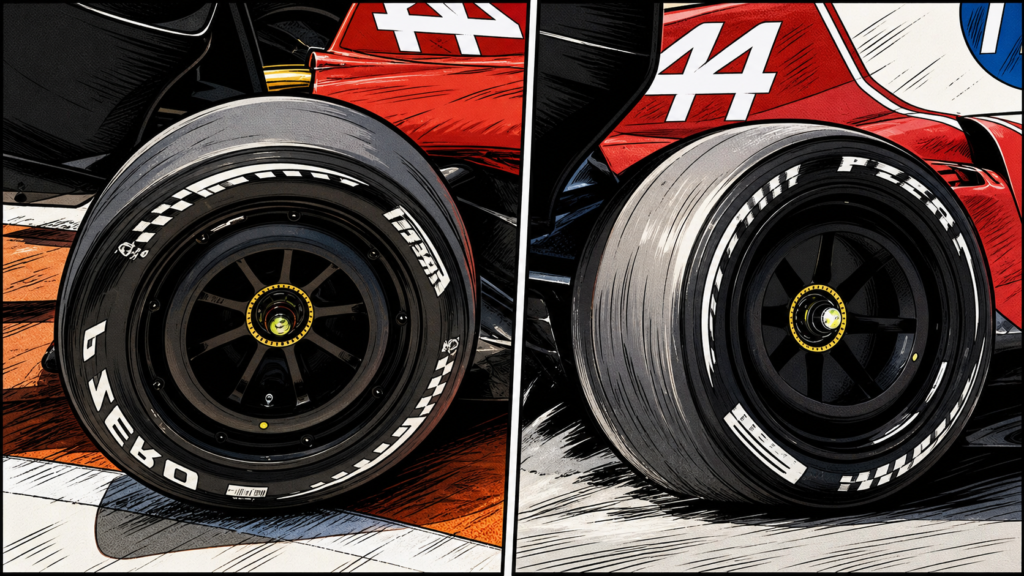
That battle is not only about wings, floors or visible aerodynamic upgrades. It is about cooling — specifically, how teams manage tyre temperatures, brake heat and airflow in a regulation era where keeping the car in the right thermal window can be worth as much as adding raw downforce.
Key development area: Ferrari’s hidden tyre and brake cooling work.
Race impact: Helped Ferrari manage Barcelona’s severe thermal degradation.
Visible upgrade package: Front wing, sidepod and underbody developments.
Hidden gain: Better control of tyre temperature and brake heat.
Result: Hamilton converted Ferrari’s strongest race execution of 2026 into victory.
The Upgrade Everyone Saw — And the One That Mattered More Quietly
Ferrari’s Barcelona package brought obvious aerodynamic changes. More load, better balance and improved stability all contributed to Hamilton’s race-winning performance. But The Race reported that another contributor emerged after the Grand Prix: a development linked to improved tyre cooling.
That matters because Barcelona was defined by thermal degradation. The tyres were overheating, sliding and losing performance faster than at any previous race this season. In those conditions, a car that can keep tyre temperatures under control has a race-winning advantage.
Ferrari did not simply add performance. It added the kind of performance that helped the tyres survive when Barcelona became a thermal stress test. F1LiveUpdates analysis
Why Cooling Has Become a Hidden Development War
Cooling is rarely as glamorous as a dramatic rear wing or a redesigned floor. But in modern Formula 1, thermal control is performance. A car that overheats its tyres loses grip, degrades faster and forces the driver to manage instead of attack.
The 2026 cars have made this even more important. Active aero, new power units and revised packaging demands have changed airflow priorities. Teams are now fighting not just to create downforce, but to direct air intelligently toward the areas that decide race pace.
The Hidden Battle
The fastest car is not always the one with the most peak downforce. In 2026, it may be the one that keeps its tyres, brakes and power unit in the correct temperature window for longer.
Barcelona Made Ferrari’s Idea Look Brilliant
Barcelona was the perfect test for this kind of upgrade. The circuit’s long corners, high-speed load and abrasive tyre demands made thermal degradation the decisive factor. Hamilton’s victory margin over George Russell looked huge, but much of that advantage came from Ferrari’s ability to keep the tyre picture under control once its strategy came alive.
The Race’s analysis noted that Ferrari’s performance swing was helped by added downforce reducing tyre sliding, but also linked the result to a cooling development that appeared at exactly the right race. That combination made the upgrade more powerful than a simple aerodynamic step.
- More downforce helped reduce sliding.
- Reduced sliding helped protect tyre temperatures.
- Improved cooling helped Ferrari control thermal degradation.
- Better tyre life made Hamilton’s strategy more powerful.
- Barcelona rewarded thermal efficiency more than raw peak speed alone.
Why This Was Not Just a Lucky Ferrari Weekend
It would be easy to reduce Hamilton’s win to the Virtual Safety Car or Mercedes’ reliability issues. Those factors mattered, but they do not explain why Ferrari had the pace to make the strategy work in the first place.
Ferrari positioned Hamilton close enough to exploit the VSC because the car was genuinely competitive over a stint. The hidden cooling advantage helped keep the tyres alive, and that gave Hamilton the platform to attack when Mercedes began to fade.
Luck can open a window. Ferrari’s job was making sure Hamilton was close enough, fast enough and cool enough to drive through it. F1LiveUpdates analysis
The Brake Cooling Link
Ferrari’s cooling development also connects with a broader technical theme around brakes. Charles Leclerc’s recent brake specification switch, following Lewis Hamilton’s Carbon Industrie direction, had already placed braking feel and thermal behaviour under the spotlight.
Brake cooling does not only protect the braking system. It can influence tyre temperature, rim heat and the way the car behaves under repeated heavy loads. In a season where small thermal differences can decide stint pace, that area becomes a natural development frontier.
Why Brake Heat Matters
Brake temperature can transfer into the wheel assembly and affect tyre behaviour. Managing that heat better can protect grip, reduce degradation and give drivers a more stable platform over a race distance.
A Smarter Kind of Ferrari Development
Ferrari’s recent upgrade path suggests a more integrated approach. Instead of chasing only headline lap-time gains, the team appears to be targeting how the whole car behaves across a stint: aero load, tyre temperature, brake cooling and balance stability.
That is exactly the kind of development that wins races under a cost cap. Big visible upgrades still matter, but the hidden work often decides whether those upgrades are usable over 60 laps.
Ferrari’s Barcelona package looked like an aero upgrade. Its real strength may have been that it made the entire car easier on its tyres. F1LiveUpdates analysis
Why Rivals Will Study Ferrari Closely
Mercedes, McLaren and Red Bull will not ignore this. If Ferrari’s cooling approach helped Hamilton win in Barcelona, rival teams will look for similar gains within their own packaging limits.
The next phase of the 2026 season may therefore become less about obvious bodywork changes and more about thermal refinement: brake ducts, wheel wake management, internal airflow routes, tyre temperature control and how cooling interacts with active aero states.
- Mercedes must protect race pace when degradation is high.
- McLaren needs a wider operating window across different circuit types.
- Red Bull is still searching for consistent balance and ride quality.
- Ferrari has shown how hidden thermal gains can become race-winning tools.
The Austria Test Comes Next
Austria will provide a very different challenge. The Red Bull Ring is shorter, more power-sensitive and sits at altitude, meaning engine response, turbo behaviour and cooling efficiency will all be under pressure.
That makes Ferrari’s hidden development direction even more interesting. If the Scuderia can combine tyre protection with effective power-unit and brake cooling at altitude, its Barcelona progress may prove transferable. If not, the upgrade may look more circuit-specific.
The Next Question
Barcelona proved Ferrari’s cooling direction could work in a high-degradation race. Austria will test whether that advantage survives a completely different technical environment.
Why This Could Shape the Title Fight
Hamilton’s win cut into Kimi Antonelli’s championship lead and changed the emotional momentum of the 2026 season. But Ferrari’s hidden cooling progress may matter even more than the points swing.
If Ferrari has found a repeatable development direction, it gives Hamilton and Leclerc a stronger foundation for the rest of the campaign. The title fight will not be decided by one spectacular upgrade. It will be decided by whether Ferrari can keep stacking these smaller, smarter gains.
Final Verdict
Ferrari’s Barcelona breakthrough was not only about Hamilton’s brilliance or a perfectly timed strategy. It was also about a quieter technical step that helped the car manage the tyres when everyone else was fighting heat.
That is why this hidden development war matters. Formula 1’s 2026 battle is not just being fought on the stopwatch. It is being fought inside brake ducts, around wheel rims, through cooling channels and in the tiny thermal margins that decide whether a tyre survives or collapses.
Ferrari has not solved the season yet. But in Barcelona, it showed that it understands one of the new rules era’s most important invisible battles — and that could be very bad news for its rivals.
Sources
→ The Race — How Ferrari is mastering F1’s new hidden development war
→ Reuters — Hamilton takes his first win for Ferrari at 41
→ The Race — Hamilton’s real Barcelona pace advantage explained
→ Motorsport.com — Why Ferrari will have to be clever with 2026 F1 upgrades
→ Reuters — Ferrari to run radical rear wing in China first practice
Discover more from f1liveupdates.com
Subscribe to get the latest posts sent to your email.