
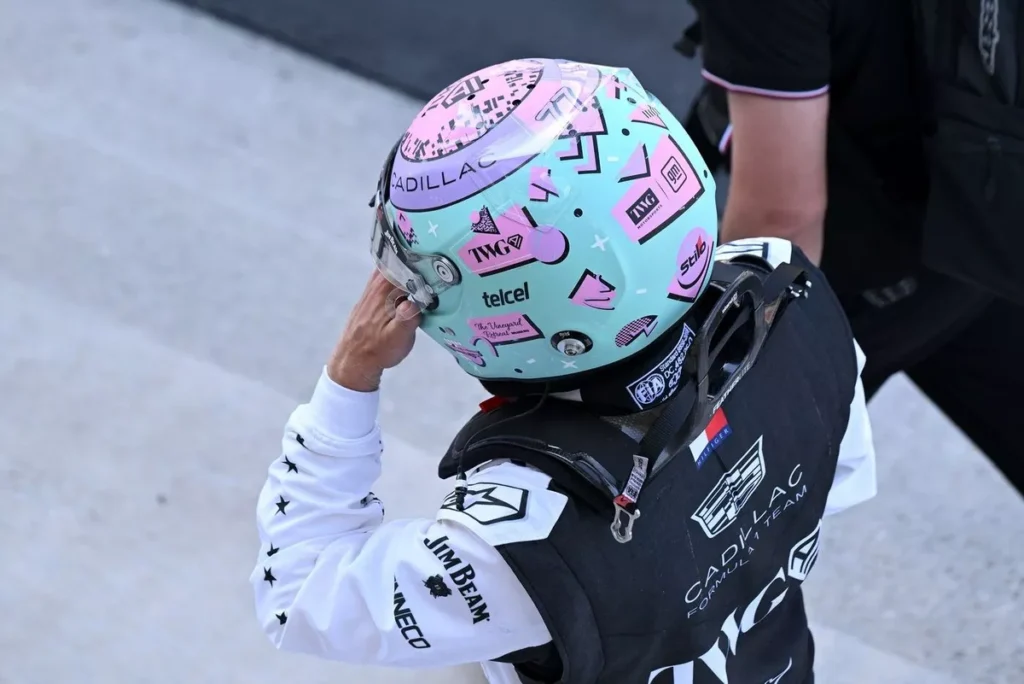
Valtteri Bottas’ Unusual Miami Penalty Explained — and Cadillac’s Encouraging Steps Forward
A button that wouldn’t press hard enough. A pitlane speed infringement by 9.5 km/h. And a team taking its first real upgrade step on home soil. Miami was a weekend of growing pains — and genuine progress — for America’s newest Formula 1 team.
Miami was supposed to be Cadillac’s celebration weekend. The team’s first home race, a special Stars and Stripes livery, a crowd rooting for the American newcomers at every turn, and a first meaningful upgrade package to show the world what the MAC-26 could become. The ingredients were all there. But Formula 1 rarely cooperates with a clean narrative — and for Valtteri Bottas, the weekend will be remembered primarily for a drive-through penalty caused by a button he could not press hard enough.
The incident is a small thing in isolation. In context, it is a precise symptom of what Cadillac is navigating in its debut season: a team built from scratch, racing with components that are still being refined, learning at speed while trying to compete. The button story is almost comically mundane. But it tells you everything about where the team currently stands.
What Happened: A Button, a Limiter, and 9.5 km/h
On lap 21 of the Miami Grand Prix, Bottas entered the pitlane for his scheduled tyre stop. As he crossed the designated speed limit line, he was travelling at 89.5 km/h — 9.5 km/h over the regulated maximum of 80 km/h. The FIA stewards acted swiftly, issuing a drive-through penalty that Bottas was forced to serve mid-race. He finished 18th and last of the classified runners, two laps down on the leaders.
The explanation Bottas gave post-race was not mechanical failure, human error or a miscalculation. It was something more mundane — and, in its own way, more revealing about the realities of being a new Formula 1 team in 2026.
“I pressed the pit limiter button, but apparently not hard enough. We’re still lacking a bit of feedback on some of the buttons. It’s been a known issue — we just haven’t got the new buttons yet. Hopefully in the next race. But yeah, it’s one of the things that happens when you start as a new team.”
— Valtteri Bottas, post-race Miami
What happened: Bottas exceeded the 80 km/h pitlane speed limit by 9.5 km/h on lap 21 of the Miami Grand Prix.
Why it happened: Cadillac does not manufacture its own steering wheel. The tactile feedback on the pit limiter button was insufficient for Bottas to confirm it had been activated. He pressed it — but not hard enough to trigger the limiter.
The fix: An updated steering wheel from Cadillac’s supplier is expected to arrive for the Canadian Grand Prix in Montreal. The inadequate button feedback has been a known issue within the team for some time.
The result: A drive-through penalty dropped Bottas to 18th and last, two laps down at the finish.
Cadillac does not produce its own steering wheel — it relies on an external supplier — and the team has been aware of the tactility problem for some time. The updated component had simply not arrived in time for Miami. It is, as Bottas put it with characteristic understatement, “one of the things that happens when you start as a new team.”
Miami Results in Numbers
The First Real Upgrade — and What It Showed
Beyond the penalty, Miami was significant for Cadillac for a more positive reason: the team arrived with its first substantial in-season upgrade package, centred on a redesigned front wing and a reprofiled floor. For a team that launched with what team principal Graeme Lowdon described as a “relatively basic” car, this was the first genuine indication of the MAC-26’s development trajectory.
The results were encouraging. Pérez was able to race Aston Martin on pace during the Grand Prix — a meaningful benchmark, given that Aston had itself brought a significant update package to Florida. The gap to the midfield, while still real, had clearly narrowed.
“We’ve made a really big step forward here in a number of areas. The upgrades have worked how we wanted them to work. We’ve got an almost constant stream of things in the pipeline — and it’s good when an upgrade works the way you think it will, because that gives us confidence that the next ones will equally deliver.”
— Graeme Lowdon, Cadillac Team Principal
Bottas echoed the positive assessment, despite his own difficult race. “The upgrades worked,” he said — adding a significant caveat that speaks to another growing pain the team is working through.
Production Quality: The Next Problem to Solve
Even with the upgrades functioning as intended overall, Bottas highlighted inconsistencies in the quality of individual components arriving at the track. For an established team, a production quality variation is a nuisance. For a team still building its manufacturing processes, it can meaningfully affect performance across a race weekend.
“I think we’re still struggling a bit with the quality of certain parts. Not every part is the same that we put on the car, so there’s a bit of a lack of consistency there. But overall, it’s getting better — and hopefully we are going to make another step in Montreal.”
— Valtteri Bottas
This is the compound challenge of being a new entrant: every problem that any other team has solved over years of operation is a problem Cadillac must solve for the first time, under competitive conditions, in public. The steering wheel button. The parts quality. The correlation between simulator data and on-track behaviour. None of these are unusual for a team in its debut season. All of them cost performance and, occasionally, race positions.
Lowdon’s Bigger Picture: Patience and Momentum
Lowdon was measured in his assessment after Miami, careful to frame the weekend as progress rather than disappointment. His language was deliberate — the language of a team principal who knows exactly where his team is on the developmental curve and is not pretending otherwise.
“They’ve got that maturity and experience to know that they can really benefit from encouraging everybody in the team to go at the right pace. If you push too hard, it’s negative. And both Valtteri and Checo push at exactly the right level.”
— Graeme Lowdon
- Bottas penalised for pitlane speeding caused by insufficient button tactility on steering wheel — fix expected for Montreal
- First substantial upgrade package (front wing + floor) confirmed as working as designed — confidence booster for future development
- Pérez split the Aston Martins on pace in the Grand Prix — clearest sign yet of competitiveness with the lower midfield
- Parts production quality inconsistency flagged by Bottas as the next priority to address
- Cadillac finished in the points for neither session but completed the race in both — a reliability marker the team values as a new entrant
- Both drivers described as pushing “at the right pace” by Lowdon — no internal pressure to overreach
There is a version of the Cadillac Miami story that focuses on the penalty, the production issues and the gap to the points. There is another that focuses on a first upgrade working as planned, a driver matching established midfield rivals on pace, and a team principal confident enough to talk about “a constant stream” of improvements still to come. Both versions are true. For a team four races into its Formula 1 existence, Miami felt, above all, like forward motion.
Sources
- Motorsport.com — Bottas’ unusual Miami penalty explained as Cadillac makes progress
- Crash.net — How Cadillac’s “known issue” led to Bottas’ pit lane penalty
- theScore — Valtteri Bottas: Drive-Through Penalty at Miami GP
- PlanetF1 — Why Bottas will serve grid penalty upon Cadillac debut
- Motorsport Week — Cadillac questions regulation “quirk” over Bottas penalty
Discover more from f1liveupdates.com
Subscribe to get the latest posts sent to your email.