Red Bull Apologises to Verstappen for Not Fixing the Steering Issue Earlier
Technical director Pierre Wache has publicly said sorry to Max Verstappen after a steering problem present since the very first lap of pre-season testing went unresolved for four race weekends — costing the four-time world champion dearly at the start of 2026.
It is one thing to have a problem. It is another to know about it from the very first lap of the season and be unable to fix it for four race weekends. That is the situation Max Verstappen found himself in during the opening chapter of the 2026 Formula 1 season — and in Miami, Red Bull’s technical director Pierre Wache finally acknowledged it with something rarely heard in Formula 1: a direct apology.
The story behind Red Bull’s dramatic turnaround in Miami is not just about upgrades to the floor, sidepods or power unit. It is also about a steering rack that never felt right, a root cause that proved maddeningly difficult to isolate, and a four-time world champion who spent the entire opening stretch of the season unable to steer his car normally.
“I’m sorry that we didn’t fix it before. We tried multiple stuff and it didn’t work. Some parts also took a long time to arrive, but I think the engineering team did a very good job to achieve it.”
— Pierre Wache, Red Bull Technical Director
A Problem Felt From the Very First Lap
Verstappen was unambiguous about the timeline when speaking to Dutch media after qualifying in Miami. He had flagged a steering problem from the very first lap of the Barcelona shakedown in pre-season testing — before the 2026 season had even officially begun. Despite raising the issue immediately, Red Bull struggled for months to identify and fix what was causing it.
“I already said from the very first lap in the Barcelona test that something was wrong with the steering, but apparently it was very difficult to find. Now it’s finally been fixed.”
— Max Verstappen
The four-time world champion had described the RB22 as “undriveable” in Japan, where he failed to reach Q3 for the first time since 2015. His teammate Isack Hadjar branded the chassis “terrible.” The car lurched from understeer to oversteer, and Verstappen was visibly struggling to keep it pointed in the right direction — particularly through high-speed corners where the steering feedback should be most natural.
What Verstappen and the outside world did not yet know was that hidden beneath the general handling complaints was a specific, identifiable mechanical fault in the steering system. Finding it proved far more complex than anticipated.
Three Stages, Six Months: Why It Took So Long
Wache outlined a three-phase process that explains why resolution was so slow: first, confirming the problem was real; then identifying its root cause; and finally designing and manufacturing the fix. Each phase took longer than expected.
-
1
November 2025 — First attempts
Red Bull began working on the steering system during the winter. Initial solutions were attempted but did not resolve the issue. The team tried to introduce the fix in Bahrain testing, but encountered problems making it work in compliance with FIA regulations.
-
2
Australia & China — Further attempts, no progress
Further fixes were attempted ahead of Melbourne but again failed. Verstappen raced through the first three rounds with a steering system that did not feel right. His results — just 12 points from three races — reflected the difficulty of driving a car he could not fully trust.
-
3
Japan — Closest attempt, still struggling
Another attempt was made in Suzuka, but Red Bull was still unable to implement the solution correctly. Verstappen failed to reach Q3 and openly considered whether the regulations were worth racing under at all.
-
4
April break — Root cause confirmed
During the five-week break, Red Bull finally pinpointed the underlying problem. Wache confirmed the root cause had been identified “a little bit before” the April gap, allowing the team to design a proper solution rather than continued trial and error.
-
5
Silverstone filming day — Fix validated
Red Bull replaced the complete steering rack and multiple supporting components. A filming day at Silverstone confirmed the fix worked: Verstappen’s feedback was immediately and significantly better.
Why the Fix Was So Difficult to Implement
According to Wache, the complexity of getting the new steering system to work stemmed primarily from FIA regulatory compliance. The updated mechanism has specific constraints on how quickly it can open and close, and the distances involved are different from what Red Bull had previously used. What should have been a relatively straightforward hardware change became an engineering project in its own right.
“The time that you have to open and close it is limited. And it’s a longer distance that is not exactly what we used to. We also didn’t anticipate some issues because it’s a new system. Maybe it was our fault — things that we had to fix. And after fixing, it takes time on top of the normal development of the car.”
— Pierre Wache
The unexpected nature of the problem also complicated diagnosis. Because the system was entirely new for 2026, Red Bull had no historical baseline to compare against. Issues that would have been immediately obvious on a known component took far longer to isolate on something the team had never used in racing conditions before.
Miami: The Proof That It Works
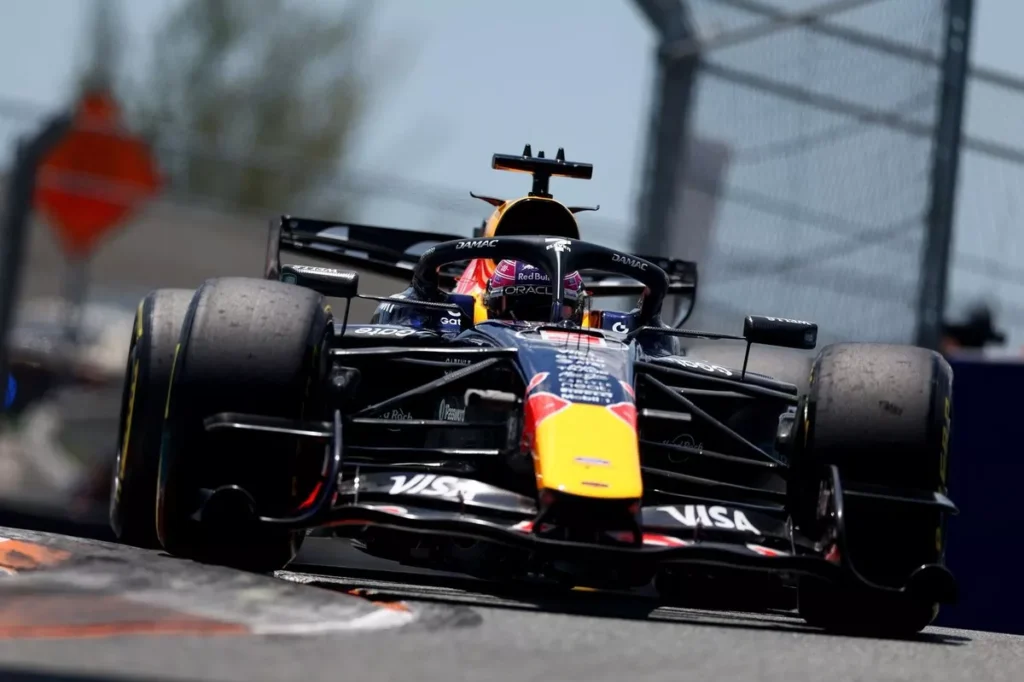
The difference in Verstappen’s performance in Miami compared to the first three rounds was stark. After qualifying second alongside polesitter Kimi Antonelli — a result he himself described as unexpected, having entered the weekend targeting a top-seven slot — Verstappen was finally driving a car he could push. His own explanation after qualifying left no ambiguity:
“Most of it is in the steering system, where something was clearly wrong before. They have finally been able to fix that, so now I can at least steer normally again.”
— Max Verstappen, post-qualifying Miami
The race result — fifth after an opening-lap spin and a subsequent five-second penalty for crossing the pit exit line — understates Red Bull’s true pace over the Miami weekend. Wache himself acknowledged that the classified position did not reflect the car’s performance. The four-time champion fought hard with Lewis Hamilton throughout the Sprint and the Grand Prix, and for the first time in 2026 looked genuinely comfortable at the limit.
Crucially, Wache noted that some of the performance gain in Miami came not just from the upgraded components themselves, but from Verstappen’s restored confidence. “After we fixed some other issues, that also brought some Max performance that maybe we didn’t expect,” he said.
- Complete steering rack replacement — the core fix for Verstappen’s long-standing handling complaint
- Multiple “supporting components” around the steering system also replaced
- Floor, sidepod and aerodynamic upgrade package — the team’s second significant development step of 2026
- Weight reduction work: Red Bull reportedly “halved” the RB22’s overweight issue compared to the start of the season
- Silverstone filming day used to validate all changes before Miami competition
What Comes Next for Red Bull
The Miami upgrade is Red Bull’s second development step of the season, following an earlier package in Japan that Verstappen said delivered no meaningful improvement. The next major question is when Red Bull can bring a third upgrade — and whether the budget cap allows for rapid iteration. Mercedes has confirmed a significant package for Montreal; Red Bull, according to Wache, will have to wait a little longer.
The deeper structural issues that have defined Red Bull’s 2026 — a chassis concept that prioritised low drag over downforce, a design that reportedly correlated poorly with the team’s wind tunnel data, and a power unit that is maturing later than rivals — remain work in progress. But Miami offered something Red Bull had not produced all season: a reason for genuine optimism.
Pierre Wache’s apology to Verstappen is more than a courtesy. It is an acknowledgement that Red Bull’s four-time world champion spent the opening chapter of 2026 at a disadvantage that his team created, maintained too long, and has now — at last — corrected. The question for the remainder of the season is whether fixing the steering was the beginning of a recovery, or simply a prerequisite for one.
Sources
- Motorsport.com — Red Bull apologises to Verstappen for not fixing steering issue earlier
- Autosport — The story behind Red Bull and Verstappen’s turnaround in Miami
- Autosport — Verstappen reveals hidden factor behind Red Bull’s turnaround
- Total Motorsport — Verstappen reveals hidden Red Bull steering issue
- F1 Oversteer — Red Bull finally fixed the problem Verstappen noticed in testing
- GPFans — FIA criticised after Verstappen penalty sparks backlash in Miami
Discover more from f1liveupdates.com
Subscribe to get the latest posts sent to your email.