Stroll and Alonso’s Private War at the Bottom of the Grid
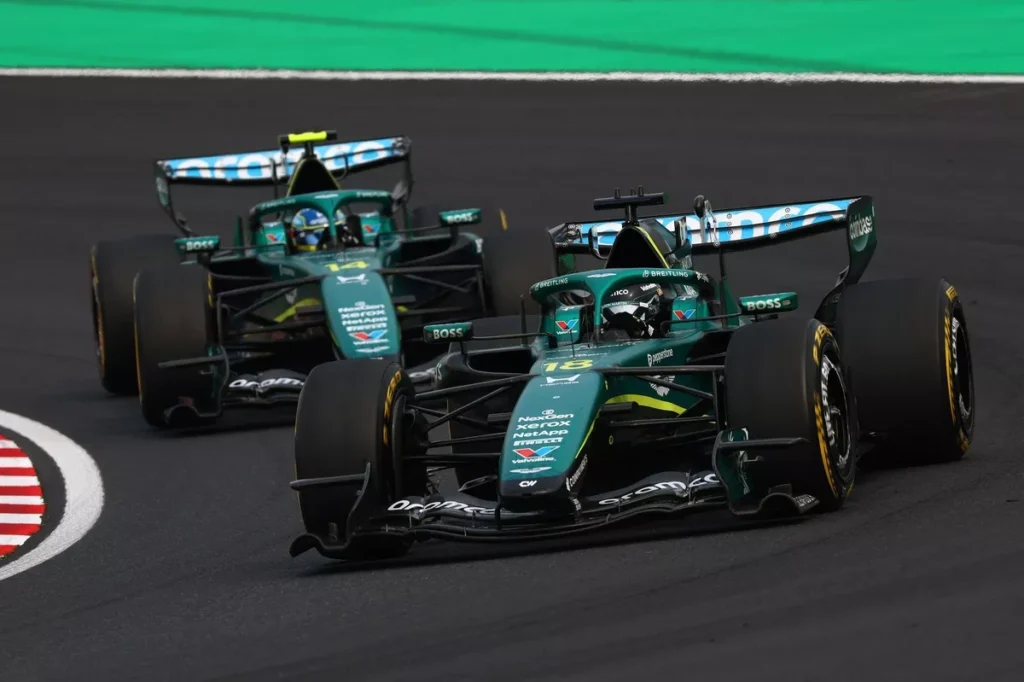
At Suzuka, with the rest of the field long gone, Aston Martin’s two drivers found themselves racing each other for last place. It was, as Stroll put it himself, their very own championship.
There is gallows humour, and then there is Lance Stroll cheerfully announcing mid-race that he and Fernando Alonso were competing in their very own “Aston Martin championship.” He meant it as a joke. But behind the smile lies one of the most alarming team situations Formula 1 has seen in years — a car so far off the pace that its two drivers spend entire races lapping alone, invisible to the rest of the field, fighting only each other for the dignity of finishing ahead of the Cadillacs.
A Miserable Race Weekend from Start to Finish
Suzuka was never going to be kind to Aston Martin. The high-speed, technically demanding circuit brutally exposes aerodynamic and power unit deficiencies, and the AMR26 has plenty of both. In qualifying, Alonso posted a time good enough only for 21st, while Stroll was slowest of all in 22nd — the pair’s times separated by less than three tenths, though both were many seconds off the pace-setters. Team principal Mike Krack acknowledged the circuit exposed their current limitations, while stressing the importance of simply building race mileage and gathering data.
The race itself offered little respite. Alonso reached the finish line in 18th place — a lap down on the winner — finishing ahead of only the two Cadillac drivers, Valtteri Bottas and Sergio Perez. Stroll was not so fortunate: he was forced to retire his AMR26 after 30 laps with a suspected water pressure issue. Before his retirement, however, Stroll gave one of the candid quotes of the weekend.
“I was having a fun race with Fernando in our own little championship — our own Aston Martin championship. I was enjoying the race, even though we were slow and we were fighting for the last positions. Suzuka is always a nice track to drive. Shame we couldn’t make it to the end.”
— Lance Stroll, Aston Martin
For Alonso, Suzuka at least offered one small positive: it was the first time in the 2026 season that Aston Martin managed to get a car to the finish of a grand prix. Yet the two-time world champion was quick to temper any sense of celebration, pointing to a pace deficit that is impossible to overlook.
A Season-Long Crisis Rooted in Honda’s Power Unit
The roots of Aston Martin’s struggles trace back well before the first race of the season. Pre-season testing in Bahrain was severely disrupted by violent vibrations from Honda’s new power unit, which damaged batteries and limited the team’s running to a fraction of what rivals managed. The issue was so severe that team principal Adrian Newey warned before the Australian Grand Prix that Alonso could not complete more than 25 consecutive laps without risking permanent nerve damage to his hands, while Stroll’s threshold was as low as 15 laps.
- Australia: Both drivers retire — vibrations prevent race distance
- China: Alonso retires after losing feeling in his hands and feet; Stroll completes only 9 laps
- Japan: Alonso finishes 18th, one lap down; Stroll retires on lap 30 (water pressure)
- Constructors’ standings: Last place, zero points after three rounds
The vibration problem stems from a fundamental mismatch between Honda’s new power unit and the AMR26 chassis. Honda’s president revealed that while vibration levels on the dyno were acceptable, they became far more severe once the unit was integrated into the actual car — an admission that points to a complex interaction between power unit and chassis that neither party has yet resolved. As a consequence, Honda cannot deploy electrical energy effectively throughout the lap, meaning Aston Martin runs out of deployment on long straights at a far more dramatic rate than rivals, and has been forced to run the engine in a more conservative mode to limit the vibrations.
At Suzuka, the vibrations remained unpredictable. Alonso reported almost no vibrations on the Friday, only for them to return in full on Saturday — illustrating just how elusive the root cause remains.
“Unless they can find some magic in the next ten days — pray. Pray for me.”
— Lance Stroll, ahead of the Japanese GP
Adrian Newey’s First Season — Not What Anyone Imagined
The circumstances are particularly striking given the fanfare that surrounded Aston Martin’s entry into 2026. The arrival of legendary designer Adrian Newey from Red Bull was meant to signal a new era of competitiveness for a team that had invested massively in its Silverstone infrastructure. Instead, Newey finds himself managing a crisis rather than chasing championships. He remains publicly supportive of Honda’s ability to fix the situation, while noting the team was caught out by the extent of how inexperienced and under-resourced the Honda programme was when they first partnered.
Honda’s current difficulties are at least partly explained by the fact that many of the engineers who developed the company’s highly successful power unit for Red Bull left after Honda initially announced its withdrawal from F1 at the end of 2021. When the decision was reversed in late 2022, the reconstituted team was, in several areas, starting relatively fresh. The consequences of that gap in expertise are now plain to see.
A Long Road Back
With the F1 calendar now entering a five-week break before Miami, Aston Martin and Honda will have time to work on their issues — but also time to reflect on how deep the hole they are in really is. Alonso has admitted that Honda’s vibration issues remain unpredictable and far from solved, while Honda has confirmed it is working in parallel on both the power unit and its integration with the chassis.
For now, Lance Stroll’s joke about the “Aston Martin championship” is perhaps the most accurate description of where the team stands: isolated at the back, racing in a category of their own, and hoping that the gap to the rest of the field can be closed before the season slips entirely beyond rescue.
Discover more from f1liveupdates.com
Subscribe to get the latest posts sent to your email.