Antonelli Wins a Lucky Japanese GP — Russell Pushed Off the Podium
A well-timed Safety Car gifted Kimi Antonelli his second consecutive victory at Suzuka, sending the teenager to the top of the 2026 championship standings while George Russell was left fuming in fourth place.
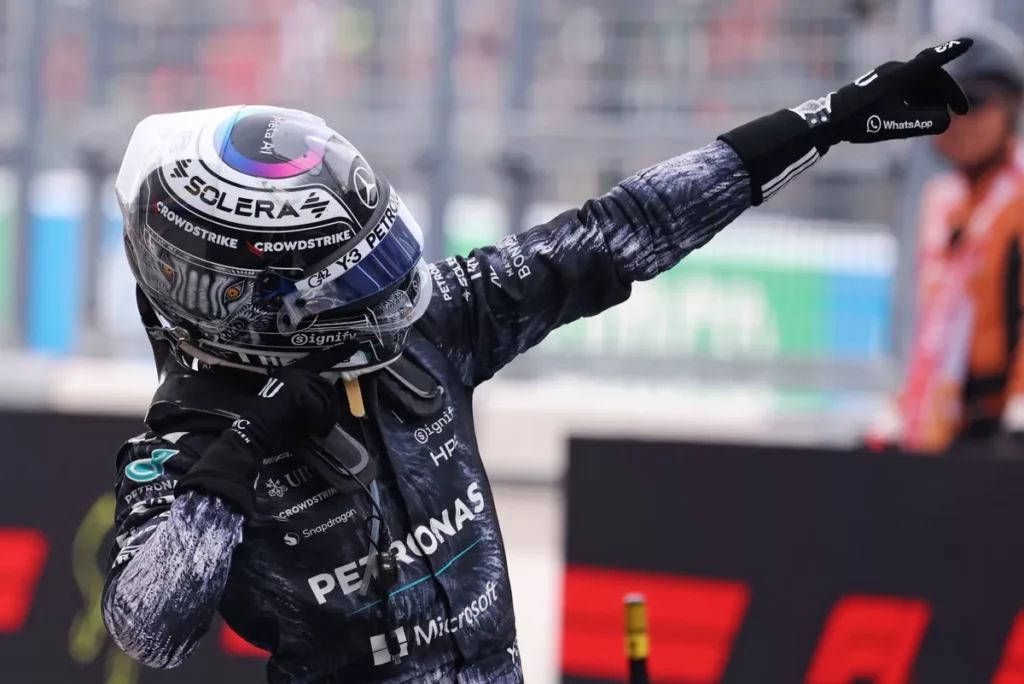
Kimi Antonelli made history at the 2026 Japanese Grand Prix, becoming the youngest driver ever to lead the Formula 1 World Championship after claiming his second successive victory at Suzuka — yet by his own admission, fortune played a decisive role. Starting from pole position, the 19-year-old Mercedes driver dropped to sixth on the opening lap following another sluggish getaway, only to be rescued mid-race by a Safety Car triggered by Oliver Bearman’s violent crash at Spoon Curve. When the dust settled, Oscar Piastri finished second for McLaren and Charles Leclerc took third for Ferrari, leaving a visibly frustrated George Russell in fourth.
A Race Turned Upside Down on Lap 22
From the moment the lights went out, it was Oscar Piastri who set the tone. The McLaren driver surged into the lead into Turn 1, while both Mercedes cars fell backwards — Antonelli slipping to sixth, Russell to fourth. Leclerc slotted into second, Norris to third, with Hamilton just ahead of Antonelli as the field settled.
Russell mounted an early recovery, picking off Norris and then Leclerc on laps three and four to move into second place. On lap eight, he swept past Piastri at the final chicane — only for the McLaren to immediately reclaim the lead on the pit straight. The two traded positions in a compelling early duel as the pit-stop window began to open.
Piastri, Russell, and Leclerc all pitted in the laps surrounding lap 20, switching from medium to hard tyres. Antonelli, running fourth on the road, held out. It looked like a calculated risk — until the race changed shape entirely.
- Lap 22: Bearman crashes at Spoon Curve at 308 kph — Safety Car deployed
- Antonelli pits under neutralisation, inheriting the lead for free
- Russell, who had pitted just laps earlier, loses all the time advantage he had built
- Antonelli leads from restart and is never challenged again
Bearman’s 50G Crash Shadows the Race
On lap 22, Haas driver Oliver Bearman was fighting through the midfield when he closed on Alpine’s Franco Colapinto at the approach to the Spoon Curves. The speed differential — reportedly around 50 kph — proved catastrophic. Caught out while Colapinto was harvesting energy and effectively decelerating sharply, Bearman had no room to react. He ran onto the grass, spun across the track, and slammed into the barriers at an impact measured at 50G.
“It was a massive overspeed — 50 kph — which is a part of these new regulations that I guess we have to get used to. We warned the FIA what can happen, and this has been a really unfortunate result.”
— Oliver Bearman, Haas F1 Team
Bearman was seen limping from the wreckage and was assisted by marshals before being transported to the circuit’s medical centre. X-rays confirmed no fractures, but the Briton suffered a right knee contusion. He was travelling at 308 kph at the point of impact. Haas team principal Ayao Komatsu absolved Colapinto of blame, pointing entirely to the speed differential created by the new 2026 power unit regulations. The FIA has since confirmed that meetings will take place in April to assess the energy management rules, with GPDA director Carlos Sainz calling for urgent action before faster circuits such as Baku or Singapore are reached.
Antonelli: Lucky — But Also Brilliant
Antonelli himself was candid about his fortune. Pitting under the Safety Car allowed him to gain a significant tyre advantage over his rivals, who had already completed their stops on full-speed laps. He emerged from the pit lane in the lead, and from that moment was peerless. He pulled out a 13.7-second margin over Piastri by the chequered flag, producing what he called an “incredible” second stint on the hard compound.
“I had a terrible start. I need to check what happened. Then I was lucky with the Safety Car to be in the lead — but then the pace was just incredible.”
— Kimi Antonelli, Mercedes
With the victory, Antonelli moves nine points clear of Russell in the Drivers’ Championship, becoming at 19 years and 216 days the youngest driver in F1 history to lead the standings — eclipsing a record previously held by Lewis Hamilton, who first topped the standings at 22 in 2007.
Russell’s Anguish — and Piastri’s Breakthrough
Few drivers left Suzuka with more to reflect on than George Russell. Twice in three races he has been undone by factors beyond his immediate control — a mechanical failure in qualifying in China, and now an ill-timed pit stop in Japan. Hearing the Safety Car called out over his radio just after pitting, Russell simply shouted “Unbelievable” — then, as Leclerc and Hamilton passed him after the restart, added: “Wow. Our luck in these last two races.” He ultimately finished fourth, behind Leclerc who held him off in a tense battle for the final podium spot.
For Piastri, Sunday represented a form of redemption. Having failed to start either of the first two races of the season — owing to a crash in Australia and a technical failure in China — the Australian delivered a masterclass at Suzuka. He led the opening phase of the race with authority and had legitimate hopes of victory before the Safety Car intervened. Second place was a strong result, and a signal that McLaren’s pace is growing.
What Comes Next
Formula 1 now enters a five-week break before resuming at the Miami Grand Prix on May 1–3, following the cancellation of the Bahrain and Saudi Arabian Grands Prix due to the ongoing conflict in the Middle East. Antonelli will carry that nine-point lead into Miami knowing that both his starts this season have been poor — a vulnerability that rivals will be eager to exploit as the championship intensifies.
Discover more from f1liveupdates.com
Subscribe to get the latest posts sent to your email.