Ocon Sees ‘Chaos’ in F1 2026 Overtaking: More Numerous But Less Equitable
The French driver warns that the new power unit regulations create unpredictable racing where drivers cannot plan overtakes, with some manufacturers enjoying significant deployment advantages over others.
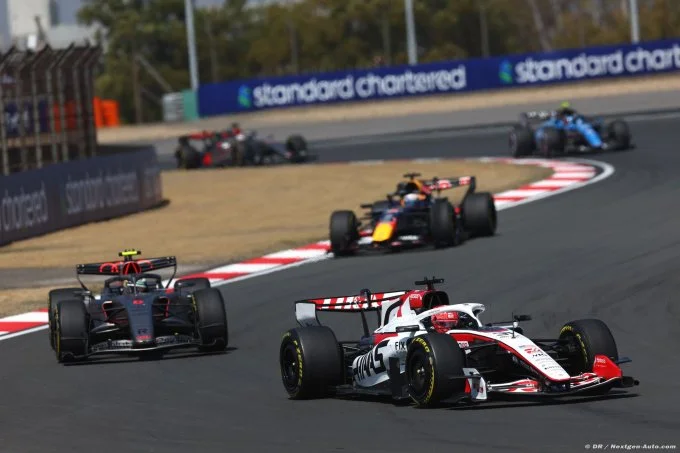
The 2026 Formula 1 season was supposed to herald a new era of closer, more exciting racing. Instead, Haas driver Esteban Ocon describes the on-track product as “chaos”—a disorganized scramble where quantity of overtakes has replaced quality of competition.
After two rounds of the championship, the Frenchman has emerged as one of the most vocal critics of the new regulations, specifically targeting the fundamental unfairness created by disparities between power units and chassis performance across the grid.
“It’s Not Go-Karts”
Speaking to media following the opening races, Ocon did not mince words about his dissatisfaction with how the new rules have transformed racing strategy. The 2026 regulations introduced a near 50-50 split between electric and combustion power, fundamentally altering how drivers manage energy deployment throughout a lap.
“It’s not go-karts. We want a lot more overtakes, but it’s just chaos. You can’t really plan for any overtaking. If you do, you are going to get re-overtaken. You can’t really seal the position. It’s difficult to call it a fair battle, especially between manufacturers.” — Esteban Ocon, Haas F1 Team
The phenomenon Ocon describes has become a recurring theme in the opening races: a driver makes a move into a corner, only to be helplessly repassed moments later because their battery is depleted while their rival’s remains charged. The result is a yo-yo effect that prioritizes energy management over racing instinct.
The Manufacturer Divide
At the heart of Ocon’s criticism lies a fundamental inequality between teams. The new power units, while technologically advanced, have not achieved parity across the four manufacturers supplying the grid.
The Power Gap Reality
Some teams enjoy significantly more electrical deployment than others, creating performance deltas that override driver skill. When combined with varying aerodynamic efficiency, the result is a grid where overtaking becomes a lottery rather than a battle of wits and courage.
“Some have more deployment than others. Some are quicker in corners than others,” Ocon explained. “It creates big, big differences. It is not straightforward to overtake. It’s more back and forth.”
This disparity represents a departure from the previous era, where differences between power units existed but were mitigated by consistent deployment strategies. Now, the variable nature of energy harvesting and deployment means that a car’s performance can fluctuate dramatically from one sector to the next.
The Overtaking Paradox
Ironically, the 2026 regulations were designed to improve racing. Active aerodynamics replacing DRS, reduced downforce, and lighter cars were all intended to create more passing opportunities. In raw numbers, they have succeeded—there have been more overtakes per race than in recent seasons.
Yet as Ocon notes, volume does not equate to quality. The new “Overtake Mode,” which replaced the Drag Reduction System, offers a power boost when within one second of a rival. However, early indications suggest it provides less lap-time gain than DRS did, making it harder to complete moves decisively.
“So far, it looks to be difficult to pass,” Ocon remarked after pre-season testing in Barcelona. “That’s my first thought about it, but I hope it’s going to get on the easier side.”
Driver vs. Machine
Perhaps most concerning for purists is Ocon’s assessment that driver skill has been devalued in the new formula. The constant need to manage battery states—harvesting on straights by lifting and coasting, then deploying in bursts—means drivers spend less time pushing flat-out and more time calculating energy budgets.
“Can the driver make enough of a difference as a driving style to be able to make like chess moves? No. And this is probably the negative at the moment.” — Esteban Ocon on driver influence in 2026
This represents a philosophical shift in the sport. Where once the fastest driver in the fastest car usually won, now the smartest energy manager can triumph—even if they are not extracting the maximum from their machinery on every lap.
Looking Forward
Despite his criticisms, Ocon has acknowledged some positives. The cars themselves, he notes, handle more predictably in corners—reminiscent of the well-balanced machinery from 2016. The reduced weight and simplified aerodynamics allow drivers to attack corners with greater confidence.
However, the power unit regulations remain the elephant in the room. The FIA has already indicated willingness to work with teams on amendments to address the most egregious issues, but any changes will take time to implement.
For now, drivers like Ocon must adapt to a new reality where overtaking is plentiful but precarious, where positions change hands multiple times per lap not because of brilliant driving, but because of energy disparities. Whether this constitutes progress remains a matter of intense debate in the paddock.
As the season progresses, the hope is that teams will converge on solutions that bring parity to the power units—or that the FIA will intervene to level the playing field. Until then, Ocon’s “chaos” looks set to define the 2026 championship.
Sources
Discover more from f1liveupdates.com
Subscribe to get the latest posts sent to your email.