
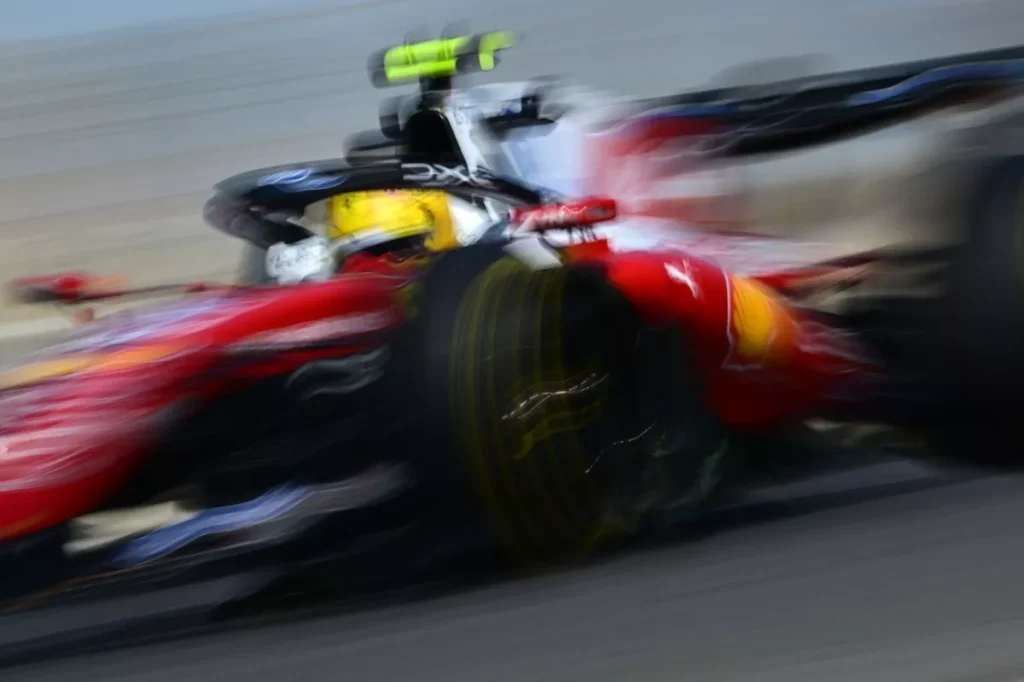
Ferrari’s Secret Weapon: How a Smaller Turbo Could Decide the 2026 F1 Championship
Maranello’s bold engine choice is already paying dividends as rivals scramble to catch up
As Formula 1 prepares for its most radical technical overhaul in a decade, Ferrari has quietly engineered what could be the decisive advantage of the 2026 season. While competitors struggle with complex launch procedures and turbo lag nightmares, the Scuderia’s decision to run a smaller turbocharger is looking increasingly like a masterstroke.
The 2026 Engine Challenge
The removal of the MGU-H (Motor Generator Unit-Heat) for 2026 has transformed race starts from a routine procedure into a high-stakes technical ballet. Without the MGU-H to assist turbo spooling, drivers must now rev their engines for up to 10 seconds—sometimes hitting peaks above 13,000rpm—to generate sufficient boost pressure for a clean getaway .
George Russell, Mercedes’ driver and Grand Prix Drivers’ Association director, highlighted the severity of the issue during Bahrain testing: « The difference between a good and bad start last year was you got a bit of wheelspin or you had a bad reaction time, whereas this year it could be effectively like an F2 race where you almost go into anti-stall… You’re not just losing five metres or so, you could be losing six or seven spots if it goes wrong » .
Ferrari’s Technical Advantage
Ferrari’s 067/6 power unit, developed under Technical Director Enrico Gualtieri, features a deliberately smaller Honeywell turbine compared to Mercedes and other rivals . This design philosophy achieves two critical objectives:
Reduced Turbo Lag: A smaller turbo requires less time to reach optimal operating speed, minimizing the dreaded lag that plagues competitors during race starts .
Strategic Energy Deployment: By reducing reliance on the MGU-K during acceleration, Ferrari can preserve electrical energy for deployment on straights—a crucial advantage in an era where power output is split 50/50 between combustion and electric systems .
The numbers tell the story. While rivals struggle with 10-second preparation sequences, Ferrari’s solution allows the team to run higher gears through corners—a telltale sign of superior turbo response . During Bahrain testing, Lewis Hamilton was observed completing practice starts with notably different rev patterns than competitors, suggesting the SF-26’s power unit operates in a more forgiving window .
The Controversy: Ferrari Blocks Rule Changes
Ferrari’s advantage hasn’t gone unnoticed—or unchallenged. As safety concerns mounted during pre-season testing, with drivers warning of potential « recipe for disaster » scenarios at race starts, the F1 Commission prepared to discuss procedural changes .
However, The Race revealed that Ferrari team principal Fred Vasseur blocked a proposal last summer to revise the start light sequence, arguing that teams who made poor design choices shouldn’t be bailed out by regulation changes . This stance has drawn criticism from rivals, particularly McLaren’s Andrea Stella, who raised safety concerns about cars potentially stalling dangerously within the pack .
The Scuderia’s position is clear: they identified the challenge early, engineered a solution, and see no reason to surrender their competitive edge. With customer teams Haas and Cadillac also benefiting from Ferrari power units, the Maranello advantage extends beyond the factory squad .
Reliability Meets Performance
Beyond the start-line advantage, Ferrari’s power unit has demonstrated remarkable durability. The 067/6 covered over 4,300 kilometers across Barcelona and Bahrain testing—equivalent to 14 Grands Prix—without significant reliability issues . This reliability, combined with the turbo strategy, suggests Ferrari has finally cracked the code that has eluded them since the hybrid era began in 2014.
For Charles Leclerc and Lewis Hamilton, this technical foundation could prove decisive. Both drivers are renowned for aggressive first-lap performances, and a predictable, powerful launch system allows them to maximize grid position—a critical factor when overtaking remains challenging in modern F1 .
Looking Ahead
The F1 Commission is expected to revisit the start procedure debate, but Ferrari’s early commitment to their turbo concept means any rule changes would likely require unanimous agreement—giving Maranello veto power over proposals that might dilute their advantage .
As Oscar Piastri grimly noted, fans should « be sitting with your TV on in Australia, because it could be one that everybody remembers » . Whether that memory is of Ferrari’s rivals struggling off the line or of a regulatory compromise remains to be seen.
What is certain is that Ferrari has transformed a regulatory challenge into a competitive weapon. In a sport where margins are measured in thousandths of seconds, the Scuderia’s smaller turbo might just be the biggest story of 2026.
Sources:
- Motorsport.com: « Ferrari brings new power unit and aerodynamic updates to F1 2026 Bahrain test » (Feb 17, 2026)
- Motorsport.com: « Why race starts get so complicated in F1 2026 » (Feb 16, 2026)
- PlanetF1.com: « Lewis Hamilton’s 22s Ferrari rev sparks fresh start row » (Feb 17, 2026)
- The Race: « Ferrari blocked F1 race start change – What you need to know » (Feb 13, 2026)
- PlanetF1.com: « Russell spots Ferrari strength as 2026 starts spark concern » (Feb 16, 2026)
- ScuderiaFans.com: « George Russell hints at Ferrari engine development that may boost race-start performance » (Feb 15, 2026)