Wolff Predicts “3 to 5 Years” Before Antonelli Reaches Peak Performance
Mercedes team principal Toto Wolff outlines a patient development timeline for Kimi Antonelli, projecting the Italian rookie won’t reach his F1 ceiling until 2030.
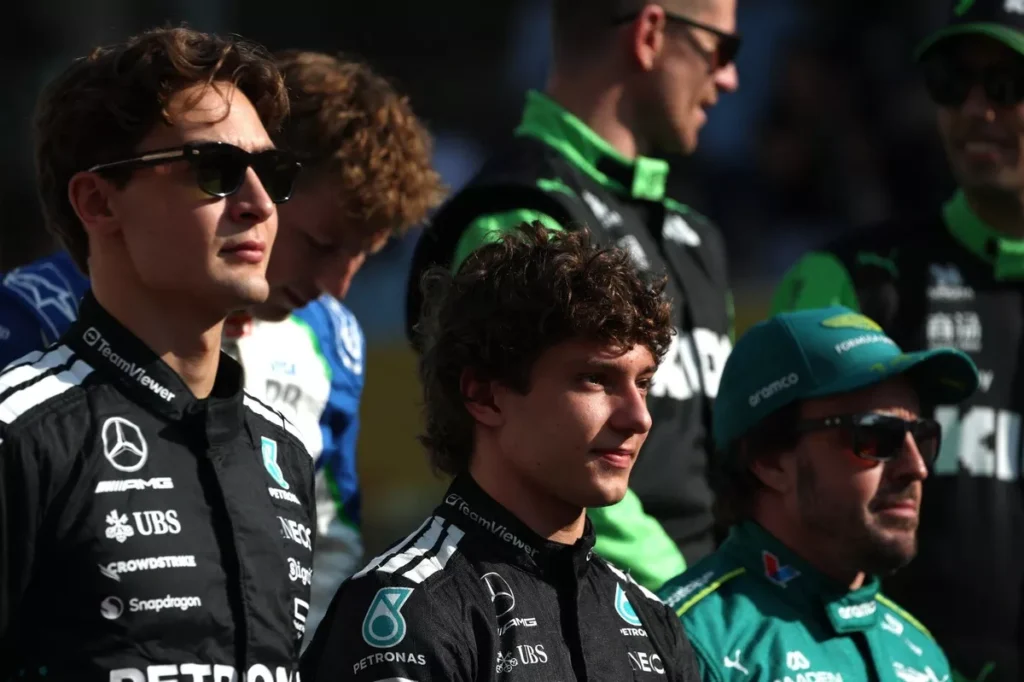
Mercedes team principal Toto Wolff has set realistic expectations for Andrea Kimi Antonelli’s Formula One journey, projecting that the Italian prodigy may not reach his peak performance level until approximately 2030. Speaking on the Beyond The Grid podcast, Wolff emphasized the importance of patience as the 19-year-old navigates the demanding world of Grand Prix racing.
A Mixed But Promising Rookie Season
The 2025 season marked Antonelli’s debut in Formula One, replacing seven-time world champion Lewis Hamilton at Mercedes following his switch to Ferrari. The Italian’s maiden campaign proved to be a rollercoaster of highs and lows, showcasing both his considerable talent and the inevitable growing pains of a driver thrust into motorsport’s premier category at such a young age.
Antonelli finished his debut season with 150 points, making him the highest-scoring rookie of the year. The young driver secured three podium finishes throughout the campaign, demonstrating flashes of the brilliance that convinced Mercedes to promote him directly from Formula Two. His standout performances included a second-place finish at the Brazilian Grand Prix and a remarkable recovery drive in Las Vegas, where he climbed from 17th on the grid to eventually claim third place after post-race disqualifications.
However, the season was far from smooth sailing. Antonelli struggled significantly during the European stretch of the calendar, with inconsistency becoming his primary challenge. The Italian rookie was defeated 25-5 in qualifying sessions by his experienced teammate George Russell, who accumulated 319 points compared to Antonelli’s 150. This 169-point gap highlighted the substantial learning curve facing the young driver.
“When do we expect him to peak? Three, five years from now. And that’s the time we need to give him.”
— Toto Wolff, Mercedes Team Principal
The Human Component: More Than Just Speed
When asked about the timeline for Antonelli’s development, Wolff was candid in his assessment. He stated that Mercedes expects the Italian to reach his peak in three to five years, placing his optimal performance window around 2029 or 2030. This projection underscores Mercedes’ commitment to a long-term development strategy rather than demanding immediate results.
Wolff elaborated on what Antonelli still needs to master beyond pure driving talent. While praising the teenager’s deep knowledge of the sport, the Austrian team boss emphasized the critical importance of emotional maturity and psychological resilience. Antonelli must learn to cope with the intense media scrutiny, the enormous responsibility of representing one of Formula One’s most prestigious teams, and the relentless pressure that comes with competing at the highest level of motorsport.
The Mercedes team principal acknowledged the extraordinary challenges facing his young driver. At just 19 years old, Antonelli has been thrust into an environment alongside experienced competitors, facing constant evaluation from media, fans, and stakeholders. Wolff admitted that he himself would not have been able to handle such pressure at that age, describing himself as having been somewhat immature during his teenage years.
Early Season Promise and Mid-Season Struggles
Antonelli’s season began with genuine promise. His debut at the Australian Grand Prix saw him salvage fourth place in challenging wet conditions, demonstrating composure and racecraft that belied his inexperience. He followed this with consistent points finishes in China and Japan, and notably became the youngest driver ever to lead a Formula One race at Suzuka at age 18.
The Miami Grand Prix provided another highlight when Antonelli secured his maiden Sprint pole position, outqualifying teammate Russell and establishing himself as the youngest polesitter in any Formula One format. This one-lap speed became a signature strength throughout his debut campaign.
However, the introduction of a problematic suspension upgrade at Imola coincided with a difficult period for Antonelli. While Russell managed to drive around the car’s deficiencies, the rookie struggled to adapt, entering what he later described as a very long and difficult period through the European races. The increased media attention at his home race in Italy added further pressure, leaving him feeling drained.
This challenging stretch included multiple retirements and non-points finishes. Technical issues contributed to some difficulties, including an engine failure in Barcelona and mechanical problems at Imola, but driver errors also played their part. A notable incident occurred at the Austrian Grand Prix, where Antonelli missed his braking point on the opening lap and collided with four-time champion Max Verstappen.
The Turning Point and Strong Finish
The Canadian Grand Prix marked a significant milestone, with Antonelli claiming his maiden Formula One podium with third place while Russell took victory. This result provided crucial confidence and appeared to reset the young driver’s approach to the remainder of the season.
After Mercedes reverted to their previous suspension configuration, both drivers found improved performance, and Antonelli’s results stabilized considerably. The final portion of the season showcased his potential more consistently. In Azerbaijan, he outqualified Russell and finished fourth. Singapore brought another strong fifth-place finish, and Mexico saw him beat his teammate for the first time during the season.
The Brazilian Grand Prix delivered Antonelli’s best result of the year. He qualified second for both the Sprint and main race, pressuring race leader Lando Norris during the Sprint before defending brilliantly against the charging Verstappen in Sunday’s Grand Prix. Despite chaotic three-wide battles with Oscar Piastri and Charles Leclerc, Antonelli held firm to secure second place, his career-best result.
His performance in Las Vegas further demonstrated his growing maturity. Despite a disappointing qualifying session that left him starting 17th, Antonelli displayed impressive racecraft, pace, and tire management to fight his way through the field. Although he received a five-second penalty for a starting infringement, the subsequent disqualifications of both McLaren drivers promoted him to the final podium position.
The Strategic Value of 2025 Experience
Mercedes engine chief Hywel Thomas emphasized the strategic importance of Antonelli gaining experience during the 2025 season, despite the major regulatory changes coming in 2026. With Formula One set to introduce radically different technical regulations affecting both chassis and power units, Thomas explained that the 2026 cars will drive significantly differently from their predecessors.
Thomas argued that having a completely inexperienced driver stepping into such a transformative season would present extraordinary difficulties. By giving Antonelli a full season to understand Formula One’s demands, become integrated into the team structure, and familiarize himself with Mercedes’ operations, the team has positioned him to tackle the 2026 challenge from a stronger foundation.
The experience gained during 2025, while sometimes painful, provided invaluable lessons about the sport’s intense pressures, the importance of consistency, and the mental fortitude required to compete at the highest level. Wolff described the season as exactly what the team anticipated: moments of brilliance interspersed with frustrating mistakes, all part of the learning process for a teenage driver competing against Formula One’s established elite.
Looking Ahead to 2026 and Beyond
As Formula One prepares for its most significant regulatory overhaul in years, Mercedes enters the new era with a driver lineup they believe can extract maximum performance from their machinery. Russell’s consistent excellence throughout 2025, combined with Antonelli’s growing competence and occasional flashes of brilliance, provides the team with both immediate reliability and long-term potential.
The 2026 regulations will level the playing field somewhat, with all drivers facing new technical challenges simultaneously. This timing could benefit Antonelli, who will have a season of experience under his belt while his competitors also grapple with unfamiliar machinery. Wolff acknowledged this advantage, noting that the cars being new for all drivers means Antonelli won’t be at a relative disadvantage compared to his 2025 situation.
Mercedes’ commitment to Antonelli remains unwavering despite the ups and downs of his debut season. The team has retained him alongside Russell for 2026, demonstrating their faith in his long-term trajectory. Wolff praised the young Italian for standing his ground among Formula One’s established elite, achieving podium finishes despite the enormous pressures and challenges he faced.
The team principal’s honest assessment of Antonelli’s timeline reflects a mature approach to talent development. Rather than expecting immediate championship contention, Mercedes recognizes that building a future world champion requires time, patience, and the willingness to weather difficult moments. By publicly stating that Antonelli may not peak until 2029 or 2030, Wolff manages external expectations while providing his driver with the psychological space to develop without crushing pressure.
The Path Forward
Antonelli’s journey through his rookie season provides valuable lessons about the challenges facing young drivers in modern Formula One. The sport’s intense spotlight, combined with the technical demands of contemporary machinery and the fierce competition from experienced rivals, creates an environment where even the most talented youngsters face significant obstacles.
The Italian’s progression from early promise through mid-season struggles to a stronger finish demonstrates both his resilience and his capacity for growth. While consistency remains a work in progress, the raw speed evidenced by qualifying performances and occasional race results suggests substantial potential waiting to be fully realized.
For Mercedes, the investment in Antonelli represents a calculated bet on long-term success. With Russell providing immediate competitiveness and reliability, the team can afford to nurture Antonelli’s development without compromising their championship ambitions. This balanced approach allows them to compete for constructors’ titles while simultaneously building toward a future where Antonelli may emerge as their lead driver.
The next few years will prove crucial in determining whether Antonelli fulfills the considerable promise that led Mercedes to promote him so aggressively through their junior program. With Wolff’s timeline suggesting peak performance around 2030, the young Italian has ample time to develop the complete skill set required for Formula One greatness.
Conclusion
Toto Wolff’s projection that Kimi Antonelli will need three to five years to reach his peak performance establishes realistic expectations for one of Formula One’s most promising young talents. The 2025 season provided both encouragement and cautionary lessons, showcasing Antonelli’s considerable potential while highlighting the substantial development work remaining.
As Mercedes prepares for the 2026 regulatory revolution, they do so with confidence in their driver pairing and a clear vision for Antonelli’s growth trajectory. The Italian teenager has shown he possesses the raw talent to compete at Formula One’s highest level. Now comes the longer, more challenging task of developing the consistency, maturity, and mental resilience required to translate that talent into sustained excellence.
If Wolff’s timeline proves accurate, Formula One fans may witness the emergence of a special talent over the coming seasons, with Antonelli potentially reaching his full capabilities around the decade’s end. For now, Mercedes remains committed to providing the time, support, and patience necessary for their young driver to fulfill his considerable promise, setting the stage for what could become one of motorsport’s compelling long-term development stories.
Discover more from f1liveupdates.com
Subscribe to get the latest posts sent to your email.