
Why Monaco Still Matters in Formula 1’s American Era
Miami, Austin and Las Vegas have changed Formula 1’s commercial centre of gravity, but Monaco remains the sport’s most powerful symbol of prestige, heritage and luxury business.
Formula 1’s American boom has changed the sport’s commercial landscape. Miami delivers lifestyle spectacle, Austin brings scale and fan energy, while Las Vegas has quickly become one of F1’s most ambitious entertainment assets. Yet Monaco, despite its narrow circuit and limited overtaking, remains one of the championship’s most commercially important weekends.
The reason is simple: Monaco sells something the newer races cannot fully replicate. It is not just a Grand Prix. It is a global luxury ritual, a business summit, a heritage event and a visual shorthand for Formula 1 itself.
Monaco no longer has the commercial field to itself, but it still owns a type of prestige that money alone cannot manufacture. F1LiveUpdates analysis
The US Boom Has Raised the Pressure
Formula 1 now has three American races: Miami, Austin and Las Vegas. The Las Vegas Grand Prix has been extended until 2037, underlining F1’s long-term commitment to the United States and its entertainment-led growth strategy. The event has also generated major economic impact for Southern Nevada since joining the calendar.
That puts Monaco under a different spotlight. In pure modern event terms, Las Vegas and Miami are easier to activate for sponsors, hospitality partners and consumer brands. They offer space, modern infrastructure, major American media attention and clearer entertainment programming.
The Commercial Challenge
Monaco must now compete not only with other races, but with purpose-built entertainment cities designed for global sponsors, celebrity culture and premium fan experiences.
Why Monaco Still Wins on Prestige
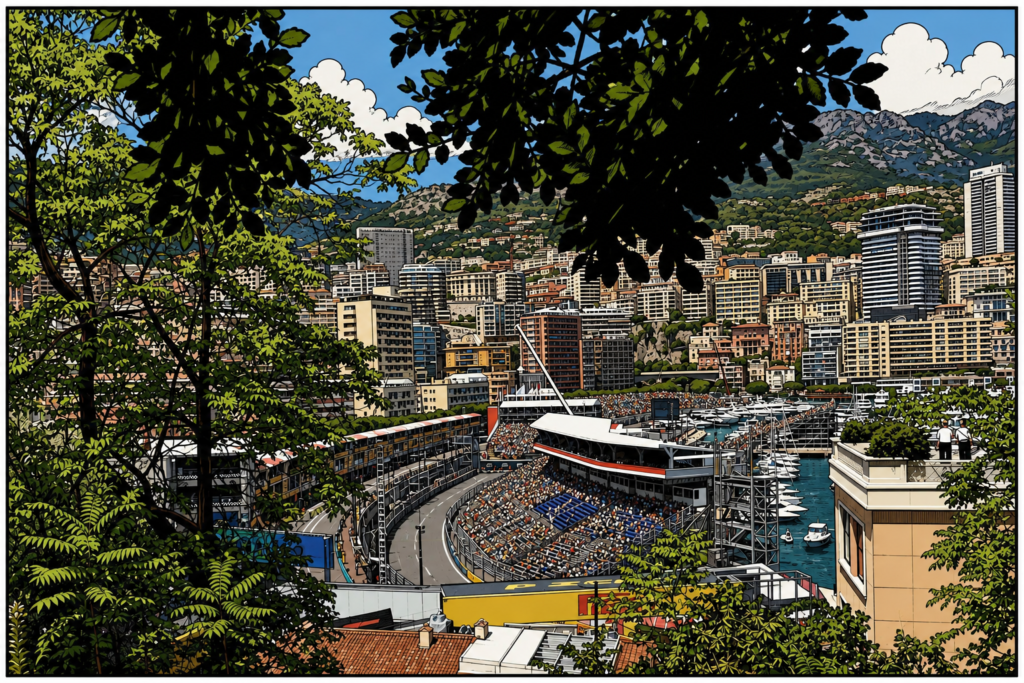
Monaco’s strength is that it does not need to behave like Las Vegas. Its value lies in scarcity, history and location. The harbour, the yachts, the casino, the city streets and the proximity between business leaders and teams create an atmosphere that remains unique on the calendar.
For sponsors and luxury brands, Monaco is still a stage where presence matters. It offers a kind of high-status visibility that fits perfectly with Formula 1’s premium positioning. Even if the racing product can be less spectacular, the commercial theatre remains powerful.
- Monaco remains one of Formula 1’s oldest and most recognisable races.
- The event is closely linked with luxury, prestige and global business networking.
- Its visual identity is instantly associated with Formula 1.
- The race has secured its place on the calendar until 2035.
- F1 has worked to bring Monaco’s commercial standards closer to modern calendar expectations.
Monaco Has Changed to Stay Relevant
Monaco’s survival is not based on nostalgia alone. Formula 1 has gradually pushed the event into a more modern commercial framework. Longstanding tensions around television production, branding and event control have eased as F1 gained greater influence over how the Monaco Grand Prix is presented globally.
The race has also moved into stronger alignment with Formula 1’s luxury partner strategy. The arrival of LVMH-linked branding, including TAG Heuer’s role around the event, reflects how Monaco can still serve as the perfect platform for premium global brands.
Monaco has not stayed relevant by refusing to change. It has stayed relevant by protecting its identity while accepting more of Formula 1’s commercial structure. F1LiveUpdates analysis
The Contract Extension Says Everything
Formula 1 confirmed in 2025 that Monaco will remain on the calendar until 2035, extending a deal that had already secured its future through 2031. That long-term commitment matters because it shows F1 still sees strategic value in the race, even as newer venues pay larger fees and deliver more modern infrastructure.
Monaco is not kept on the calendar because it produces the best overtaking. It remains because it gives Formula 1 something bigger than race-day action: historical legitimacy, brand continuity and global prestige.
The Monaco Formula
Las Vegas offers spectacle. Miami offers lifestyle. Austin offers scale. Monaco offers heritage — and in Formula 1, heritage remains commercially valuable when packaged correctly.
Business Race, Not Just Motor Race
Monaco has long been described as Formula 1’s “business race”. That label still matters. The paddock, yachts, hotels and private events create a dense commercial environment where sponsors, investors, team owners, executives and luxury brands converge.
Newer venues can replicate hospitality. They can build VIP clubs, concerts and premium lounges. But Monaco’s advantage is that the entire city becomes the hospitality platform. That makes the weekend feel less like a race staged in a city and more like a city transformed into Formula 1.
The Weakness Is Still the Racing
The criticism remains obvious. Monaco’s narrow streets make overtaking extremely difficult, and modern Formula 1 cars are far larger than the machinery the circuit was originally built around. For fans focused only on wheel-to-wheel action, Monaco can be frustrating.
That is where the US races have an advantage. Las Vegas, Miami and Austin can deliver broader entertainment value and, in some cases, better racing prospects. Monaco’s challenge is to ensure its commercial and historical weight does not become an excuse for a weak sporting product.
Monaco does not need to become Las Vegas. But it does need to keep proving that its prestige adds enough value to balance its racing limitations. F1LiveUpdates analysis
Why Monaco Still Fits F1’s Future
Formula 1’s future is not one-dimensional. The calendar needs modern entertainment events, emerging markets, historic circuits and luxury showcases. Monaco survives because it occupies a category no other race truly owns.
The American boom has expanded F1’s audience and commercial ambition, but it has not made Monaco obsolete. If anything, it has made Monaco’s distinct identity more valuable. In a calendar increasingly filled with large-scale entertainment products, Monaco remains the race that reminds F1 where its mythology was built.
The sport can chase new markets without abandoning its most powerful symbols. That is why Monaco still matters — not because it beats Las Vegas at being new, but because Las Vegas cannot beat Monaco at being Monaco.
Sources
→ Financial Times — Challengers vie for Monaco’s Formula 1 “business race” crown
→ Financial Times — How Monaco changed for F1
→ Formula1.com — F1 to race in Monaco through 2035 after contract extension
→ Reuters — Las Vegas to host Formula One until 2037
→ Autosport — How Monaco reflected F1’s cultural and financial boom
Discover more from f1liveupdates.com
Subscribe to get the latest posts sent to your email.