
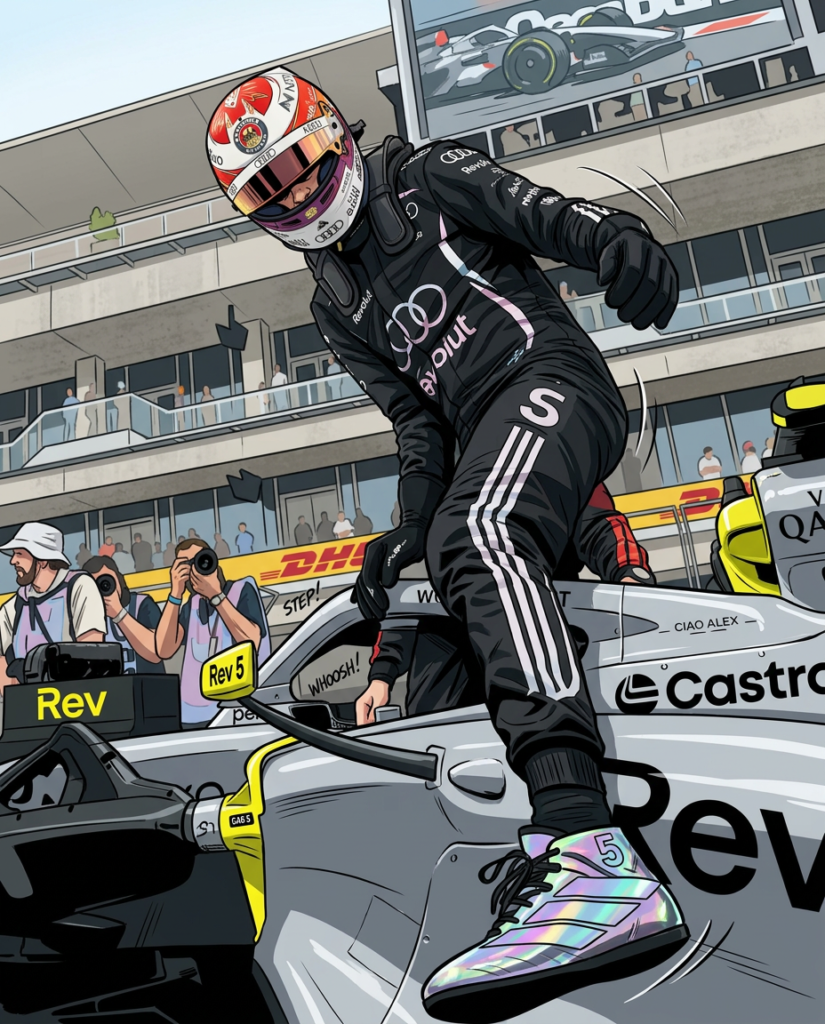
Audi F1 Engine ‘Just Lacks Power’ — Gabriel Bortoleto Confirms Power Unit Weakness
The Brazilian rookie delivers a frank assessment of Audi’s debut power unit, admitting the AFR26 is holding back a competitive chassis as the team battles reliability and performance deficits.
Audi’s Formula 1 project is facing a stark reality check. Despite producing a competitive chassis with the R26, the German manufacturer’s first-ever grand prix power unit is struggling to match the performance of its established rivals, leaving drivers Gabriel Bortoleto and Nico Hulkenberg unable to convert strong qualifying showings into consistent race results.
The team, which took over the former Sauber operation ahead of the 2026 regulatory overhaul, has shown flashes of promise. Bortoleto has reached Q3 in multiple qualifying sessions, and Hulkenberg has consistently placed the car in the midfield mix. Yet the scoreboard tells a different story: Audi has failed to score points in the last three rounds, with technical issues and operational setbacks compounding an underlying power deficit.
A Frank Admission
Speaking ahead of the Canadian Grand Prix, Bortoleto did not shy away from identifying the root cause of Audi’s race-day struggles. While careful to acknowledge the scale of the challenge facing a brand-new engine manufacturer, his assessment was unequivocal.
“Our car, our chassis looks in a good place. But with the engine, in my point of view we have done an amazing job to start a project with what we have, but when we are competing against other teams right now, we can see the lack of power a little bit. We just lack power. That’s realistically what we are facing right now.” — Gabriel Bortoleto, speaking to Motorsport.com
The Brazilian explained that the deficit is visible in the data — both in the team’s internal analysis and in publicly available performance metrics. Audi recorded the second-slowest top speed at the Miami Grand Prix, hitting 319 km/h at the speed trap. That figure was only marginally better than Cadillac’s 318.5 km/h, but significantly adrift of Mercedes’ leading 334.1 km/h.
Hulkenberg Concurs
Team-mate Nico Hulkenberg echoed Bortoleto’s assessment, pointing to a combination of factors that leave the Audi vulnerable during races. The German veteran highlighted driveability as a major concern, noting that the power unit’s behavior under varying conditions creates a complex challenge for the drivers.
“It’s a combination of things. Our driveability is definitely a topic. It’s something that we have a lot of room for improvement since the beginning of the year. We’re working on it, but it’s a longer-term subject. There’s no easy fixes for that, really. Power, definitely. We’re not the most powerful power unit out there. We definitely have a deficit on that, we know that.” — Nico Hulkenberg
Hulkenberg emphasized that the interplay between power delivery, energy deployment, and battery management creates a delicate balance. When the system falls out of harmony, the drivers are left exposed — particularly on straights where rivals can capitalize on Audi’s straight-line speed deficit.
After four rounds, Audi sits ninth in the constructors’ championship with just two points. Both drivers have missed one race each due to technical failures — Hulkenberg in Australia, Bortoleto in China — while poor starts have further compromised potential points finishes. The R26 chassis has shown genuine pace in qualifying, but the AFR26 power unit’s performance and reliability remain works in progress.
The Data Doesn’t Lie
Bortoleto was precise in his analysis, distinguishing between the chassis and power unit performance. When examining cornering data, the Audi R26 compares favorably with its midfield rivals. The problem manifests on the straights, where the energy deficit becomes impossible to hide.
“Sometimes it’s just difficult, because it feels like we are always chasing, chasing on the straights, trying to save energy here until we’re taking the next one,” Bortoleto explained. “And that has not been the case.”
The Brazilian clarified that the issue is not limited to a single component. Rather, it is the cumulative effect of multiple small deficits across the power unit’s architecture — from the internal combustion engine to the hybrid system’s harvesting and deployment efficiency.
“There is not really one thing that stands out as a big problem. We just lack power. It’s clear when you look at data — public data that we have available as well — it’s just what we are going through. I think there are many small areas here and there that make a big difference at the end of the lap.” — Gabriel Bortoleto
A Nightmare Weekend in Miami
The scale of Audi’s challenges was laid bare during the Miami Grand Prix weekend. The team faced a cascade of unrelated technical problems that underscored the immaturity of its first-year package.
Hulkenberg’s car caught fire due to a leak, while Bortoleto was disqualified from the sprint race after a spike in air pressure was detected. The Brazilian also suffered a braking problem during the weekend, and Hulkenberg battled an overheating issue. These setbacks came on top of the underlying power deficit, creating a perfect storm of frustration for the Hinwil-based squad.
Team principal Mattia Binotto described the weekend as a nightmare where “every single problem was different,” highlighting the reactive nature of Audi’s early-season development phase.
Long Development Lead Times
Binotto has been candid about the timeline for improvement. Engine development in Formula 1 operates on extended lead times, and with Audi fielding only two cars — compared to the eight Mercedes-powered entries or six Ferrari-powered machines — data gathering is inherently slower.
“The lead times on engine development are very long, and we have assessed, I believe, that most of the gap we have to the top teams is from the power unit, which is not unexpected,” Binotto said earlier in the season. “We knew that it would have been the biggest challenge.”
The former Ferrari team principal has set 2030 as the target for Audi to become a championship contender, a timeline that reflects the steep learning curve facing any new power unit manufacturer. The FIA’s Additional Development and Upgrade Opportunities (ADUO) mechanism may accelerate certain upgrades, but fundamental performance gains require patience.
Confidence for the Future
Despite the current struggles, Bortoleto maintains an optimistic long-term outlook. The Brazilian, who won both Formula 3 and Formula 2 championships as a rookie, has full confidence that Audi will eventually join the ranks of F1’s leading engine manufacturers.
“I have no doubt. I can’t tell you when we’re gonna be there, but I can tell you that we’re gonna be there. If it’s this year, if it’s next year, I don’t know, but I have full confidence that we’re gonna be one of the top engine manufacturers in the future. We understand the reasons why we miss [power], and it’s just about working and learning things. There are teams doing this for 15 years, and we are in the first year of building an engine, so it’s not easy.” — Gabriel Bortoleto
For now, the focus remains on incremental gains. Audi’s immediate priority is resolving the reliability niggles that have cost the team valuable race finishes, while the engineering group in Neuburg works on unlocking more performance from the AFR26 power unit. The Canadian Grand Prix offers another opportunity to gather crucial data — and, perhaps, to finally convert the R26’s qualifying potential into a meaningful points haul.
Sources
- Motorsport.com — Audi F1 engine ‘just lacks power’ – Gabriel Bortoleto
- PlanetF1 — Audi’s pace is real, so why do the results still not show it?
- Motorsport.com — Audi will eventually have one of the best engines in F1, says Gabriel Bortoleto
- Yahoo Sports — Audi will eventually have one of the best engines in F1, says Gabriel Bortoleto
Discover more from f1liveupdates.com
Subscribe to get the latest posts sent to your email.