“Is the Car Behind in Control?” Albon’s Fears Over F1 2026 Energy Chaos
Alexander Albon reveals that drivers “sometimes worry” the car behind them may not be fully in control, as the complexity of 2026 regulations creates unpredictable and dangerous racing scenarios.
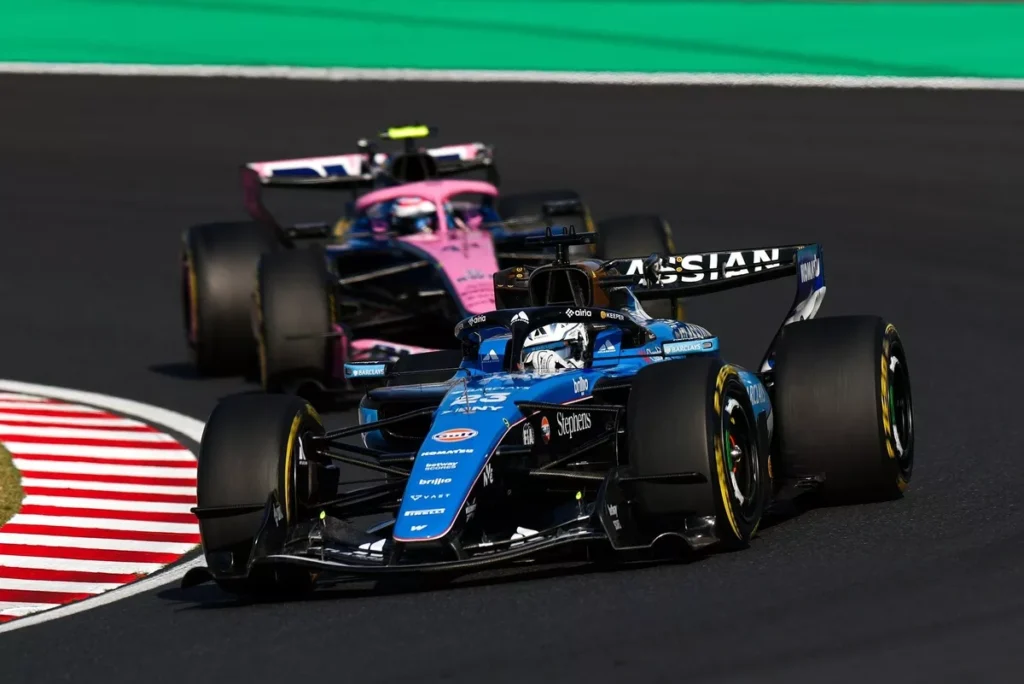
The 2026 Formula 1 regulations promised a new era of closer racing and sustainability. What they delivered, according to Williams driver Alexander Albon, is a safety nightmare where drivers cannot predict what the car behind them will do—and sometimes cannot even control their own.
Speaking after the Japanese Grand Prix at Suzuka, Albon lifted the lid on growing concerns within the driver community about the unpredictable nature of energy management under the new rules. The Thai driver admitted that defensive driving has become a frightening proposition because the closing speeds between cars in different energy modes are so extreme that the attacking driver may not be able to react in time.
The Bearman Crash That Proved the Point
The fears articulated by Albon were violently illustrated during the Japanese Grand Prix when Oliver Bearman lost control of his Haas at 308 km/h while approaching Franco Colapinto’s Alpine. The Frenchman’s car was traveling 45 km/h slower as it harvested energy, creating a closing speed differential that proved impossible for Bearman to manage.
The resulting crash was a stark demonstration of what happens when the 2026 energy management systems create unpredictable speed differentials on track. Bearman, caught out by the sudden deceleration of the car ahead, had no chance to avoid disaster.
“We actually talked about that in the drivers’ briefing, just about the closing speeds and defending and moving and all these kinds of things. It feels really awkward now, because you want to defend but you’re sometimes worried that the car behind—if they’re in control of their car.” — Alexander Albon, Williams Driver
When the Battery Has a Mind of Its Own
The problem runs deeper than mere speed differentials. Under the 2026 regulations, drivers do not have complete control over when their power units deploy energy. The “Straightline Mode” (SLM)—the successor to DRS—activates automatically based on complex energy management algorithms that prioritize battery state over driver preference.
Lando Norris revealed the extent of this loss of control after the Japanese Grand Prix, explaining that he “didn’t even want to overtake Lewis [Hamilton]. It’s just that my battery deploys, I don’t want it to deploy, but I can’t control it.” [1]
This creates a terrifying scenario for the driver being overtaken. When defending a position, they cannot predict when the car behind will suddenly surge forward with full power deployment, nor can they be certain the attacking driver can actually control that surge.
The 2026 Energy Problem
Cars harvesting energy can be traveling 45 km/h slower than those deploying power. The “Straightline Mode” activates automatically, not at driver command. Closing speeds are so extreme that defensive maneuvers have become dangerous gambles rather than racing tactics.
A Call for Regulatory Intervention
Albon has not merely identified the problem; he has proposed solutions. The Williams driver suggests that the FIA needs to make the Straightline Mode “more stable or less powerful or something like that. More like a regular DRS that you can control quite easily.”
The comparison to DRS is telling. Under the previous regulations, drivers chose when to activate their drag reduction, giving both the attacker and defender predictable parameters within which to race. The 2026 system’s automated nature removes that predictability, replacing calculated racing with chaotic energy roulette.
The issue is compounded by active aerodynamics and the interplay between Straightline Mode and Corner Mode on different cars. Each team’s energy management philosophy creates different behavioral patterns, making it impossible for drivers to anticipate what a rival’s car will do in any given moment.
The Defensive Dilemma
For a driver in Albon’s position—defending from a faster car—the 2026 regulations present an impossible choice. Move to block early, and you risk the attacking car surging past with unexpected battery deployment. Wait to react, and the closing speed may be so extreme that any evasive action comes too late.
“It feels really awkward now,” Albon emphasized. The word “awkward” understates the reality: drivers are being forced to make split-second decisions about defensive positioning while uncertain whether the car approaching at closing speeds exceeding 50 km/h differential can actually stop or steer.
The psychological burden is significant. Racing drivers are trained to trust their instincts and the predictability of their machinery. When neither the machinery nor the competitors’ machinery behaves predictably, the fundamental contract between driver and sport begins to fray.
What Happens Next
The FIA faces a critical decision. The 2026 regulations were designed to improve racing and sustainability, but if drivers cannot race safely, the entire premise of the new era is undermined. Albon’s intervention—speaking publicly about concerns raised in private drivers’ briefings—suggests patience within the paddock is wearing thin.
Williams, for their part, are focused on understanding their own car’s behavior before demanding regulatory changes. Albon’s Japanese Grand Prix became “a bit of a test session” as the team tried to map the FW46’s characteristics during the five-week break before Miami. Points were never the objective at Suzuka; survival and data collection were.
Yet even as teams work to optimize their own systems, the fundamental issue remains: when drivers cannot control when power deploys, and cannot predict whether the car behind is actually controllable, defensive racing becomes a dangerous lottery. Albon’s question—”Is the car behind in control?”—deserves an answer before the next major incident provides it tragically.
Sources
- Motorsport.com: ‘Is the car behind in control?’ F1 2026 rules spark Alex Albon’s concern
- FormulaRapida: The new F1 rules raise concerns among drivers
- Yahoo Sports: ‘Is the car behind in control?’ F1 2026 rules spark Alex Albon’s concern
- Crash.net: Possible fix suggested to combat “awkward” defending in F1 2026 battles
- RacingNews365: F1 drivers fearing ‘awkward’ concerns after private discussions
Discover more from f1liveupdates.com
Subscribe to get the latest posts sent to your email.