Ocon Opens His 2026 Account Despite “100% Bad Luck” So Far This Season
A Safety Car at the worst possible moment cost him a stronger result in Suzuka — yet Esteban Ocon could only laugh at a pattern that has followed him through all three races of 2026.
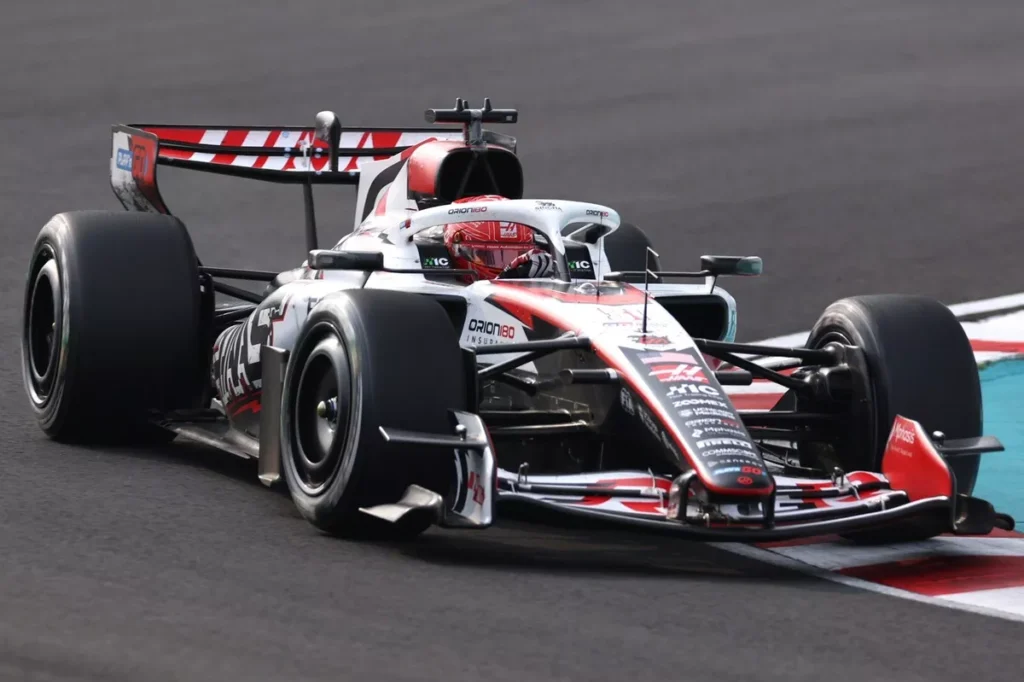
Esteban Ocon arrived at Suzuka pointless in 2026, and he left with one. The Haas driver finished tenth at the Japanese Grand Prix — a result that delivers his first championship point of the season and ensures Haas has now scored in every race this year. But the number beside Ocon’s name flatters neither the quality of his drive nor the misfortune that has consistently undercut it. Three races in, three Safety Car interventions at the wrong moment. “100% bad luck so far,” Ocon said in the post-race media pen, with a laugh that suggested he has decided the only sensible response is to find it funny.
A Race That Could Have Been More
Starting 12th on the grid, Ocon made an immediate impression at the lights, picking up a place on the opening lap and working his way into the top ten at the expense of Isack Hadjar. By lap six he was ninth, having passed Arvid Lindblad. Everything was proceeding well. He was running ahead of his team-mate Bearman, managing his tyres, and building a race. Then came lap 19, his scheduled pit stop for hard tyres — and, three laps later, Bearman’s 50G crash at Spoon Curve that triggered the Safety Car.
The timing was punishing. Ocon had already pitted and was on fresh hard tyres with nothing to gain. Liam Lawson and Gabriel Bortoleto, who had not yet stopped, came in under the Safety Car for free stops and jumped him in the queue. He emerged P11, clawing back one position by passing Bortoleto after the restart. Lawson, now running in front, proved impossible to overtake. Ocon finished tenth — one place outside what might have been a better result — and lost the chance to gauge himself against Gasly and Verstappen ahead.
“Unfortunately, it has been three out of three races where the safety car timing has been bad for us. I managed to overtake Gabi on track, but with Liam it wasn’t possible. Overall, it was a positive weekend — we got the maximum out of the car in every situation we could control. It should have been a few positions better, but we can’t control everything.”
— Esteban Ocon, Haas F1 Team
Three Races, Three Cruel Twists
What makes Ocon’s frustration legitimate is that this pattern has repeated itself with metronomic consistency since the first race of the year.
A Virtual Safety Car at precisely the wrong moment damaged Ocon’s race prospects, costing him track position he had worked hard to build in the opening stint.
A Safety Car intervention in Shanghai similarly arrived just after Ocon had pitted, gifting others a free stop and bumping him down the order. Ocon was also handed a penalty for a collision with Franco Colapinto during the race.
Pitted on lap 19, then Bearman’s crash brought out the Safety Car on lap 22 — Lawson and Bortoleto benefitted, Ocon lost positions he had spent the first stint earning. Finished 10th rather than what looked like a potential 7th or 8th.
“100% bad luck so far — it’s pretty good going. But at every race I’ve stopped at the wrong time.”
— Esteban Ocon, Haas F1 Team
Haas Keeps Its Points Streak Alive
Despite the personal frustration, Ocon’s point was important in the team context. Haas has now finished in the points at every race of the 2026 season — a consistency that places it firmly in the competitive midfield tier and gives team principal Ayao Komatsu reason for satisfaction, even on a difficult day overshadowed by Bearman’s accident.
Bearman himself was visibly shaken but confirmed he was physically fine after his 50G crash at Spoon Curve. A right knee contusion was the only confirmed injury, and Komatsu confirmed the team was “glad he came out okay,” while acknowledging the massive closing speed at the root of the accident was a consequence of the new 2026 regulations rather than any fault by either driver involved.
With the five-week April break now ahead, Ocon arrives in Miami with one point on the board — and a legitimate case that he should have several more. The pace is evidently there: his ability to gain positions from a midfield grid slot is not in question. The question for Miami is simply whether his luck changes. Three Safety Cars in three races is statistically unusual. Whether it continues into the fourth is another matter, but for a driver who has described his season so far with a word — “100%” — the next few weeks can’t come soon enough.
Discover more from f1liveupdates.com
Subscribe to get the latest posts sent to your email.