
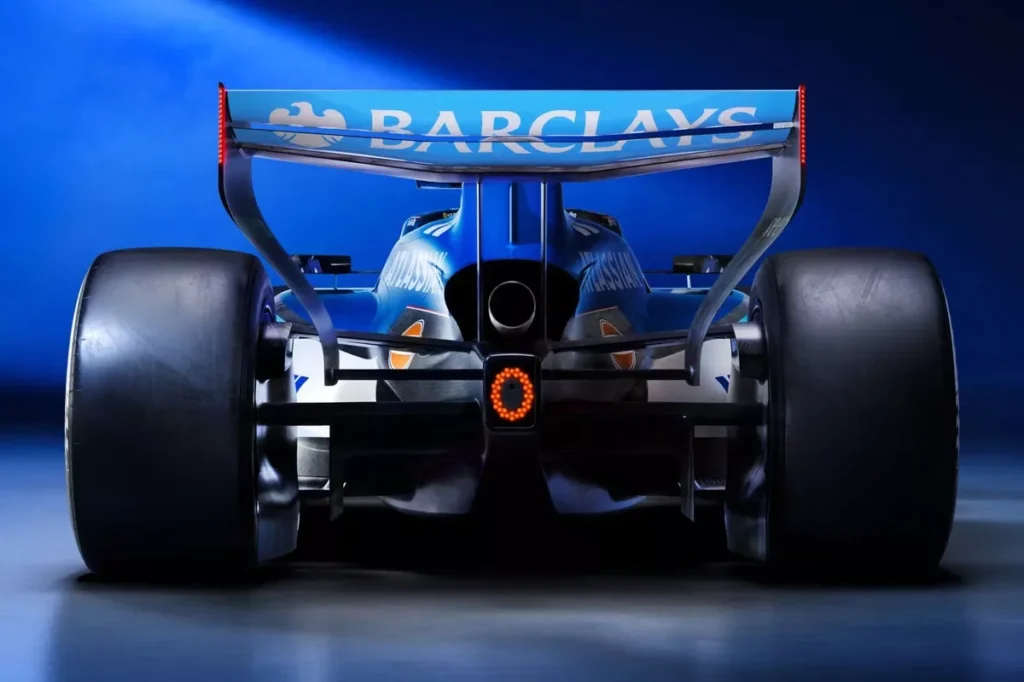
Burning Fuel to Save Battery: Williams Reveals Extreme F1 2026 Energy Strategies
Teams may run engines at maximum revs through corners to recharge batteries, as new power units create unprecedented energy management challenges
Formula 1’s 2026 revolution is forcing teams into paradoxical strategies: burning more fuel to generate electricity. Williams has revealed the extreme measures drivers may adopt to manage the new power units’ voracious energy demands .
The Grove-based squad’s technical leadership explained how the dramatic increase in electrical power — from 120kW to 350kW — combined with only marginally increased battery capacity, creates a fundamental energy deficit that teams must solve creatively.
The Energy Equation
The mathematics are unforgiving. The MGU-K’s output has nearly tripled, yet the battery can only store approximately 4 megajoules — barely more than the 1.6MJ of the previous era . This means drivers cannot deploy maximum electrical power for an entire lap without running dry before the finish line.
“Fundamentally, energy recovery on this car is going to be a challenge,” admitted Matt Harman, Williams’ engineering technical director. “We know why we have active aerodynamics on the car and therefore we need to make sure that we can maximise that recovery” .
Burning Fuel to Make Electricity
The most counterintuitive solution involves deliberately consuming more fuel to generate electrical energy. By running the internal combustion engine at maximum revs even through corners — where drivers would normally modulate throttle — teams can harvest additional energy through the MGU-K.
“At any point you decide, you can turn the electric motor in negative torque or negative power, let’s say, in harvesting mode and effectively burn fuel to create some electricity,” explained Angelos Tsiaparas, Williams’ head of trackside engineering. “This is happening even in the current regulations. It’s just that because the electrical element in ’26 is so much bigger, almost three times more powerful than the previous era of power units, such strategies will become way more potent” .
Harman confirmed teams will explore every avenue: “We are looking to promote maximum energy recovery during the lap in every way that we can. You’ll absolutely see engines running at maximum revs through some corners to boost electrical power” .
Downshifting Extremes
The quest for energy will also change driving styles dramatically. Harman revealed drivers may select “a lot lower gears than you’ve ever seen before” to maximize harvesting through increased revs .
“As it stands right now, a driver would very rarely pull first gear. You may see that,” he noted, highlighting the stability challenges this creates. “That gives us challenges further on in the car, because that is a stability problem. So then you’re into how you control the power unit, how you control some of the stability in the rear of your car” .
Lift and Coast Returns
While burning fuel generates energy, conserving it remains equally critical. Drivers have already reported extensive “lift and coast” techniques during the Barcelona shakedown — lifting off the throttle before braking points to harvest energy, even during qualifying laps .
Haas driver Oliver Bearman described the energy management as “annoying” and “sad,” noting: “Actually feeling it in reality for the first time is a little bit sad. One of those things” . His teammate Esteban Ocon, however, found it “quite natural because it’s the fastest way of driving” once adapted .
Strategic Implications
The energy dilemma transforms race strategy. Teams must balance aggressive fuel consumption for battery charging against overall efficiency. As Tsiaparas noted, this “fuel burn” strategy “has great merit” for qualifying and tactical race use, though “for prolonged race use, it isn’t practical” .
Mercedes driver George Russell compared the sensation to “driving your car up a hill — you’re still going flat out, but you’re losing a bit of speed, and you may just downshift to give you a bit of extra revs” .
The New Normal
With the Australian Grand Prix approaching on March 8, teams are finalizing energy deployment maps that will define performance. The FIA permits up to 9 megajoules of energy recovery per lap under certain conditions — nearly double the battery’s storage capacity — meaning strategic harvesting becomes as crucial as deployment .
For fans, the 2026 era promises unfamiliar sights: cars screaming at maximum revs through corners, drivers downshifting to first gear on straights, and the bizarre spectacle of Formula 1 cars “lift and coasting” during qualifying to save energy.
As Williams’ revelations demonstrate, the pursuit of speed now requires mastering the art of energy alchemy — turning fuel into electricity, and electricity into lap time, in carefully measured doses around every circuit.
Sources
- Motorsport.com: “Williams: Burning fuel may be key to having enough battery power to finish F1 lap” (February 5, 2026)
- F1i.com: “Williams explain power trick that could define F1 in 2026” (February 5, 2026)
- Motorsport.com: “F1 2026 energy management ‘annoying’ and ‘sad’ as drivers lift early” (February 7, 2026)
- PlanetF1: “‘Like driving up a hill’ – F1 drivers reveal unusual demands of new 2026 power units” (February 2, 2026)
- Fox Sports: “‘Forget everything’: Why F1 is on brink of ‘chaos’ as shift to flip playbook on its head” (February 9, 2026)
- Motorsport.Tech: “2026 F1 Tech Regulations in focus – the Power Unit” (February 1, 2026)
- Autosport: “How energy management could turn F1 2026 into ‘speed chess'” (February 3, 2026)
Discover more from f1liveupdates.com
Subscribe to get the latest posts sent to your email.