
How Prost’s Five-Minute Conversation Shaped Toto Wolff’s Driver Management Philosophy
When Toto Wolff became Mercedes team principal in 2013, he faced a daunting challenge that would define his leadership: managing two fiercely competitive drivers who could either propel the team to unprecedented success or tear it apart from within. The solution to this predicament came from an unlikely source—a brief conversation on the grid with Formula 1 legend Alain Prost.
The Legendary Rivalry That Taught a Crucial Lesson
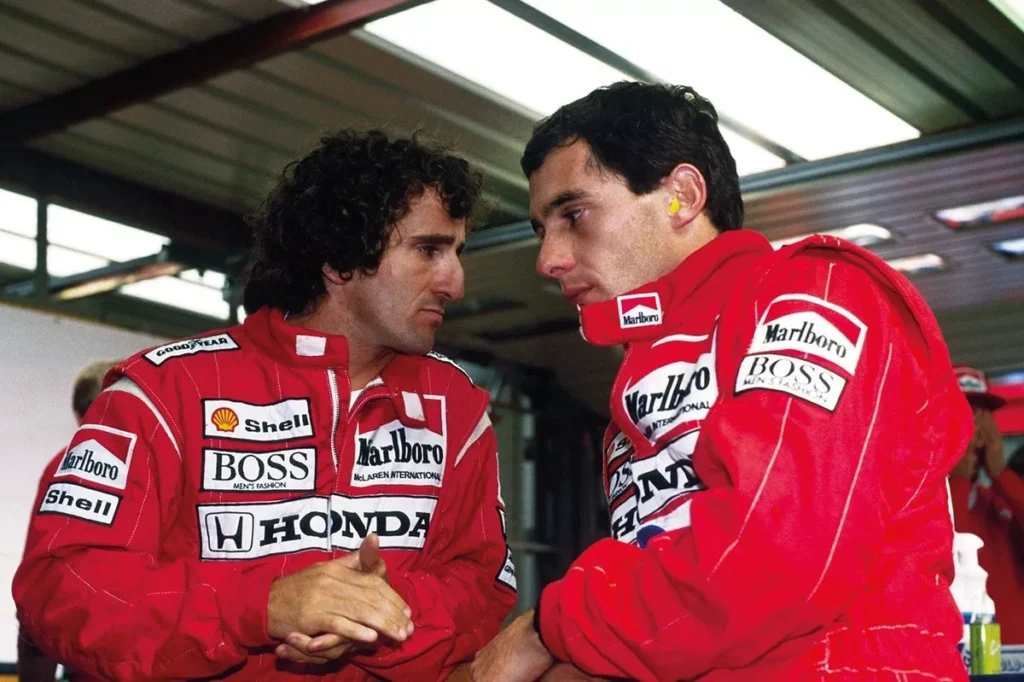
Prost’s tumultuous partnership with Ayrton Senna at McLaren from 1988 to 1989 remains one of the most intense rivalries in motorsport history. The two champions fought for the title while the relationship deteriorated into toxicity, culminating in high-profile clashes like the infamous Suzuka incident in 1989. The fallout eventually drove Prost to Ferrari.
Understanding what went wrong between two of racing’s greatest talents would prove invaluable for Wolff as he prepared to navigate similar waters at Mercedes.
The Five-Minute Conversation That Changed Everything
During a pre-race moment on the grid in 2013, Wolff approached Prost with a simple question: “What went wrong with Senna and you?”
Nothing went wrong between the two of us. What went wrong is that the team management played us against each other—we never knew where we were. One weekend you were the flavour of the month, the next month you didn’t know whether you had a seat.
Prost’s answer was revealing. He explained that the problem wasn’t between the drivers themselves, but rather how McLaren’s management handled them. The team played the drivers against each other, creating an atmosphere of uncertainty and paranoia. The lack of clear communication bred distrust that eventually imploded relationships within the team.
Wolff absorbed this lesson immediately, vowing never to repeat that mistake at Mercedes.
Transparency as the Foundation of Success
The conversation with Prost fundamentally shaped Wolff’s management philosophy at Mercedes. He implemented a culture of radical transparency, ensuring his drivers always knew where they stood with the team.
Wolff has consistently emphasized brutal honesty in his relationships with drivers. He acknowledges that not everyone can handle this direct approach, but both George Russell and Lewis Hamilton have thrived under it. This openness extends to difficult conversations—whether discussing potential rival drivers or addressing on-track conflicts.
The Transparency Principle
When rumors surfaced about potential talks with Max Verstappen for 2026, Wolff immediately informed Russell. He explained that exploring options was his duty as team principal, but Russell deserved to know rather than be blindsided.
This exemplifies the transparency Prost wished he’d experienced at McLaren.
The Hamilton-Rosberg Test
The philosophy was put to its ultimate test during the Hamilton-Rosberg rivalry from 2014 to 2016. The childhood friends turned bitter rivals, with tensions culminating in incidents like the Barcelona collision in 2016 and Hamilton’s controversial tactics at the Abu Dhabi finale.
When Rosberg suddenly retired just five days after clinching the 2016 championship, Wolff and Hamilton faced a critical moment. Rather than letting resentment fester, they sat down for a brutally honest conversation. Wolff emphasized that without communication, their partnership had no future. This difficult discussion helped rebuild trust and kept Hamilton committed to Mercedes.
The Influence of Niki Lauda
Prost wasn’t the only influence on Wolff’s management style. The late Niki Lauda, Mercedes’ non-executive chairman, reinforced the importance of straightforward communication. Lauda’s philosophy was simple: no deception, just honest assessment. His approach aligned perfectly with the lessons Wolff learned from Prost.
Together, these influences created a management culture that has contributed to Mercedes’ remarkable run of eight consecutive constructors’ championships and helped the team maintain stability even during internal rivalries.
Applying the Lessons Today
The principles Wolff learned continue to guide Mercedes’ driver management. When Hamilton announced his departure to Ferrari for 2025, Wolff applied the same transparent approach with the team’s new lineup of Russell and rookie Andrea Kimi Antonelli.
Even in exploring potential opportunities with Verstappen, Wolff maintained open dialogue with Russell, ensuring his current driver felt respected and informed throughout the process. Russell has publicly acknowledged Wolff’s honesty, noting that while some find it challenging, he appreciates the direct communication.
The Contrast With Modern Rivals
Wolff’s transparent approach stands in stark contrast to the more traditional team hierarchies seen elsewhere in Formula 1. Where other teams might favor one driver or play internal politics, Mercedes has maintained a policy of equal treatment and open communication.
This philosophy doesn’t mean avoiding tough decisions or preventing competition between teammates. Rather, it ensures that when conflicts arise, they’re addressed openly rather than allowed to fester in secrecy and mistrust.
A Lasting Legacy
The brief conversation between Prost and Wolff on that grid in 2013 has had lasting implications beyond Mercedes. It demonstrates how learning from motorsport history can prevent repeating past mistakes. Prost’s candid reflection on his experiences with Senna provided Wolff with a blueprint for managing elite talent.
As Mercedes continues to evolve with new driver lineups and faces the challenges of the 2026 regulation changes, Wolff’s commitment to transparency remains steadfast. The lesson from Prost—that team management can make or break driver relationships—continues to inform every decision at Mercedes.
Key Takeaway
The success of this approach is evident not just in championships won, but in the relationships maintained even through intense rivalries. While Hamilton and Rosberg’s partnership ended, it didn’t destroy the team. Instead, Mercedes emerged stronger, with a management philosophy that has become a model for handling competitive teammates.
In an era where Formula 1 teams juggle massive egos, intense competition, and complex team dynamics, Wolff’s application of Prost’s wisdom offers a masterclass in leadership. The key insight remains simple yet powerful: transparency, honesty, and clear communication are the foundation of managing world-class talent in high-pressure environments.
Sources
- Motorsport.com — “How Alain Prost shaped the way Toto Wolff manages Mercedes F1 drivers” (September 10, 2025)
- PlanetF1.com — “How an F1 legend influenced Wolff’s Max Verstappen and George Russell plan” (September 17, 2025)
- F1 Oversteer — “Alain Prost once shared the advice he gave Toto Wolff during Lewis Hamilton and Nico Rosberg’s spat” (January 2026)
- Mixvale — “Toto Wolff reveals Prost’s lessons for managing Mercedes drivers” (September 11, 2025)
- Formula1.com — “Toto Wolff reveals extent of summer talks with Verstappen” (September 29, 2025)
Discover more from f1liveupdates.com
Subscribe to get the latest posts sent to your email.