Why Early 2026 F1 Aero Simulations Don’t Reveal the True Hierarchy
The reason? The simulations are based on preliminary data, incomplete car designs, and a host of variables that will evolve dramatically as development progresses.
Wide Discrepancies, Little Meaning
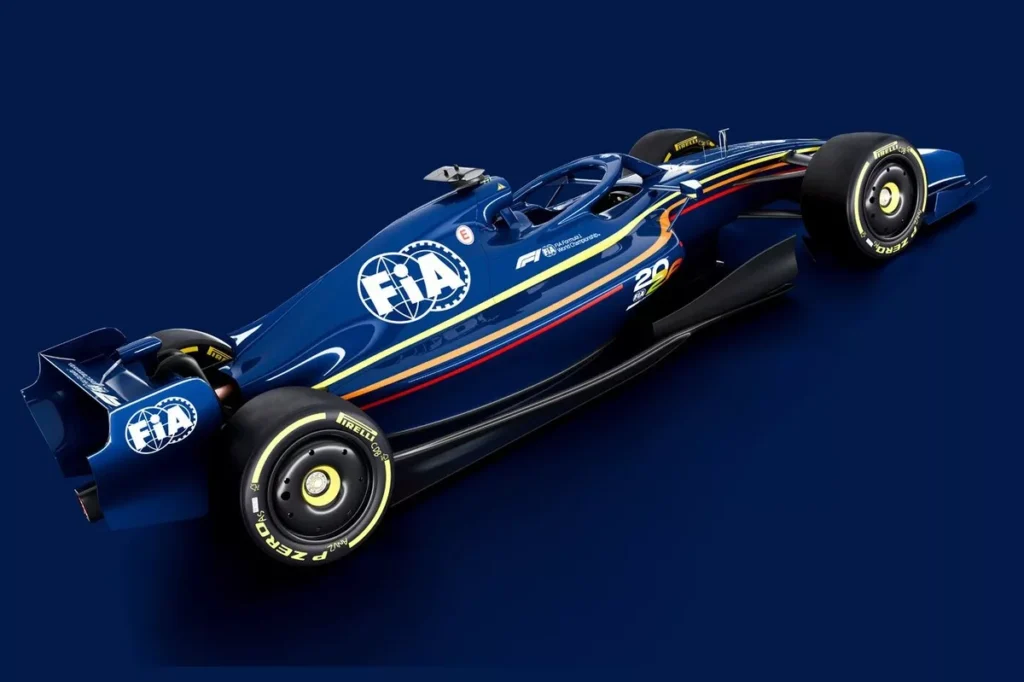
Teams have reported significant variations in their 2026 aero load predictions, with some estimates differing by as much as 20-30% in downforce levels compared to 2025. Pirelli’s Mario Isola noted that while these early numbers are useful for tyre development, they are not indicative of final performance.
« I don’t believe that those simulations are telling us what the competitive order for next year will be. »
The disparities stem from teams using different assumptions about active aerodynamics, mechanical grip, and power unit integration—all of which remain works in progress.
Why Simulations Are Misleading
Several factors contribute to the unreliability of early simulations, as Williams team principal James Vowles put it: « The mule cars are just too far away to give a clear read on 2026. »
Key Distortion Factors
- Incomplete Car Designs: Current simulations are based on partial or theoretical models rather than finalized chassis.
- Active Aero Uncertainties: New systems allowing adjustable wing angles introduce variables difficult to model accurately at this stage.
- Tyre Development Lag: Pirelli’s 2026 tyres are being designed based on forecast loads, but real-world performance won’t be verified until pre-season testing.
- Team-Specific Methodologies: Each team prioritizes different data points, leading to inconsistent outputs.
Historical Precedent
Pirelli and the FIA point to past regulation changes, such as the introduction of 18-inch tyres, where early simulations also showed wide gaps that later converged. « This has happened before, » Isola noted. « The numbers will tighten as teams refine their designs and gather real-world data. »
Conclusion: Patience Is Key
While the initial simulations provide a snapshot of where teams think they stand, the reality is that the 2026 hierarchy will be shaped by adaptability, power unit integration, and mechanical grip. The true pecking order will only become clear once the cars hit the track in anger—likely not until the first races of 2026.
Sources
- Motorsport.com: Analysis of 2026 Aero Simulations
- Formula1.com: Pirelli on future tyre development
- GrandPrix247: Why early data is misleading
- The Race: James Vowles on mule car relevance