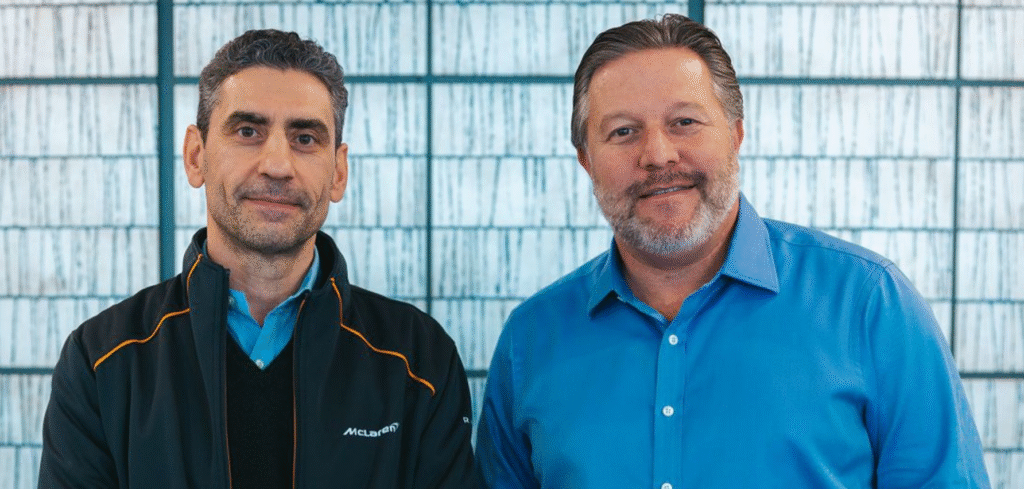
Stella and Brown, the Two “Engines” That Drive the McLaren Machine
Woking, 6 November 2025 – Ask any insider why McLaren will enter the Las Vegas season finale leading both championships and they point to the same garage wall: a laminated org-chart with two names at the top—Andrea Stella and Zak Brown. One is a soft-spoken Italian engineer who quotes Senna and Dante in the same sentence; the other a skate-boarding American deal-maker who once sold a sponsorship while sky-diving. Together they have morphed a drifting midfield team into F1’s benchmark operation in just 48 months.
From fourth to first: the timeline
- 2021 – Stella arrives as performance director; Brown is one year into CEO role, team P4
- 2022 – MCL36 still fourth, but wind-tunnel correlation jumps 17 %
- 2023 – MCL60 wins in Brazil, Stella promoted to team principal
- 2024 – P2 in constructors, Norris wins five races
- 2025 – Enter Vegas with 26-point cushion over Red Bull
Brown calls it “the most relentless turnaround in modern sport”; Stella prefers “a process of respectful impatience”.
Stella: the culture architect
Inside the MTC’s new $200 million wind-tunnel, Stella’s first act was to remove the glass wall separating aero and race engineers. “Culture eats strategy for breakfast, but culture plus strategy wins championships,” he tells selected media. His “no-blame, high-accountability” doctrine means every failed part is displayed on a “wall of learning” in the canteen. Staff bonuses are 50 % weighted on long-term car development, not race-day result, ending the “upgrade-then-forget” cycle that plagued McLaren since 2014.
Brown: the commercial rocket
While Stella polishes internals, Brown weaponises cash-flow. In 2025 McLaren’s budget tops $310 million, $35 million above the cost-cap thanks to commercial exemptions for marketing, heritage and sustainability projects. New title partner Ma’aden brings $22 million a year, Cisco Webex pays $18 million for Senna-inspired halo branding, and Gulf Oil returned with an equity stake that values the F1 team at £1.6 billion. Brown sealed the $38 billion AWS-OpenAI cloud deal that now powers the team’s race-day sim, leveraging McLaren’s technology arm as a sweetener .
Decision flow: who decides what?
- Technical concept – Stella approves final CAD freeze
- Capital expenditure >$5 m – Brown signs off, Stella consulted
- Driver line-up – Joint vote; Brown has casting vote on contracts
- Race strategy – Stella only; Brown watches from garage wall
- Marketing stunts – Brown only, provided car build not impacted
The result is zero politics: Stella never negotiates sponsorships, Brown never asks for set-up tweaks.
Recruitment coup: Newey & Cowell
When Adrian Newey announced he would leave Red Bull, Brown flew to London on a Gulf-liveried jet with a blank cheque and a 30-page technical freedom manifesto. Stella provided wind-tunnel time slots and unlimited CFD budget before the contract was even signed. Andy Cowell, former Mercedes power-trains boss, was lured by a CEO title and equity in McLaren Applied Technologies. “Zak opened the door, Andrea showed the laboratory,” Cowell says.
Data-driven race-day: Stella’s philosophy
Stella’s race-morning brief is a 40-slide probabilistic deck: tyre-energy curves, safety-car likelihood, rival fuel loads. “We never ask ‘what should we do?’ We ask ‘what is the probability the others do X?’” says race-engineer Will Joseph. The approach delivered four strategic masterclasses in 2025: Miami, Spain, Monza and Qatar, where Norris undercut Verstappen by 0.8 s thanks to a lap-32 switch to hards predicted by the model.
Brand-first global reach: Brown’s playbook
Brown’s “fan-first” mantra means every sponsor must activate at a Grand Prix, not just write a cheque. Cisco built a 5G-connected fan-zone in Austin where supporters can download 4 GB of telemetry in real time; Gulf painted an entire Tokyo subway train, creating 1.2 billion social impressions. The result: McLaren is the most-followed F1 team on TikTok (14 M fans) and merchandise revenue jumped 62 % year-on-year.
Handling star power
Stella meets Norris and Piastri individually every Friday to discuss mental energy, not lap time; Brown hosts a monthly “no-racing” dinner where drivers bring a friend or family member. “We don’t manage egos, we manage human beings,” Stella says. The policy paid off in Japan when Piastri voluntarily gave up a win-threatening strategy after engineers showed him long-term title probabilities favouring Norris.
The final push: Vegas and beyond
With 26 points in hand, Stella has banned the word “championship” inside engineering offices. Brown, conversely, commissioned 200 P1 replica trophies for sponsor events. “Andrea keeps the team cold, I keep the brand hot,” Brown laughs. If the duo delivers McLaren’s ninth constructors’ crown, it will be the first title since 1998—and proof that engineering culture and commercial velocity can coexist at maximum revs.
Bottom line
McLaren’s renaissance is not a single upgrade or sponsor deal; it is a dual-engine architecture: Stella’s methodical culture turning data into down-force, Brown’s relentless deal-making turning hype into horsepower. Together they have built a machine that leads the championship—and shows no sign of lifting off the throttle.
Sources
- Motorsport.com – Stella-Brown dynamic behind McLaren revival, 4 Nov 2025
- The Race – How Stella and Brown run McLaren, 3 Nov 2025
- ESPN – McLaren duo Brown and Stella the driving force, 3 Nov 2025
- PlanetF1 – Brown hails Stella influence on McLaren, 4 Nov 2025
- Formula1.com – Brown and Stella on McLaren success, 4 Nov 2025