Sainz Slams « Unacceptable » Piastri Penalty: F1 Drivers Demand Urgent Rules Overhaul
Topic: Formula 1 / Brazil GP Controversy Key Figures: Carlos Sainz, Oscar Piastri, Kimi Antonelli, Charles Leclerc
A controversial penalty handed to McLaren’s Oscar Piastri at the Brazilian Grand Prix has become a major flashpoint for driver frustration, prompting Grand Prix Drivers’ Association (GPDA) director Carlos Sainz to label the decision « unacceptable. » The incident has sparked a call for an urgent review of Formula 1’s racing guidelines, exposing a widening chasm between the stewards’ strict interpretation of the rulebook and the drivers’ understanding of wheel-to-wheel combat.
The Incident at Interlagos
The debate centers on a chaotic three-way battle at the first corner of the Interlagos circuit involving Piastri, Mercedes rookie Kimi Antonelli, and Ferrari’s Charles Leclerc. As the three cars fought for position into the Senna S, contact between Piastri and Antonelli sent the Mercedes into Leclerc, ending the Ferrari driver’s race.
The stewards handed Piastri a 10-second penalty, reasoning that under the official guidelines, the McLaren driver was not « sufficiently alongside » Antonelli at the apex and was therefore not entitled to racing room.
« Everyone Knows That Is Not Oscar’s Fault »
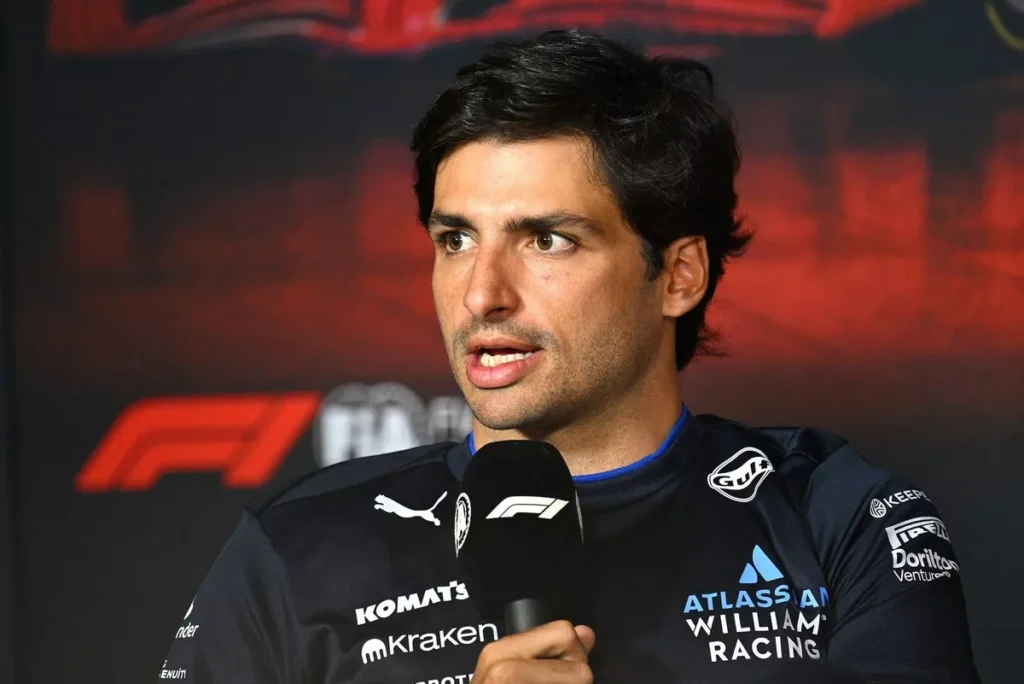
The decision was met with widespread disbelief throughout the paddock. Carlos Sainz, speaking as a senior representative of the drivers, was unequivocal in his criticism, suggesting the penalty defied racing logic.
« Everyone that’s seen racing knows that that is not Oscar’s fault at all. Everyone that’s really raced a race car knows he could have done nothing to avoid an accident there and he got away with a 10-second penalty. For me, it’s something that I don’t understand. » — Carlos Sainz, GPDA Director
Tellingly, even Charles Leclerc—the primary victim of the crash—came to Piastri’s defense, stating that he did not believe the McLaren driver deserved a penalty. Sainz pointed to this incident as the latest in a series of questionable rulings throughout the season, arguing that guidelines are being applied too rigidly, without necessary common sense.
The Technical Debate: Lock-ups and Layouts
The controversy has brought the FIA’s Driving Standards Guidelines under intense scrutiny. While intended to create consistency, drivers argue these rules force stewards to make black-and-white judgments in scenarios that are inherently grey.
A specific point of contention is how stewards interpret brake locking:
- The Stewards’ View: Any wheel lock-up is increasingly viewed as a sign that a car is « out of control. »
- The Drivers’ View: A lock-up does not equal a loss of control.
- Sainz argued: « You can lock up and still make the apex. »
- George Russell (fellow GPDA director) added context regarding the track layout, noting that on a cambered corner like Turn 1 in Brazil, the inside front tire is often unloaded. This makes locking easy even when the driver is fully in control of the vehicle’s trajectory.
The Path Forward: Showdown in Qatar
In response to the growing unrest, an urgent meeting between the drivers and the FIA has been scheduled for the upcoming Qatar Grand Prix. While the FIA has expressed an open-minded approach, the solution remains unclear.
- Permanent Stewards: Drivers like Sainz and Russell are advocating for a permanent, professional panel of stewards to build a more intuitive and predictable system of officiating.
- Simplification: Others, like Alex Albon, worry that adding more layers of rules will only increase confusion, suggesting a return to a simpler framework that relies on drivers’ inherent respect and racecraft.
As Kimi Antonelli noted, while the penalty might be technically « fair » under the current strict wording of the law, the situation was complex enough to be deemed a racing incident—highlighting the very dilemma the sport must now resolve.