
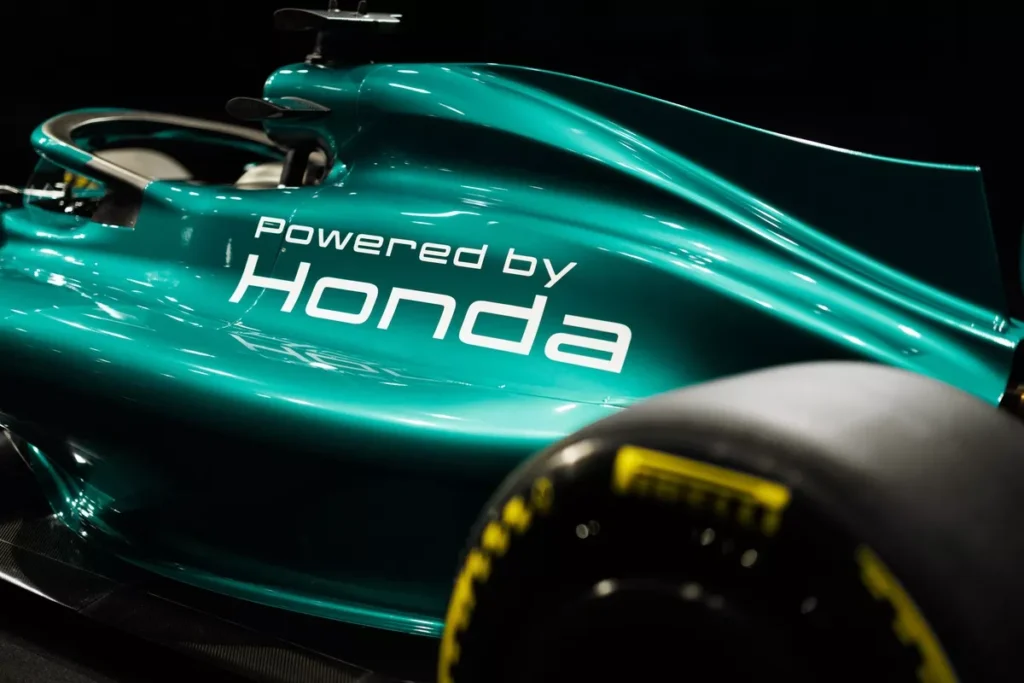
Honda Admits V6 Development Not Progressing as Expected for 2026 F1 Season
Honda has candidly acknowledged significant challenges in developing its V6 combustion engine for the 2026 Formula 1 season, revealing an uneven progress across its new power unit program. While the electrification components are advancing as planned, the internal combustion engine faces unexpected difficulties ahead of the manufacturer’s return as a works partner with Aston Martin.
Contrasting Development Progress
At the official unveiling of Honda’s 2026 power unit in Tokyo, F1 project leader Tetsushi Kakuda provided a frank assessment of the development status. The electrification side, including the significantly upgraded MGU-K system and battery technology, is progressing according to schedule. However, Kakuda admitted the combustion engine development has not followed the same trajectory.
The project leader explained that development time remains a critical factor influencing the final performance of the internal combustion engine. Despite acknowledging the challenges, Kakuda emphasized that Honda has maximized its efforts within the available timeframe, doing everything possible to prepare for the 2026 season debut.
The Scale of Technical Challenge
The 2026 regulations represent what Kakuda describes as essentially a complete reset for engine manufacturers. Beyond the basic V6 turbocharged architecture, virtually everything about the power unit is new. The combustion system has been fundamentally redesigned, fuel specifications have changed entirely, and the requirements governing engine operation bear little resemblance to the previous generation.
Honda’s previous high-speed combustion approach, which delivered championship-winning performance during its Red Bull partnership, has become largely unusable under the new regulations. Compression ratio limits and changes to fuel flow restrictions have forced the manufacturer to develop entirely new concepts for extracting performance from the internal combustion engine.
Kakuda emphasized that the ICE represents the area where performance differences between manufacturers are most likely to emerge. Achieving high output from the combustion engine while optimizing compatibility with the new sustainable fuel formulations has become critically important, making it a primary battleground for competitive advantage.
The Electrification Success Story
While combustion engine development faces headwinds, Honda’s electrical components show encouraging progress. The manufacturer has developed a completely new battery system featuring a two-stage vertical layout designed to meet Aston Martin’s request for a compact package. This innovative design reduces overall length while accommodating the dramatically increased electrical output requirements.
The 2026 regulations nearly triple the MGU-K output to 350 kilowatts, creating an almost equal split between combustion and electric power. Honda believes its battery technology, which continued evolving even during its period of reduced F1 involvement, represents a significant strength heading into the new era.
However, the increased electrical power brings its own challenges, particularly regarding thermal management. Managing temperatures with more electrical power concentrated in a tighter space requires close cooperation with specialist partners and careful integration into the chassis design.
Realistic Expectations and Long-Term Vision
Honda Racing Corporation president Koji Watanabe struck a measured tone at the Tokyo launch event, acknowledging both ambition and reality. While the manufacturer remains committed to winning, Watanabe admitted the 2026 regulations are technically extremely challenging and Honda may struggle initially. The true competitive picture will only become clear once testing begins and real-world performance data emerges.
This cautious messaging reflects Honda’s awareness of several complicating factors. The manufacturer delayed its formal commitment to the 2026 project until May 2023, giving rivals like Mercedes and Ferrari a head start on research and development. Honda also had to reassemble its engineering team after dispersing F1 personnel to other divisions following its 2021 withdrawal announcement.
Additionally, speculation suggests Mercedes and Red Bull Ford Powertrains may have identified a loophole in the compression ratio regulations, potentially providing them with an early advantage. The FIA has scheduled meetings with technical experts from all five engine manufacturers to address these concerns.
The Complexity of Missing Components
The elimination of the MGU-H thermal energy recovery system, while simplifying the overall architecture, has created unexpected complications. The MGU-H previously helped eliminate turbo lag by managing the turbocharger’s behavior, providing immediate throttle response. Without this component, engineers must find alternative solutions to prevent the delay between throttle application and full power delivery.
The MGU-H also played a role in shaping torque characteristics and achieving peak power, depending on the specific turbocharger and engine design. Its absence requires fundamental rethinking of how the turbocharged engine operates and how electrical energy deployment compensates for lost functionality.
Fuel Development as a Key Variable
The switch to advanced sustainable fuel represents another significant challenge that Honda characterizes as completely new development. While the manufacturer possesses some relevant knowledge, understanding how the new fuel interacts with redesigned hardware requires extensive testing and optimization work.
Honda is working with new partners including fuel supplier Aramco and lubricant manufacturer Valvoline to optimize the complete power unit package. This collaboration remains in relatively early stages, with Honda Racing Corporation president Watanabe indicating the team continues building knowledge incrementally as testing progresses.
The Aston Martin Partnership Context
Honda’s challenges must be considered alongside Aston Martin’s evolution as a team. Despite massive investment from owner Lawrence Stroll, the Silverstone-based outfit has never consistently competed for championships since its founding as Jordan Grand Prix in 1991. The 2025 season saw the team finish seventh in the constructors’ championship.
However, the AMR26 represents a potential turning point as the first car to fully benefit from Aston Martin’s expanded infrastructure, new wind tunnel, and the technical leadership of legendary designer Adrian Newey. The combination of Honda’s power unit and Newey’s chassis design expertise creates significant potential, though realizing that potential depends heavily on resolving the combustion engine development challenges.
Learning from Past Experience
Honda’s previous entry into F1’s hybrid era in 2015 proved disastrous, with reliability issues and poor performance marring the manufacturer’s return. A major redesign in 2017 also led to difficult testing experiences. By 2021, Honda had transformed its fortunes, producing a championship-winning power unit that matched or exceeded Mercedes’ benchmark.
Kakuda does not anticipate failures on the scale of 2015 and 2017, largely because those problems related to the complex MGU-H system with its extreme rotational speeds and intricate mechanisms. The 2026 power unit, despite being essentially new, avoids some of those specific complications. Nevertheless, significant challenges remain, particularly regarding high torque effects on the MGU drivetrain and thermal management of the battery and motor systems.
The Road Ahead
Pre-season testing will provide the first real indication of where Honda stands relative to its rivals. Sessions scheduled in Barcelona from January 26-30 and Bahrain in mid-February will reveal whether the combustion engine development concerns translate into meaningful performance deficits or prove manageable within the broader power unit package.
Honda’s honesty about development challenges reflects a pragmatic approach rather than crisis management. The manufacturer understands that the new regulations have reset the competitive landscape, creating both opportunities and risks for all five power unit suppliers. Success in this environment requires not just technical excellence but also realistic expectations and the patience to develop solutions as the season progresses.
The manufacturer’s long-term commitment to winning remains firm, even as short-term difficulties loom. Honda’s decision to return to Formula 1 stems from alignment between the sport’s increasing electrification and the company’s broader sustainability goals. This strategic fit provides motivation to overcome current obstacles and establish Honda as a competitive force under the new technical regulations.
Sources
- The Race – Six things Honda’s revealed about 2026 F1 engine
- Motorsport.com – Honda: « Perhaps we will struggle » in 2026 F1 season
- Autosport – Honda admits to engine trouble ahead of 2026 F1 season
- The Race – Where Honda stands on tough 2026 targets + compression ratio trick
- Honda Global – HRC LPL Tetsushi Kakuda Discusses Key Points of the New Power Unit Regulations
- F1i.com – Honda committed to winning but admits it may ‘struggle’ in 2026
- Motorsport.com (French) – Le développement du V6 Honda n’avance « pas nécessairement » comme prévu