
How Cadillac’s Arrival Changes F1 Qualifying Format in 2026
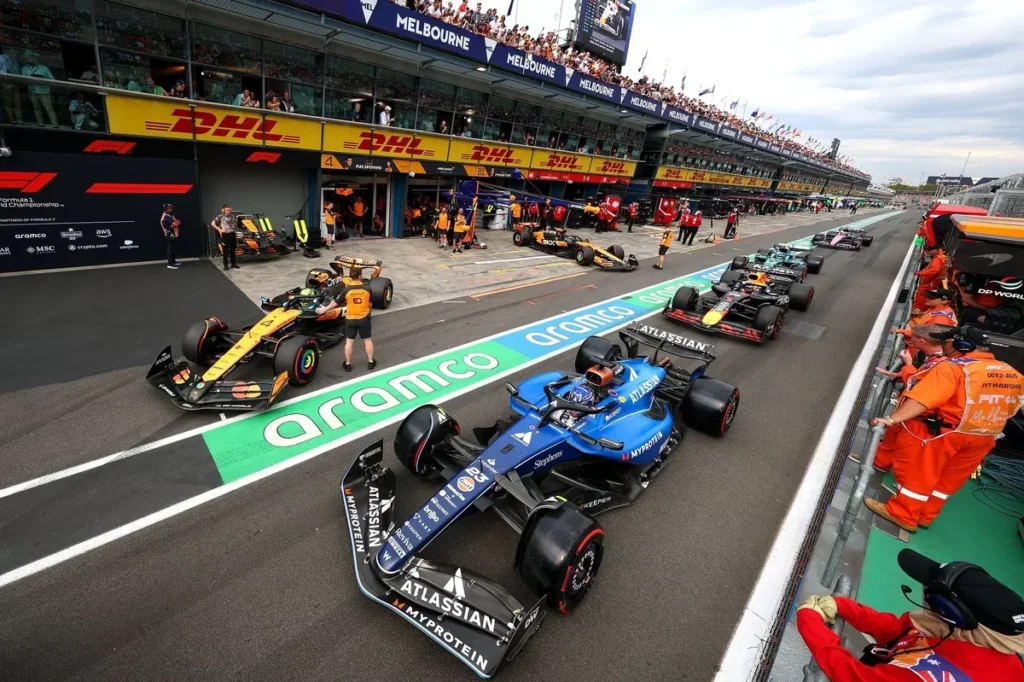
The arrival of Cadillac as Formula 1’s 11th team will expand the grid to 22 cars for the first time since 2016, prompting the FIA to adjust the qualifying format while preserving the sport’s competitive structure.
Formula 1’s familiar three-part knockout qualifying system will remain in place for 2026, maintaining the Q1, Q2, and Q3 structure that fans have known for years. The session durations also stay unchanged: Q1 runs for 18 minutes, Q2 for 15 minutes, and Q3 for 12 minutes. However, the critical adjustment lies in the elimination thresholds.
Under the current 20-car format, five drivers are eliminated after both Q1 and Q2, leaving ten cars to battle for pole position in Q3. With 22 cars on the grid in 2026, the FIA has increased the number of eliminations in the first two sessions to six drivers each, while crucially keeping Q3 as a 10-car shootout.
Breaking Down the New Qualifying Structure
Q1 (18 minutes): All 22 cars take to the track. The six slowest drivers are eliminated, determining grid positions 17 through 22. Sixteen cars advance to Q2.
Q2 (15 minutes): The remaining 16 cars compete for a place in the final session. Again, the six slowest are eliminated, setting grid positions 11 through 16. Ten cars progress to Q3.
Q3 (12 minutes): The fastest ten drivers battle for pole position and the top ten grid slots, maintaining the same intensity and format as the current system.
The breaks between sessions remain consistent with current regulations: seven minutes between Q1 and Q2, and eight minutes between Q2 and Q3.
Sprint Qualifying Follows the Same Pattern
The changes extend to Sprint Qualifying weekends as well. While the sprint sessions are shorter in duration—12 minutes for SQ1, 10 minutes for SQ2, and 8 minutes for SQ3—the elimination numbers mirror the standard qualifying format. Six drivers will be knocked out in both SQ1 and SQ2, with ten cars advancing to the final shootout.
Why the FIA Kept Q3 at Ten Cars
The decision to maintain a 10-car Q3 was deliberate. According to the FIA’s 2026 sporting regulations, the standard qualifying procedure is « based upon twenty (20) Cars being officially eligible, » with a scaling clause that states: « If twenty-two (22) Cars are eligible six (6) will be eliminated » after Q1 and Q2.
This approach ensures that the fight for pole position retains its exclusivity and intensity. Rather than expanding Q3 to include 11 or 12 cars, the FIA chose to increase competition in the earlier sessions, making every lap in Q1 and Q2 more critical than ever.
Impact on Teams and Drivers
The adjustment creates a more demanding qualifying environment, particularly for midfield teams. With six eliminations instead of five in Q1 and Q2, margins for error shrink considerably. Traffic management on flying laps becomes even more crucial, as denser grids mean less clean track space.
The expanded grid also intensifies the pressure on drivers who typically hover around the Q2 cutoff line. Teams that consistently qualified in the 11th to 15th positions under the old format may now find themselves more vulnerable to elimination, while those at the back of the grid face an even steeper climb to reach Q3.
Cadillac Joins With Experienced Lineup
Cadillac’s entry marks a significant moment for Formula 1’s expansion in the American market. The team will field a seasoned driver pairing of Sergio Pérez and Valtteri Bottas, both of whom bring extensive F1 experience and race-winning pedigree to the new outfit.
Their arrival comes as Formula 1 undergoes one of its most radical technical overhauls in modern history. The 2026 regulations introduce a complete power unit revolution, shifting from the current 80/20 split between internal combustion and electric power to an even 50/50 balance, alongside the introduction of 100% sustainable fuel.
What This Means for 2026
While the qualifying adjustments may seem minor on the surface, they represent a meaningful shift in how sessions will play out. The extra eliminations in Q1 and Q2 add an additional layer of jeopardy, requiring teams to execute cleanly from the very first run.
For fans, the format remains familiar and easy to follow, while the increased competition in the early sessions promises more drama and unpredictability. Combined with the revolutionary technical regulations and Cadillac’s arrival, the 2026 season is shaping up to be one of the most transformative periods in Formula 1’s recent history.