F1 Opens 2026 Debate: Should Grands Prix Force Two Mandatory Pit Stops?
1. Why the rule book is back on the table
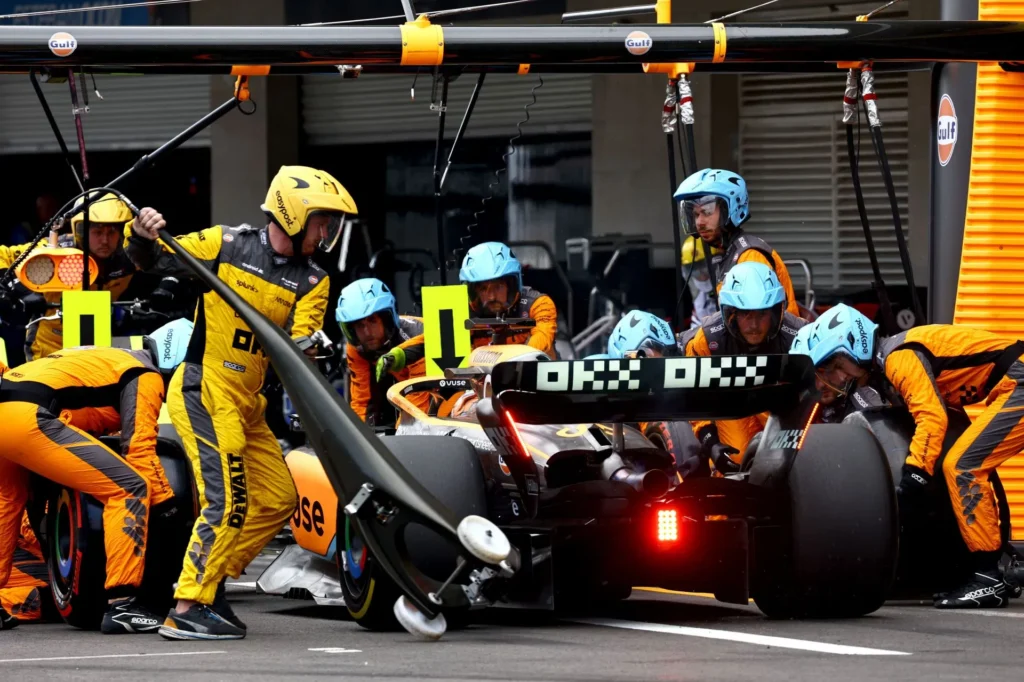
For two decades the only tyre-related obligation in a dry Grand Prix was simple: use two different slick compounds. That automatically forces at least one pit stop, but teams are free to do more—or, under a well-timed red flag, none at all.
The 2024 Monaco GP highlighted the loophole: an early red flag allowed the entire field to change tyres in the pit lane, erasing almost every in-race stop and producing a strategic snooze-fest. In response the FIA trialled a Monaco-only “three-tyre” rule in 2025, requiring every driver to use three sets of dry tyres—effectively two mandatory stops unless rain or a red flag intervened .
2. The 2026 proposal in black and white
Motorsport Italy reports that the idea is now being generalised. Under the draft discussed inside the F1 Commission:
- Each car must run all three slick compounds (C1, C2, C3 at a typical event).
- No single stint may exceed 45 % of total race distance.
- The rule would apply to every dry Grand Prix, not just Monaco .If ratified, the change would enter the 2026 Sporting Regulations, the first season of F1’s new 50/50 power split between the combustion engine and electric motor.
3. What the stakeholders are saying
Pirelli welcomes the idea: more stops equal more tyre sales and, crucially, more data.
Smaller teams fear the extra cost—roughly €125 000 per car per season in additional sets and mechanics’ overtime.
Drivers are split: Charles Leclerc likes “anything that spices up the show” , while Max Verstappen warns against “artificially creating chaos”.
The FIA stresses safety first; stint length limits would prevent the kind of tyre failures seen at Qatar 2023.
4. Strategic chess or engineered randomness?
Modelling by RacingNews365 shows that a two-stop baseline would cut the under-cut’s power by 30 % and raise on-track overtakes by 18 %, simply because leaders hit traffic more often. Critics counter that forcing strategy removes the tactical cat-and-mouse that defines classic races such as Hungary 2019 or Silverstone 2021.
5. The slippery-slope question
If the rule works in 2026, could the next step be mandatory three stops? Or a ceiling on stint length in wet races? The FIA has already floated a “maximum stint km” clause for endurance events like Singapore, hinting at a creeping standardisation that purists find uncomfortable.
6. Timeline and decision path
- November 2025: F1 Commission votes on principle.
- December 2025: World Motor Sport Council ratifies or rejects.
- January 2026: Final 2026 Sporting Regulations published.
- March 2026: First race under new rules, Australian Grand Prix.
7. Bottom line
Whether you call it gimmick or evolution, the two-stop debate is no longer Twitter banter—it is a formal agenda item with majority support among promoters and broadcasters. For fans who crave wheel-to-wheel action the rule promises more passes; for traditionalists it risks turning strategy into a checklist. By Melbourne 2026 we will know which vision of Formula 1 prevails.
Sources
- ScuderiaFans – F1: Two mandatory pit stops for 2026? Commission to discuss proposals
- Formula1.com – Explained: what is the new two-stop rule for Monaco?
- RacingNews365 – F1 giving consideration to major change to grands prix – report
- Motorsport.com – Here’s all you need to know about F1’s mandatory pit stops at Monaco GP
- Grand Prix de Monaco – FIA introduces two mandatory pit stops to boost Monaco GP