
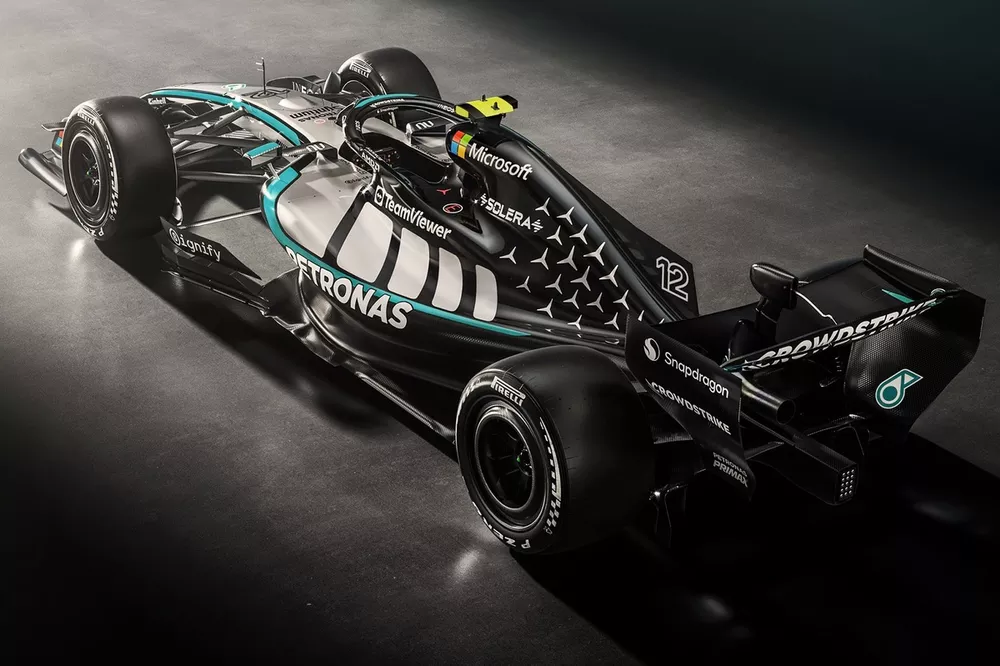
Status Quo on Engines After FIA Meeting
The FIA’s gathering with engine technical experts on Thursday, January 22, 2026, failed to resolve the most contentious technical dispute of Formula 1’s new era. Despite strong complaints from Ferrari, Honda, and Audi about alleged compression ratio exploitation by Mercedes and Red Bull Powertrains, the meeting ended with the status quo firmly intact.
The Meeting That Changed Nothing
Sources close to the discussions confirm that FIA representatives at the meeting defended the technical choices enshrined in the new regulations, effectively shutting down hopes for immediate rule changes. Any performance advantage Mercedes and Red Bull may have secured through clever engineering remains in place—at least until 2027.
I don’t think it’s as big a deal as the press is currently making it out to be.
FIA single-seater director Nikolas Tombazis attempted to downplay the controversy, though his comments did little to satisfy frustrated rivals.
The Compression Ratio Controversy Explained
The entire dispute revolves around Article C5.4.3 of the 2026 technical regulations, which states: “No cylinder of the engine may have a geometric compression ratio higher than 16.0. The procedure to measure this value will be detailed by each PU manufacturer according to the guidance document and executed at ambient temperature.”
The compression ratio was reduced from the previous 18:1 limit to 16:1 for 2026, partly to make F1 engine regulations more accessible for new manufacturers. However, the critical phrase “at ambient temperature” has become the source of intense debate.
The Alleged Trick
Mercedes and Red Bull Powertrains are believed to have designed engines that comply with the 16:1 limit during static checks at ambient temperature but achieve higher compression ratios when running at operating temperatures. This is accomplished through clever metallurgy and thermal expansion properties of components such as connecting rods.
The Performance Impact
The potential advantage is substantial. According to simulation testing conducted by manufacturers, increasing the compression ratio from 16:1 to 18:1 could deliver approximately 10 kilowatts of additional power—equivalent to 13 horsepower.
This translates to roughly 0.3 to 0.4 seconds per lap at most circuits. Over the course of a 58-lap Grand Prix, this could amount to a cumulative advantage of 17 seconds or more—a performance gap that would be virtually impossible to overcome through chassis development alone.
The Legal Arguments
Mercedes and Red Bull maintain they are operating entirely within the regulations. From their perspective, the rules explicitly state that compression ratio measurements occur at ambient temperature. As long as their engines comply during these official checks, they argue there is no violation.
I’m confident that what we’re doing is legal. It’s a lot of noise about nothing.
Red Bull Powertrains technical director Ben Hodgkinson dismissed the controversy with confidence, while an FIA spokesperson reinforced the interpretation: “The regulations clearly define the maximum compression ratio and the method for measuring it, which is based on static conditions at ambient temperature.”
However, Ferrari, Audi, and Honda point to Article C1.5, which states: “Formula 1 cars must comply with these regulations in their entirety at all times during a competition.”
Their argument is straightforward: if the regulations specify a 16:1 maximum compression ratio, then engines must maintain that limit at all times, including when running at operating temperatures.
Why No Resolution Was Reached
Several factors contributed to the meeting’s failure to reach consensus. Most critically, it’s now too late for manufacturers to significantly modify their engines. Power units are set to be homologated on March 1, 2026, and the lead time for engine changes is substantial—far longer than for chassis modifications.
The Italian outlet Corriere dello Sport reports that Red Bull could potentially adjust its engines to meet a strict 16:1 limit if required, while Mercedes would be unable to do so. However, this remains unverified speculation.
The proposal to add sensors in the combustion chamber—which would allow the FIA to monitor compression ratios dynamically while engines are running hot—failed to gain unanimous support among manufacturers.
The ADUO Safety Net
The FIA has built a performance-balancing mechanism into the 2026 regulations called ADUO (Additional Development and Upgrade Opportunities). This system grants struggling manufacturers additional development opportunities based on measured power deficits.
How ADUO Works
Based on three periods of six races each, the FIA measures the power of the internal combustion engine. If a manufacturer is between 2% and 4% behind the best ICE, they receive one additional upgrade opportunity. Larger deficits grant even more development chances.
However, there’s considerable skepticism about whether ADUO can truly level the playing field. Red Bull Powertrains’ Hodgkinson argues that the gestation time for engine development is much longer than for chassis changes.
The Cost Cap Complication
Making matters worse, new cost cap rules for 2026 create additional disincentives for rapid engine development. Under previous regulations, teams could introduce new engine specifications relatively easily by accepting grid penalties—the additional costs fell outside the cost cap.
For 2026, however, engine supply costs are included in the budget cap. This means that bringing in upgraded engines for performance reasons directly impacts a manufacturer’s ability to fund other development work.
Historical Parallels
The controversy recalls previous technical disputes where clever interpretation of ambiguous regulations created competitive advantages. The most obvious parallel is the 2009 double-diffuser saga.
Teams including Brawn, Toyota, and Williams exploited wording in the regulations about how diffuser dimensions would be measured, creating devices that were arguably legal under the letter of the law but violated its spirit. The FIA ultimately allowed these designs to race, fundamentally altering the championship battle.
What Happens Next?
With no resolution achieved, the compression ratio controversy will now extend into the 2026 season itself. Sources suggest Ferrari, Honda, and Audi retain the right to protest after the Australian Grand Prix if Mercedes and Red Bull-powered teams demonstrate the suspected performance advantage.
Hopefully, the FIA will make the right decision.
Mattia Binotto’s comments reflect both frustration with the current situation and resignation that immediate change is unlikely.
Conclusion
The January 22 meeting between the FIA and engine manufacturers ended exactly where it started: with Mercedes and Red Bull defending their technical solutions as legal under the regulations, rivals insisting those solutions violate the spirit of the rules, and the governing body unwilling to impose a resolution without consensus.
Any performance advantage from higher compression ratios at operating temperatures will remain in place for 2026, potentially fundamentally altering the championship battle before it begins. The ADUO performance-balancing mechanism provides a theoretical safety net, but practical constraints around development lead times and cost cap restrictions may prevent it from truly leveling the field.
For a sport already implementing the most dramatic technical changes in over a decade, this controversy creates additional uncertainty and potential chaos. The only certainty is that the compression ratio debate will continue to dominate pre-season discussion and may well explode into full controversy once on-track performance differences become clear at the Australian Grand Prix in March.
Sources
- The Race — “What’s been agreed at key F1 engine loophole meeting” January 2026
- The Race — “What to expect from key F1 engine loophole meeting” January 2026
- The Race — “No hope for rivals until 2027? The impact of F1’s loophole controversy” December 24, 2025
- Motorsport.com — “Mercedes, Red Bull and F1’s 2026 engines: The loophole controversy explained” December 23, 2025
- Motorsport.com — “Controversial 2026 F1 engine loophole will not be resolved before the racing begins” January 2026
- Motorsport.com — “F1 engine trick to be debated in special FIA meeting” January 2026
- RacingNews365 — “FIA issue statement amid pressure over F1 engine controversy” January 2026
- Motorsport.com — “Audi joins call for action on 2026 F1 engine loophole” January 2026
- Auto Hebdo F1 — “The FIA and engine manufacturers are meeting to resolve the controversy” January 2026
- GrandPrix.com — “Engine row erupts over alleged 2026 compression loophole” December 2025
Discover more from f1liveupdates.com
Subscribe to get the latest posts sent to your email.