Why Ferrari Will Need to Be “Clever” With 2026 Upgrades
Ferrari team principal Frédéric Vasseur has revealed that the true challenge of 2026 development won’t be finding performance in the wind tunnel—it will be managing the cost cap. As Formula 1 prepares for its most dramatic technical reset in years, the Scuderia faces a strategic puzzle where logistics, timing, and financial discipline could matter more than raw engineering prowess.
The Cost Cap as Primary Development Driver
In a marked departure from traditional F1 thinking, Vasseur has identified the budget cap—not aerodynamic capacity—as the primary factor that will determine upgrade strategies throughout the 2026 season.
I think the driver of the introduction of upgrades won’t be the capacity to develop into the wind tunnel. The driver of the introduction of upgrades will be the cost cap.
This statement signals a fundamental shift in how top teams must approach development. In previous regulatory cycles, teams with superior wind tunnel facilities and larger technical departments could simply out-develop their rivals through sheer volume of upgrades. That approach becomes financially untenable under the expanded cost cap regime for 2026.
“It means we will have to be clever to do a good usage of the budget that we have for development and to cope with this budget to introduce upgrades,” Vasseur continued. “For sure, the sooner the better and the most important the better on this. But it’s not a given that if you start to introduce four or five upgrades the first couple of races, if you have to send a floor to Japan or to China, you are burning half of your development budget.”
The Transport Cost Dilemma
A critical new factor for 2026 is the inclusion of transport costs within the budget cap calculation. This seemingly minor accounting change has major strategic implications, particularly given the opening sequence of races.
Early 2026 Calendar Challenge
The early 2026 calendar features an Australia-China double-header, followed immediately by Japan, before the Middle Eastern leg begins in Bahrain. This concentration of long-haul, far-flung destinations creates a financial minefield for teams eager to deploy upgrades early in the season.
Large components like floors represent a particularly expensive logistical challenge. Not only do they cost significant resources to design, manufacture, and validate, but shipping them via expedited freight to Asia can consume massive portions of the development budget.
“If you have to send a floor to Japan or to China, you are burning half of your development budget,” Vasseur emphasized, highlighting the stark arithmetic teams now face.
Smaller items present less of a problem. Teams will likely continue the established practice of transporting minor components in personnel luggage, a workaround that has long helped manage freight costs. But for major aerodynamic or mechanical upgrades, the calculus has fundamentally changed.
Strategic Patience May Become a Weapon
Vasseur’s comments suggest that Ferrari is prepared to resist the traditional impulse to rush upgrades to the earliest races. Instead, the team may deliberately hold back certain developments, refining them further in simulation and wind tunnel work until the calendar and cost structure make deployment financially sensible.
It means we will need to be clever in the plan, perhaps to develop sometimes more in the wind tunnel and to introduce in race three or four, when we are going back to Bahrain.
This approach represents a calculated bet that patience will prove more valuable than early deployment. Rather than arriving at the Australian Grand Prix with a suite of new parts that drain the budget before understanding their real-world effectiveness, Ferrari may opt for a more measured rollout timed to coincide with returning to more accessible venues.
A Volatile Development Landscape
Vasseur anticipates that the 2026 competitive order will prove far more fluid than what teams experienced in 2025. The contrast between the two seasons reflects the maturity level of the respective technical regulations.
“I’m really convinced that 2025, the picture in Bahrain test one was almost the same picture in the last race in Abu Dhabi,” Vasseur noted, describing how the established 2022-2025 regulation cycle had reached a point of technical convergence where the hierarchy remained largely static throughout the season.
2026 will be dramatically different. With entirely new chassis regulations, power unit architecture, and aerodynamic philosophies, every team starts from zero. The potential for development gains remains enormous throughout the season.
“Next year, you will have a huge rate of development all over the season. It’s more like 2022 – if someone is in front at the beginning of 2026, it doesn’t mean they will be in front at the end of 2026, or that they will be at the front in 2027,” Vasseur explained.
The $215 Million Reality
For 2026, the cost cap rises to $215 million—a substantial increase from the $135 million baseline that governed 2024 and 2025. However, this expansion doesn’t represent additional spending power in real terms.
The increase primarily accounts for inflation and the inclusion of additional operating expenses now factored into the cap. Media activities, expanded transport costs, and other operational elements that previously sat outside the budget limit have been brought within the calculation.
Budget Reality Check
Teams don’t have genuinely more resources to deploy—they simply have more expenses to manage within the cap. The financial constraint remains as tight as ever, just distributed across a broader range of activities.
For Ferrari specifically, this creates pressure to maximize efficiency. The team has acknowledged struggles in recent seasons to optimize upgrades effectively. McLaren’s successful development trajectory from midfield to championship contention has provided a contrasting example of how well-timed, well-executed upgrades can transform a team’s competitive position.
Component-Specific Strategy
Vasseur indicated that Ferrari’s approach will vary depending on the specific component being upgraded. Not all parts carry equal weight in the cost-benefit analysis.
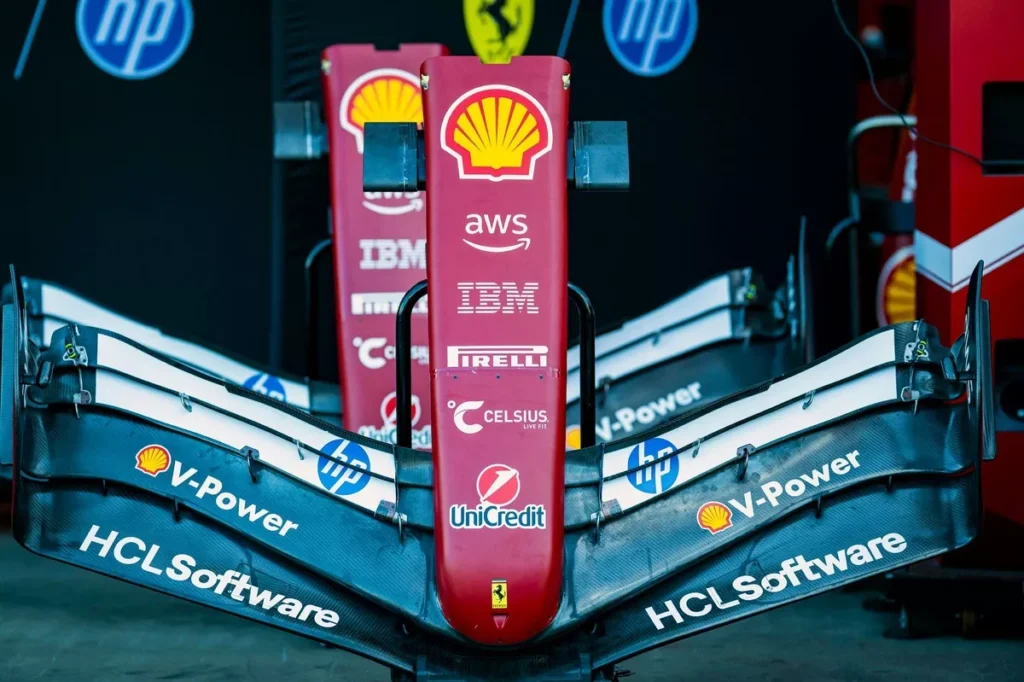
“For sure, if you have an upgrade on the flap of the front wing, it’s less cost than the floor to send to China,” he noted, highlighting the spectrum of logistical complexity.
Front wing elements, smaller bodywork pieces, and certain mechanical components can be transported relatively affordably. These items may still be candidates for early-season deployment, even at distant venues. But major aerodynamic structures—floors, sidepods, engine covers—require more careful strategic consideration.
Timing, Not Just Performance
The emphasis on “clever” timing reveals that 2026 development strategy transcends pure engineering questions. Knowing when to deploy an upgrade may prove as important as knowing what to develop.
A team that introduces a marginal floor upgrade at the Australia opener might gain one-tenth of a second per lap—but if that deployment consumes half the development budget for logistics, it precludes more significant upgrades later in the season when the competitive picture becomes clearer and transportation costs decrease.
Conversely, a team that exercises restraint early, banking upgrades for mid-season deployment once the calendar returns to Europe and the Middle East, preserves financial resources for multiple upgrade packages when the development direction becomes more certain.
Reliability First, Performance Second
Vasseur also emphasized that the initial 2026 testing phase will prioritize reliability over raw performance. With such radical technical changes, confirming that fundamental concepts are sound takes precedence over chasing lap time.
On the eve of such a radical technical change, the most important thing is to get the miles in, in the initial phase, the pursuit of performance is not a priority.
This philosophy extends to the early race weekends. Teams cannot afford to pursue aggressive performance upgrades if those developments compromise reliability or introduce unexpected complications. The cost cap makes backtracking from failed upgrade directions especially painful—development resources spent on unsuccessful paths cannot be easily recovered.
Conclusion
Frédéric Vasseur’s emphasis on being “clever” with 2026 upgrades reveals the complex strategic environment teams now navigate in Formula 1. The budget cap has evolved from a simple spending limit into a multidimensional constraint that touches every aspect of technical development.
For Ferrari, success in 2026 won’t come from wind tunnel prowess alone. It will require careful timing, smart logistics, strategic patience, and disciplined resource management. The team that wins might not be the one that develops fastest—it might be the one that develops smartest.
As Vasseur put it, the question teams must continually ask isn’t “what can we develop?” but rather “what should we develop, when should we introduce it, and what will it cost?” Those answers, balanced against the competitive circumstances and remaining budget, will determine who rises and who stumbles in Formula 1’s new era.
Sources
- Motorsport.com — “Fred Vasseur: Ferrari will have to be ‘clever’ with 2026 F1 upgrades” December 2025
- Scuderia Fans — “How Ferrari views the budget cap as a strategic tool for 2026 development” December 2025
- GPBlog — “Vasseur shares key reason Ferrari will need to be clever with 2026 upgrades” December 2025
- F1i.com — “Vasseur sees 2026 F1 development race won by ‘clever’ timing” December 2025
- Motorsport Week — “The one area Ferrari is exercising caution on for 2026 F1 reset” December 2025
- Auto Action — “Vasseur sure ‘development will be the key’ in 2026” December 2025
Discover more from f1liveupdates.com
Subscribe to get the latest posts sent to your email.