Red Bull’s “Big Mistakes” Cost Tsunoda at Las Vegas
How critical tyre pressure errors destroyed Yuki Tsunoda’s qualifying hopes and left him starting from 19th position
📖 6 min read
Red Bull Admits Catastrophic Error
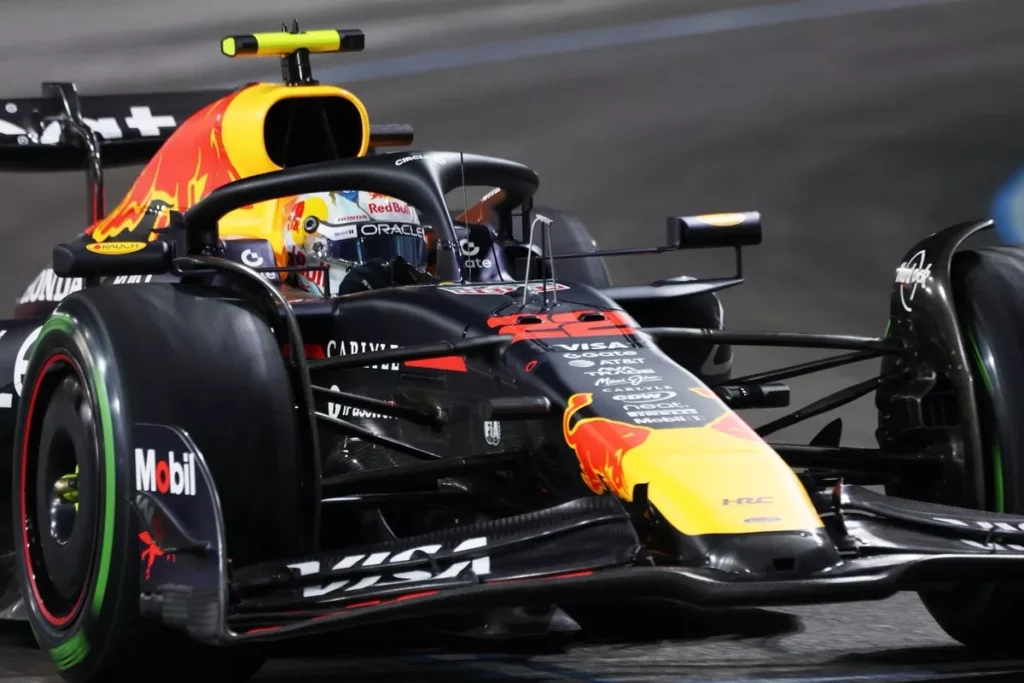
Red Bull Racing has accepted full responsibility for Yuki Tsunoda’s disastrous qualifying elimination at the Las Vegas Grand Prix. Team Principal Laurent Mekies publicly apologized after admitting to critical tyre pressure setup errors that left the Japanese driver with “no chance to be competitive” in Friday’s treacherous wet session.
Tsunoda will start Saturday’s race from 19th position on the grid—his sixth Q1 elimination of the 2025 season, a damning statistic that underscores his ongoing struggles with Red Bull’s notoriously difficult RB21.
The Perfect Storm
Las Vegas provided one of the most hostile qualifying environments of the entire 2025 season. Conditions were extreme: ice-cold temperatures hovering around 12°C, a circuit saturated with standing water, and visibility so poor that experienced drivers struggled to locate corner markers.
Yet despite these universal challenges affecting all competitors, Red Bull’s setup miscalculation compounded Tsunoda’s difficulties dramatically. His teammate Max Verstappen progressed smoothly through the rounds and secured a commanding second-place grid position. Tsunoda, meanwhile, found himself fighting a car with fundamentally compromised setup.
The Critical Tyre Pressure Mistake
The root cause was straightforward but catastrophic: incorrect tyre pressures applied to Tsunoda’s RB21 before Q1. In wet conditions, tyre pressure management becomes exponentially more critical than in dry weather. Engineers must carefully calibrate pressures to maximize the limited contact patch available between rubber and a waterlogged racing surface.
“We made quite big mistakes with his tyre pressures. These things obviously should not happen. Apologies to Yuki—he was in a good rhythm all weekend and it’s really painful to take this chance away from him.” — Laurent Mekies, Red Bull Team Principal
Red Bull failed to properly reduce Tsunoda’s pressures in response to the exceptionally slippery track conditions. The low-grip surface and cold temperatures demanded precise pressure configurations, yet the team’s setup left Tsunoda unable to generate sufficient mechanical grip, regardless of his driving commitment.
“I could feel that clearly something wasn’t right and wasn’t working properly. Now I know my pressures were way off where they should have been, which explains the issues I had throughout Q1.” — Yuki Tsunoda
A Puzzling Performance Collapse
The error proved particularly galling given Tsunoda’s strong form throughout the weekend’s opening two days. During Friday morning’s opening practice session, he finished third-fastest and demonstrated genuine mastery of the difficult circuit conditions.
That confidence and pace proved impossible to access when qualifying began. The incorrect tyre pressures degraded his car’s fundamental operating characteristics. Tsunoda described the experience as driving on ice, struggling to generate even basic grip on intermediate tyres.
Unexpected Strategy Compounds the Problem
Adding insult to injury, Red Bull had failed to anticipate requiring the full wet “extreme” tyre compound for qualifying. This poor expectation management meant the team was potentially unprepared with optimal setup configurations for the scenario that rapidly materialized once qualifying commenced.
“We didn’t expect to use the extreme tyres. I’m just three seconds off compared to any other drivers. Clearly I was missing something, because I was literally driving on ice.” — Yuki Tsunoda
Career Implications at Critical Juncture
For Tsunoda personally, the Las Vegas qualifying disaster arrives at the worst possible timing. With his 2026 seat widely expected to be handed to Racing Bulls rookie Isack Hadjar and only three races remaining in the season, each session represents a crucial opportunity to demonstrate his value.
While Red Bull’s transparency provides external explanation for the catastrophic result, it cannot entirely absolve Tsunoda in the eyes of decision-makers determining his future. The reality is that teammates, rivals, and Red Bull leadership will scrutinize his response in the remaining races to determine whether he deserves retention.
Unusual Transparency from Red Bull
The openness with which Mekies accepted responsibility represents an unusual departure from typical Formula 1 team communications, where blame is usually diffused or deflected. That Red Bull explicitly stated the error was “on us” rather than attempting to minimize or contextualize the failure suggests genuine contrition and recognition that Tsunoda’s opportunity was unjustly compromised.
For Tsunoda, such acknowledgment provides at least partial vindication that his Q1 elimination stemmed from systemic team failure rather than pure performance shortfall. However, whether that distinction carries weight with Red Bull’s 2026 lineup decisions remains uncertain.
Discover more from f1liveupdates.com
Subscribe to get the latest posts sent to your email.