
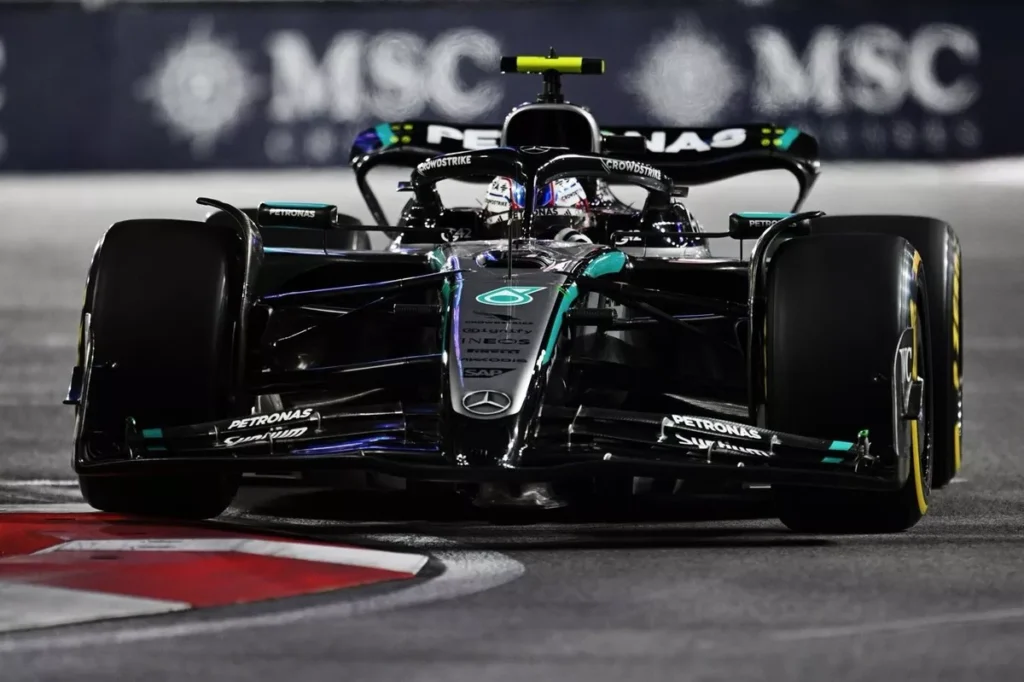
Mercedes Announces Major Microsoft Partnership Worth $60M Annually for F1 2026
Mercedes has officially confirmed a landmark multi-year partnership with technology giant Microsoft ahead of the 2026 Formula 1 season. The deal, estimated at approximately $60 million per year, brings Microsoft’s cloud computing and artificial intelligence capabilities to the heart of the team’s operations as Formula 1 enters a new technical era.
A Strategic Alliance at the Right Moment
The announcement came Thursday morning, coinciding with Mercedes’ unveiling of the W17 car for the 2026 season. The partnership positions Microsoft’s Azure cloud platform and enterprise AI technologies as central components of Mercedes’ operational infrastructure, from the factory in Brackley to trackside operations during race weekends.
Team principal Toto Wolff emphasized the strategic importance of the collaboration, noting that Formula 1 is driven by those who lead through innovation. Partnering with Microsoft, whose name has become synonymous with groundbreaking technological advancement, reflects Mercedes’ commitment to remaining at the forefront of performance and progress as the sport undergoes one of its most significant technical transformations in modern history.
The Third-Largest Sponsorship Deal on the Grid
While Mercedes has not officially confirmed the financial details, industry experts estimate the partnership’s value at approximately $60 million annually. This figure would make it the third most lucrative sponsorship arrangement in Formula 1, trailing only Mercedes’ existing title sponsorship with Petronas at $75 million per season and Red Bull Racing’s partnership with Oracle valued at $100 million annually.
The deal represents another major commercial success for Mercedes, which already counts more than 20 sponsors across its operation. The team recently expanded its commercial portfolio with partnerships including PepsiCo and digital finance firm Nu, demonstrating the continuing appeal of Formula 1’s most successful constructor of the turbo-hybrid era.
Technical Integration Beyond Branding
The Microsoft partnership extends far beyond traditional sponsorship visibility. While the Microsoft logo will appear prominently on the W17’s front wing endplates and airbox, as well as on the race suits of drivers George Russell and Kimi Antonelli, the collaboration’s true value lies in technical integration.
Microsoft Azure and its AI capabilities will expand Mercedes’ existing high-performance computing and data analysis infrastructure. The cloud-based systems will support simulation workloads, performance analysis, race strategy modeling, and cross-team analytics. This scalable approach allows Mercedes to adjust computing power dynamically, scaling resources up during periods of high demand and down when requirements decrease.
Judson Althoff, CEO of Microsoft’s commercial business, highlighted that the partnership places Microsoft’s cloud and enterprise AI technologies at the heart of racing performance, where milliseconds determine outcomes and data drives decisions. The collaboration aims to create faster insights, smarter collaboration, and new operational methodologies as Mercedes navigates the challenges of the 2026 technical regulations.
Building on a Thirty-Year Foundation
The Formula 1 partnership builds on more than three decades of collaboration between Microsoft and Mercedes-Benz across the automotive value chain. Previous joint initiatives have spanned AI-powered smart factories, electric vehicle telemetry systems, onboard vehicle intelligence, and cloud-enabled engineering platforms. The new Formula 1 arrangement brings this same innovation mindset and digital capability into the world’s premier motorsport.
Mercedes has already begun implementing Microsoft’s technology in practical applications. The team used real-time sensor data combined with Azure cloud tools to pilot intelligent virtual sensors, enabling rapid testing without waiting for new on-premises infrastructure deployment. Azure Kubernetes Service has allowed Mercedes to flexibly adjust computing power while meeting strict financial regulations and Formula 1’s cost cap requirements.
Switching Allegiances from Alpine
Microsoft’s move to Mercedes represents a significant shift in Formula 1 sponsorship landscape. The technology giant had maintained a long-standing partnership with Alpine and its predecessor teams, dating back to 2012 when the Enstone-based operation competed as Lotus. Microsoft also briefly sponsored the Manor team in 2016 during that squad’s final season.
The Alpine partnership concluded following the 2025 campaign, freeing Microsoft to pursue an arrangement with Mercedes. The switch reflects both Mercedes’ enhanced commercial attractiveness and Microsoft’s strategic decision to align with a team positioned to capitalize on the 2026 regulatory changes. Alpine finished the 2025 season struggling near the bottom of the constructors’ championship, while Mercedes aims to return to championship-contending form.
Perfect Timing for the 2026 Revolution
The partnership’s timing aligns with Formula 1’s most comprehensive technical overhaul in years. The 2026 regulations introduce numerous fundamental changes, including power units with a 50-50 split between internal combustion and electric power, smaller and lighter cars, removal of DRS in favor of active aerodynamics, and mandatory use of fully sustainable fuels.
These changes create both challenges and opportunities for teams. Mercedes, having dominated Formula 1 following the last major engine regulation changes in 2014, hopes to recapture that competitive edge. The team won eight consecutive constructors’ championships between 2014 and 2021 but managed only seven race victories during the ground-effect era spanning 2022 to 2025.
The increased emphasis on electrification, efficiency, and data-driven performance optimization makes Microsoft’s technological capabilities particularly relevant. As teams navigate the complexity of the new regulations, those with superior computing infrastructure, simulation capabilities, and AI-assisted analysis may gain critical advantages in development speed and strategic decision-making.
Financial Strength and Valuation Growth
The Microsoft deal comes amid growing recognition of Mercedes’ financial strength and commercial value. Team principal Wolff recently sold a 15 percent stake in his holding company, translating to approximately 5 percent of the F1 team, to cybersecurity firm CrowdStrike. The transaction valued the entire team at £4.6 billion, underscoring the commercial success Mercedes has achieved beyond on-track performance.
Wolff noted that the robust valuations reflect genuine business fundamentals rather than speculative projections. Mercedes ranks among the five most profitable sports teams globally based on revenues and cash flows, demonstrating that Formula 1 teams have evolved into sustainable, profitable enterprises. This financial stability attracts major corporate partners like Microsoft seeking long-term associations with premium sporting properties.
Implications for the Competitive Landscape
Microsoft’s backing strengthens Mercedes’ position heading into an unpredictable 2026 season. The partnership provides not only financial resources but also technological capabilities that could prove decisive as teams rush to understand and optimize the new regulations. Access to advanced AI systems, scalable cloud computing, and sophisticated data analytics may help Mercedes identify performance advantages earlier in the development cycle.
The deal also reinforces the technology sector’s growing involvement in Formula 1. Beyond Microsoft’s partnerships with Mercedes and previously Alpine, Oracle maintains its prominent Red Bull alliance, while numerous other tech companies sponsor teams across the grid. This trend reflects Formula 1’s evolution into a data-driven sport where computational power and analytical sophistication increasingly determine competitive outcomes.
For Microsoft, the partnership provides global visibility to F1’s estimated 800 million fans worldwide while demonstrating its cloud and AI capabilities in an extremely demanding, high-stakes environment. Success in Formula 1, where performance differences are measured in thousandths of seconds, serves as a compelling showcase for Microsoft’s enterprise technology solutions across industries where speed and precision matter.
Sources
- PlanetF1 – Mercedes set for major ‘$60m a year’ sponsorship deal with Microsoft
- The Race – Mercedes secures major new Microsoft F1 deal
- Motorsport.com – Mercedes F1 expected to announce huge new multi-year partnership with technology giant
- PlanetF1 – Mercedes confirms lucrative Microsoft sponsorship ahead of W17 launch
- Motorsport.com – Microsoft switches F1 sponsorship from Alpine to Mercedes
- RacingNews365 – Mercedes logs onto new F1 era with new trillion-dollar company partnership