
« Typical Politics »: Zak Brown Dismisses Fears of Mercedes Engine Melbourne Ban
McLaren CEO confident Mercedes-powered cars will race in Australia despite compression ratio controversy threatening to overshadow season opener
McLaren CEO Zak Brown has poured cold water on speculation that Mercedes-powered cars could be forced to sit out the Australian Grand Prix, labeling the ongoing engine compression controversy « typical politics of Formula 1 » .
As rival manufacturers push for last-minute rule changes targeting Mercedes’ alleged exploitation of a regulatory loophole, Brown remains steadfast in his belief that the grid will feature a full complement of Silver Arrows-powered machinery when the lights go out in Melbourne on March 8.
The Compression Conundrum
At the heart of the dispute lies a technical nuance that could reshape the 2026 competitive landscape. The new regulations mandate a 16:1 compression ratio — reduced from 18:1 under the previous era — to prevent an expensive engine arms race .
However, Mercedes appears to have discovered that the FIA only measures compression at ambient temperature with the engine off. By utilizing steel connecting rods with high thermal expansion coefficients paired with aluminum engine blocks that expand less, the Brackley-based manufacturer can allegedly achieve an effective 18:1 ratio when the engine reaches operating temperature — worth an estimated 30-40 horsepower and three-tenths of a second per lap .
Rivals Rally for Rule Change
Ferrari, Audi, and Honda — the trio that initially lodged a joint complaint with the FIA — have reportedly secured Red Bull’s support in a bid to force through new measurement procedures before Melbourne .
Their proposal would require compliance checks when engines are hot, either through onboard sensors or garage measurements at operating temperature — a move that would likely see Mercedes fail tests and potentially face exclusion.
Under Power Unit Advisory Committee (PUAC) governance, such an immediate rule modification requires backing from four of five manufacturers plus the FIA and FOM .
Brown’s Serene Assessment
Despite the escalating tensions, Brown — whose McLaren squad relies on Mercedes customer power units — maintains a pragmatic perspective.
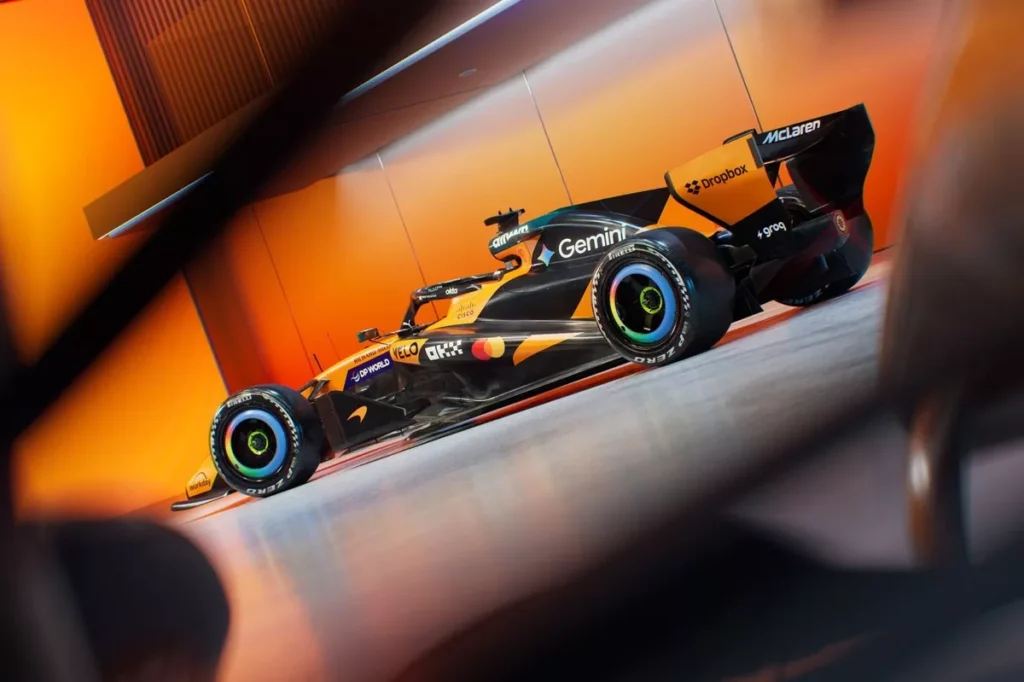
« It’s typical politics of Formula 1, » he stated ahead of McLaren’s MCL40 launch. « The engine has been designed and totally… I can’t imagine that Mercedes-powered cars wouldn’t be on the grid in Melbourne » .
His confidence stems from the homologation process: final power unit specifications must be locked in by March 1, leaving virtually no time for fundamental design changes even if new regulations were approved .
The FIA’s Position
The governing body has remained consistent in its stance. An FIA spokesperson confirmed that « the regulations clearly define the maximum compression ratio and the method for measuring it, which is based on static conditions at ambient temperature » — a procedure unchanged despite the 2026 ratio reduction .
Mercedes team principal Toto Wolff has emphasized « very positive » dialogue with the FIA throughout development, insisting his team’s power unit is « fully compliant with the letter of the rules » . He has urged rivals to focus on their own preparations rather than « concentrate more on the others » .
Strategic Implications
The controversy threatens to cast a shadow over the season opener, with the potential for protests if Mercedes-powered cars — including works entries, McLaren, Aston Martin, and Williams — demonstrate superior straight-line performance.
Interestingly, Ferrari is reportedly already planning to incorporate similar thermal expansion technology into its 2027 engine design, operating under the assumption that Mercedes’ solution will ultimately be declared legal .
For now, Brown’s assessment appears grounded in reality. With homologation imminent and the FIA showing no indication of regulatory reversal, the « typical politics » may remain just that — background noise to the racing spectacle that awaits in Melbourne.
Sources
- Motorsport.com: « Compression ratio saga ‘typical politics of F1’, says McLaren’s Zak Brown » (February 9, 2026)
- Crash.net: « McLaren weigh in on ‘typical politics of F1’ amid 2026 engine compression row » (February 9, 2026)
- Motorsport Week: « McLaren ‘can’t imagine’ Mercedes-powered cars could be deemed illegal » (February 10, 2026)
- The Race: « Mercedes rivals plotting F1 engine rule change for Melbourne » (February 7, 2026)
- GrandPrix247: « How Does Mercedes’ Formula 1 engine compression trick work? » (February 6, 2026)
- GrandPrix247: « Mercedes rivals pushing to change engine compression measurement procedure » (February 7, 2026)
- GPBlog: « Two F1 engine manufacturers to gain on rivals in 2026 loophole controversy » (December 19, 2025)
- PlanetF1: « Ferrari working on Mercedes-style trick with F1 2027 engine » (February 9, 2026)