
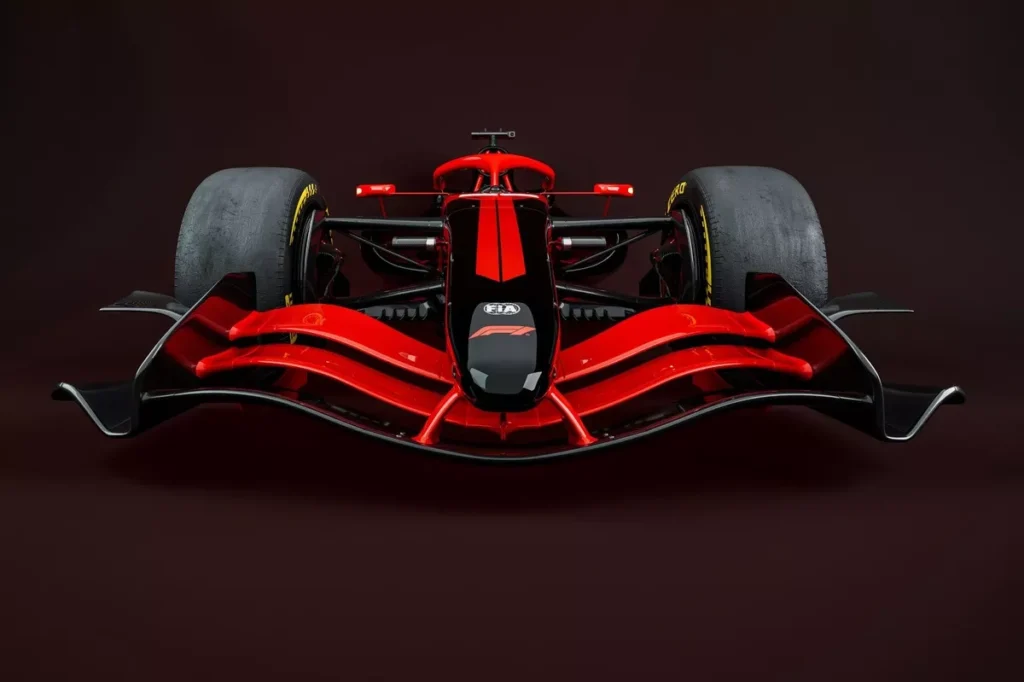
Toto Wolff’s 400 km/h F1 2026 Claim: A Marketing Masterstroke or Technical Truth?
Yet, Wolff was quick to clarify: “Yes, it’s theoretically possible… but it will never happen in reality.” So why the hype? The answer lies in a mix of engineering ambition, regulatory constraints, and the art of selling a revolution.
The 400 km/h Promise: What’s Under the Hood?
The 2026 F1 regulations represent the biggest technical overhaul in decades. According to Wolff, these changes create the perfect storm for extreme straight-line speed.
The new hybrid engines feature a 50/50 split between internal combustion and electric power. While designed for efficiency, they can unleash short bursts of immense power. Additionally, the 2026 cars will be 30 kg lighter with active aerodynamics to drastically reduce drag on straights.
“If you put it all together, we could do 400 km/h or maybe even exceed it.”
— Toto Wolff, Mercedes Team Principal
The Reality Check
However, the catch is significant. Wolff admits this is a “theoretical possibility,” not a race-day reality. The energy deployment rules limit how much electric power can be used per lap. To hit 400 km/h, a driver would drain the battery entirely, leaving them defenseless in corners.
As Wolff bluntly put it: “You’re going to run out of energy for the next straight. It’s possible, but it’s stupid.”
Why the Marketing Hype?
Wolff’s motivation for highlighting this milestone is strategic. The 2026 regulations have faced skepticism regarding whether increased electrification will dilute the sport’s raw speed. By framing the new cars as faster than ever, Wolff is rebutting critics and boosting the image of the new engine formula.
Hywel Thomas, Mercedes’ High Performance Powertrains director, echoed this, noting the intention was to give the engine “a marketing boost” to show it is an amazing piece of engineering kit.
Why 400 km/h Won’t Happen in a Race
- Energy Management: Drivers must balance deployment for lap time, not top speed.
- Safety: Most FIA Grade 1 circuits do not have runoff zones designed for 400 km/h impacts.
- Race Strategy: Top speed is useless if you compromise corner exit and defense.
The Verdict
Toto Wolff’s 400 km/h claim is part marketing, part technical truth. The 2026 F1 cars *could* hit that speed—in a straight line, with no energy limits, on a perfect day. But in a race? The real story isn’t the top speed; it’s how Wolff is framing the narrative to ensure F1’s biggest rule change in history is seen as a thrilling evolution, not a compromise.
Sources
- Motorsport.com: Analysis of Wolff’s top speed claims
- F1i: Hywel Thomas on the 2026 power unit potential
- GPFans: Active aero and the theoretical limit
- Crash.net: The marketing push behind the 2026 regs