
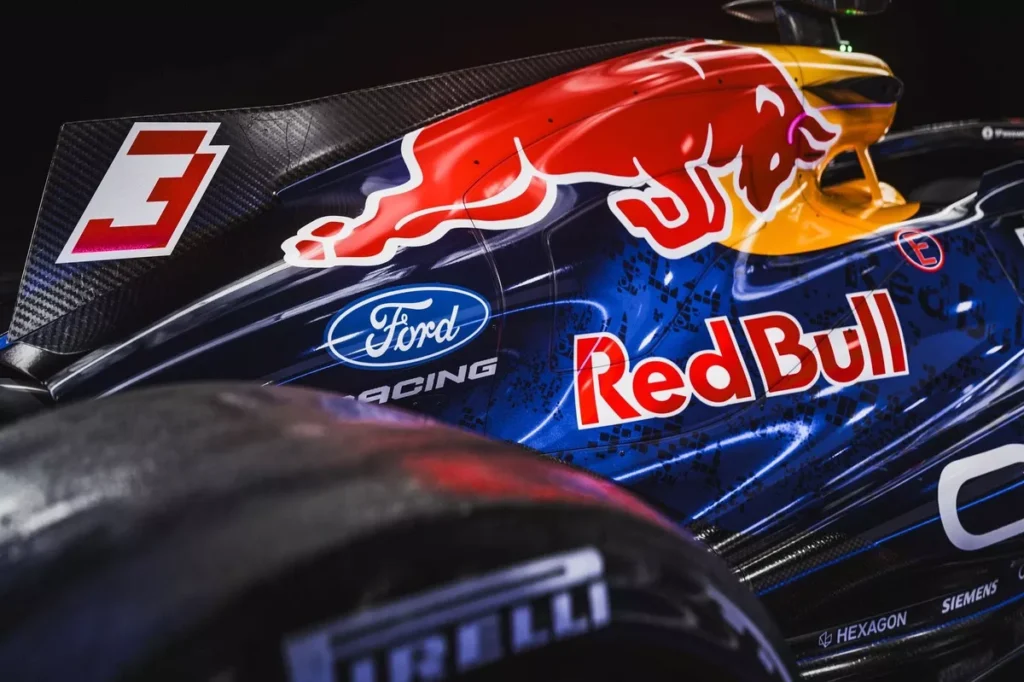
Red Bull Confident 2026 Engine Is Legal Despite Compression Ratio Controversy
Red Bull Powertrains remains adamant that its 2026 Formula 1 power unit fully complies with regulations, as technical director Ben Hodgkinson dismisses recent controversy as « a lot of noise about nothing. » The statement comes amid heightened scrutiny over compression ratio interpretations that have divided the paddock ahead of the new regulatory era.
The Heart of the Controversy
The dispute centers on the compression ratio of the new 2026 power units, which has been capped at 16:1—down from the previous 18:1 limit. The reduction was implemented to make Formula 1 more accessible to new manufacturers entering the sport. However, the controversy erupted after reports suggested that Mercedes, and to a lesser extent Red Bull, have developed engines that comply with the 16:1 ceiling when measured at ambient temperatures but potentially exceed it when running at operational temperatures.
The technical issue revolves around thermal expansion. As engines heat up during operation, certain components expand, potentially allowing the piston to move closer to the top of the combustion chamber during its cycle. This could effectively increase the compression ratio beyond the regulatory limit, despite passing static tests conducted at room temperature.
According to sources, this advantage could be worth as much as 10 kilowatts—equivalent to approximately 13 horsepower—translating to a performance gain of roughly three to four-tenths of a second per lap.
Hodgkinson’s Confident Response
Speaking at Red Bull’s season launch in Detroit, Hodgkinson addressed the speculation directly. His response was measured but firm, reflecting confidence in the team’s approach while acknowledging the competitive nature of the technical challenge.
I think there’s some nervousness from various power unit manufacturers that there might be some clever engineering going on in some teams. I’m not quite sure how much of it to listen to, to be honest. I’ve been doing this a very long time, and it’s almost just noise.
The technical director emphasized that Red Bull Powertrains has pushed to the absolute limit of what the regulations permit—as would be expected from any Formula 1 team. « I know what we’re doing. I’m confident that what we’re doing is legal. Of course, we’re taking it right to the very limit of what the regulations allow. I’d be surprised if everyone hasn’t done that. »
Hodgkinson’s dismissal of the controversy was unequivocal: « My honest feeling is that it’s a lot of noise about nothing. I expect everyone’s going to be sitting at 16, that’s what I really expect. »
The Regulatory Framework
The controversy hinges on the interpretation of Article C5.4.3 of the technical regulations, which states: « No cylinder of the engine may have a geometric compression ratio higher than 16.0. » The critical issue is that the FIA’s verification procedures are conducted under static conditions at ambient temperature.
The Legal Divide
Mercedes & Red Bull position: Compliance with static testing at ambient temperature means full regulatory compliance.
Ferrari, Audi & Honda position: Article C1.5 requires cars to comply « at all times during competition, » including at operational temperatures.
Mercedes and Red Bull argue that their compliance with these specific measurement conditions means they are operating within the regulations. Their interpretation is that as long as the engine passes the prescribed tests, it meets the legal requirements.
However, Ferrari, Audi, and Honda have pointed to Article C1.5, which requires that « Formula 1 cars must comply with these regulations in their entirety at all times during a competition. » These manufacturers argue that the 16:1 limit should apply continuously during racing conditions, not just during static testing.
Why the Compression Ratio Matters
Hodgkinson also provided insight into why this technical parameter has become such a contentious issue. In his view, the new 16:1 limit is unnecessarily conservative given current combustion technology.
From a purely technical point of view, the compression ratio limit is too low. We have the technology to make combustion fast enough, so the compression ratio is way too low. We could make 18:1 work with the speed of combustion that we’ve managed to get.
This means there is significant performance to be gained from even marginal improvements in compression ratio. « There’s performance in every tenth of a ratio that you can get, » Hodgkinson explained. « Every manufacturer should really be aiming at 15.999 as far as they dare when it’s measured. »
The stakes are particularly high given the new 50-50 hybrid architecture of the 2026 power units, where electrical deployment accounts for roughly half of the total output. Any advantage on the internal combustion side becomes crucial in this more balanced configuration.
The Opposition’s Concerns
Ferrari, Audi, and Honda have formally raised their concerns with the FIA, sending a letter seeking clarification over the rules. Their primary worry is that if Mercedes and Red Bull have indeed found a way to operate beyond the intended compression ratio limit during actual racing, it would represent a significant competitive advantage before the season even begins.
The three manufacturers are particularly concerned given the introduction of ADUO (Additional Development Upgrade Opportunities), a mechanism designed to help lagging manufacturers catch up during the season. There are fears that if some teams start with a fundamental advantage, the catch-up provisions may not be sufficient to level the playing field.
The timing is also critical. With the engines already homologated for 2026, making changes to the compression ratio would be extremely complex and potentially costly. Even with permitted upgrades, adjusting this fundamental aspect of engine design remains a significant engineering challenge.
The FIA’s Response
In response to the concerns raised, the FIA has scheduled a meeting with all power unit manufacturers for January 22—just four days before the first pre-season test begins in Barcelona. An FIA spokesperson downplayed suggestions of an emergency intervention, stating that such discussions are routine with new regulations.
FIA Statement
« As is customary with the introduction of new regulations, discussions on the 2026 iteration covering power unit and chassis are ongoing. The meeting planned for 22 January is between technical experts. As always, the FIA assesses the situation in order to make sure the regulations are understood and applied in the same manner between all the participants. »
However, it’s understood that the FIA is unlikely to mandate changes to the measurement procedures or regulations in the short term. This means any advantage that Mercedes and Red Bull may have could potentially be maintained for much of the 2026 season.
The governing body faces a delicate balancing act. Mercedes is understood to have disclosed its approach early in the development cycle and received confirmation that it complied with the regulations as written. Reversing that position now could create significant complications.
Red Bull’s Competitive Position
Beyond the technical controversy, Hodgkinson was candid about the challenge facing Red Bull Powertrains as it enters its first season as a full works engine operation. The team began developing its power unit later than established manufacturers, creating inherent disadvantages.
« I think we started behind, but I think the people and the facilities we have are better than everybody else, » Hodgkinson said. « Watch this space. Will I have overtaken them by race one? I don’t know. »
I’ve described it before to some of my team-mates that it’s like a 400 meter race. So it feels like a sprint, but you’re doing it in a stadium on your own, with no crowd, in a different country to all of your competitors. All I know is that we’re running as fast as we possibly can.
The technical director also emphasized that continuous development remains crucial, even with the new regulations. « I’ve been designing racing engines for 27 years now, and even in the last set of regulations, which started in 2014 and went right until the end of last year, every year there was a big step forward, » he noted.
What Happens Next
The January 22 meeting will bring together technical experts from all five power unit manufacturers—Mercedes, Red Bull-Ford, Ferrari, Honda, and Audi—along with FIA officials. While the meeting had been planned as part of the standard regulatory introduction process, the compression ratio issue is expected to dominate discussions.
Several potential outcomes are being discussed. The FIA could maintain its current interpretation, effectively validating the approaches taken by Mercedes and Red Bull. Alternatively, it might issue a technical directive clarifying that the 16:1 limit must be maintained during racing conditions, though implementing such a change mid-development would be problematic.
Some manufacturers are reportedly hoping for resolution by the summer break, while others acknowledge that significant regulatory changes might not be feasible until 2027. Two potential longer-term solutions include more stringent measurement procedures that verify compliance at operating temperatures, or removing the compression ratio ceiling altogether.
If no resolution is reached, rival manufacturers retain the right to lodge formal protests at the season-opening Australian Grand Prix. Such a scenario would create uncertainty and potential instability at the start of what is already Formula 1’s most significant regulatory change in years.
The Broader Implications
This controversy highlights the perpetual tension in Formula 1 between innovation and regulation. Teams are rewarded for finding creative interpretations of rules, yet such discoveries can upset competitive balance and create political friction.
For Red Bull, the situation represents both an opportunity and a challenge. Having developed its power unit entirely in-house in partnership with Ford, the team is seeking to establish itself among the sport’s elite engine manufacturers. A strong start to the 2026 era would validate years of investment and development work.
Hodgkinson’s confidence suggests Red Bull believes it has found the optimal balance between aggressive engineering and regulatory compliance. His emphasis on the « very limit » of the regulations is telling—in Formula 1, pushing boundaries is not just accepted but expected.
The coming weeks will reveal whether that confidence is justified. As teams converge on Barcelona for the first official test, all eyes will be on the power unit performance differentials. Any significant gaps could reignite the controversy and intensify pressure on the FIA to intervene.
For now, Red Bull Powertrains stands by its work, ready to let its engine do the talking on track. As Hodgkinson put it: « You just have to play your own race, really. » In the high-stakes world of Formula 1 engine development, that philosophy will be put to the test when the 2026 season begins.
Sources
- The Race — « Red Bull’s 2026 F1 power unit on ‘very limit’ of the rules » January 16, 2026
- Motorsport.com — « Red Bull confident new F1 power unit is legal, albeit ‘on the very limit’ of the rules » January 16, 2026
- PlanetF1.com — « Why Red Bull believe F1 2026 compression ratio intrigue is ‘noise about nothing' » January 16, 2026
- ESPN — « Is Red Bull’s F1 engine legal? ‘A lot of noise about nothing' » January 16, 2026
- Motor Sport Magazine — « Red Bull: 2026 F1 engine row ‘a lot of noise about nothing' » January 16, 2026
- The Race — « FIA calls meeting with F1 manufacturers over loophole controversy » January 9, 2026
- Motorsport.com — « F1 engine trick to be debated in special FIA meeting » January 9, 2026