McLaren Demands Urgent F1 Rule Changes Over « Imperative » Safety Concerns
Bahrain’s pre-season testing has exposed critical flaws in the 2026 regulations that McLaren boss Andrea Stella warns could compromise driver safety before the season even begins.
The 2026 Formula 1 season is facing a potential crisis before the lights go out in Melbourne. Following three days of pre-season testing in Bahrain, McLaren team principal Andrea Stella has issued a stark warning to the FIA and rival teams: fix three fundamental safety issues immediately, or risk serious incidents on track.
The Perfect Storm on the Grid
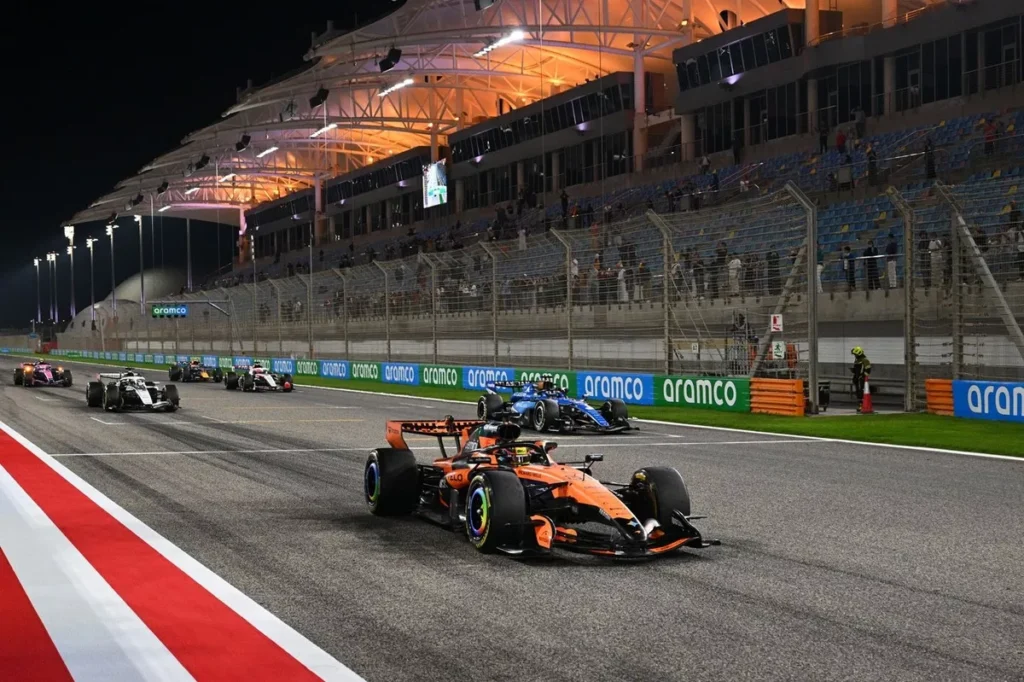
The most pressing concern revolves around race starts. The removal of the MGU-H component from this year’s power units has created a dangerous turbo-lag scenario that threatens to turn the starting grid into a collision waiting to happen.
Under the new regulations, cars cannot deploy electrical boost until they exceed 50km/h, forcing drivers to rely solely on their V6 turbo engines for the initial getaway. To build sufficient boost pressure, engines must be revved aggressively for over ten seconds—a procedure that the current five-light start sequence simply doesn’t accommodate.
« We need to make sure that the race start procedure allows all cars to have the power unit ready to go because the grid is not the place in which you want to have cars slow in taking off the grid, » Stella emphasized during testing. The McLaren boss is calling for immediate adjustments to the timing of the start lights to ensure all 20 cars can prepare their power units safely .
The Lift-and-Coast Danger
Stella’s second safety warning targets the increased prevalence of « lift and coast » driving—where drivers lift off the throttle to recharge batteries mid-race. With cars running closer than ever due to the absence of DRS, sudden deceleration on straights creates a recipe for catastrophic rear-end collisions.
The McLaren chief referenced Mark Webber’s infamous airborne crash at Valencia in 2010 and Riccardo Patrese’s similar incident at Estoril in 1992 as stark reminders of what happens when following drivers encounter unexpected slowing .
Overtaking Crisis Looms
Beyond immediate safety, Stella identified a third concern: the new overtaking mode simply isn’t working. Designed to replace DRS, the system grants chasing cars additional electrical deployment, but testing revealed insufficient energy availability to create meaningful speed differentials.
« Our drivers have been racing with other drivers during these three days of testing in Bahrain and they found it extremely difficult to overtake, » Stella reported. Without the aerodynamic advantage of DRS, cars now have « the same drag and the same power, » effectively neutralizing passing opportunities .
A Call for Responsibility
Stella has scheduled discussions for the upcoming F1 Commission meeting, pushing for changes before the Australian Grand Prix opener. He insists these aren’t competitive gambits but genuine safety imperatives.
« We’re not talking about how fast you are in qualifying. We are not talking about what’s your race pace. We are talking about safety on the grid, » he stated firmly. « There’s some topics which are simply bigger than the competitive interest » .
With Ferrari reportedly blocking previous start procedure changes due to their early adoption of a smaller turbo design, Stella faces an uphill battle against competitive self-interest. However, with drivers including Oscar Piastri confirming the severity of the issues, the pressure on the FIA to act has never been greater.
Sources:
: Laurence Edmondson, « McLaren proposes F1 rule changes over safety concerns, » ESPN, February 13, 2026. https://www.espn.com/f1/story/_/id/47922662/mclaren-proposes-f1-rule-changes-safety-concerns
: « McLaren calls for 2026 F1 rules safety changes before season-opener, » The Race, February 14, 2026. https://www.the-race.com/formula-1/mclaren-calls-for-2026-f1-rules-safety-changes-before-season-opener/