
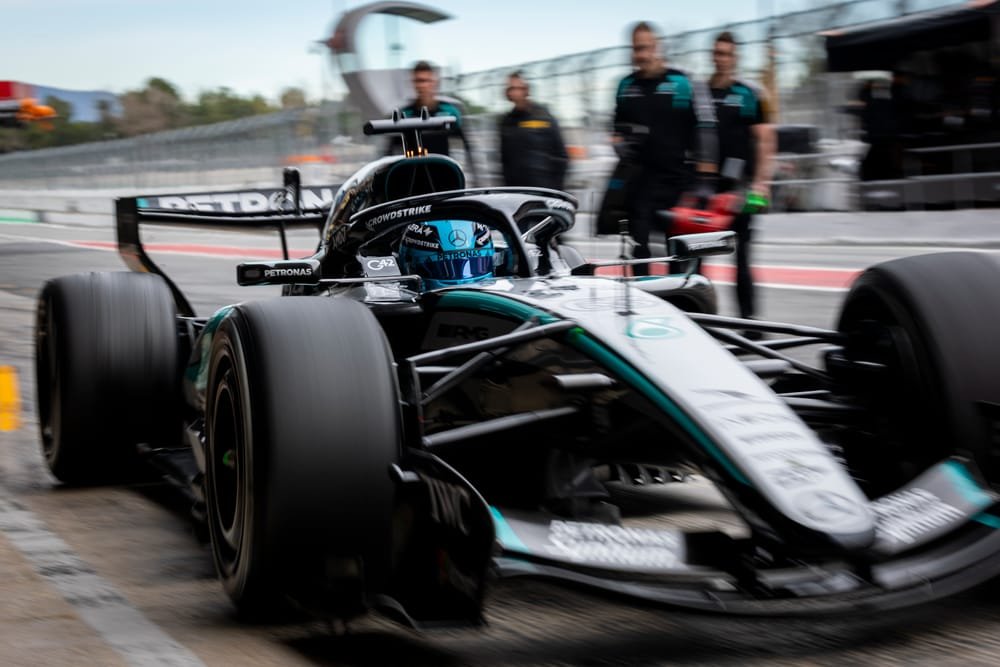
F1 Engine War Escalates: Rivals Push for Emergency Rule Change as Mercedes Defends « Legal » Compression Ratio Advantage
The 2026 season opener in Melbourne faces potential disruption as four engine manufacturers align against Mercedes’ controversial thermal expansion technology
The Technical Loophole at the Center of the Storm
Formula 1’s new era has barely begun, yet the sport is already embroiled in its most significant technical controversy since the introduction of hybrid power units. At issue is the interpretation of Article C.5.4.3 of the 2026 technical regulations, which mandates a 16:1 geometric compression ratio—down from 18:1 in 2025—intended to level the playing field for new manufacturers.
The regulations specify that compliance checks occur only under static conditions at ambient temperature. Mercedes—and initially Red Bull—appear to have engineered solutions that comply with this literal interpretation while achieving significantly higher effective compression ratios when engines reach operating temperature on track.
According to technical analyses, Mercedes may have achieved 18:1 effective compression through sophisticated material engineering: utilizing low-carbon, high-chromium austenitic stainless steel connecting rods with high thermal expansion coefficients paired with engine blocks using alloys that expand less dramatically. This creates a « shrinking » combustion chamber at operating temperature, potentially delivering 30-40 horsepower and 0.3 seconds per lap advantage .
The Shifting Alliance: From Three to Four
What began as a coordinated complaint from Audi, Ferrari, and Honda has evolved into a four-manufacturer bloc. In a dramatic reversal, Red Bull Powertrains—initially suspected of exploiting the same loophole—has reportedly aligned with the protest group.
Sources indicate Red Bull’s technical team, led by former Mercedes HPP chief Ben Hodgkinson, failed to extract comparable performance gains from thermal expansion techniques. This failure apparently prompted Red Bull to support regulatory changes that would neutralize Mercedes’ advantage .
The united front is strategically significant. Under Power Unit Advisory Committee (PUAC) governance, immediate rule modifications require:
- Approval from four of five manufacturers
- Support from both FIA and Formula One Management
With four manufacturers now aligned, the supermajority threshold is within reach—provided the governing bodies cooperate .
Governance Gridlock: The Homologation Deadline
Time is the rivals’ greatest enemy. Power unit homologation is scheduled for March 1, 2026—just weeks before the Australian Grand Prix on March 8. Any regulatory change effective for Melbourne would require immediate implementation, forcing Mercedes into potentially impossible design modifications or competitive disadvantage .
Recent meetings have produced contradictory signals:
- January 22 Technical Workshop: FIA met with manufacturers but declined to mandate hot-condition testing
- February 2-3 Follow-up Sessions: Technical experts and PUAC convened without resolution
- Current Status: Static ambient-temperature measurement remains the legal standard
Paddock consensus suggests any procedural changes would realistically target 2027, given homologation constraints and the complexity of retroactive regulation .
Mercedes’ Aggressive Defense
Mercedes Team Principal Toto Wolff has mounted an unapologetic defense, dismissing rivals’ complaints as distraction tactics from underperforming competitors.
« The power unit is legal. The power unit corresponds to how the regulations are written, and the power unit corresponds to how the checks are being done. »
Wolff revealed Mercedes maintained « very positive » communication with the FIA throughout development, suggesting the governing body was aware of their technical approach. His message to rivals was characteristically blunt:
« Just get your shit together. Doing secret meetings and letters, and inventing ways of testing which don’t exist… we’re trying to minimise distractions and that’s looking more at us, not everybody else. »
FIA President Mohammed Ben Sulayem has reportedly endorsed Mercedes’ interpretation, stating the ambient-temperature measurement standard has been explicit since regulations were first drafted in August 2022 .
The Protest Threat
Despite the governance hurdles, rivals continue exploring avenues for immediate intervention. Options under consideration include:
- Post-warm-up measurement protocols in garage conditions
- In-run sensor monitoring during track sessions
- Formal protests at the Australian Grand Prix should regulatory changes fail
The threat of Melbourne protests looms large, potentially casting a shadow over the season opener. However, Wolff remains defiant:
« That’s what the FIA said. That’s what the president of the FIA said, and he knows a bit about that. In that respect, let’s wait and see. But we feel robust. »
Technical Context: Why Compression Ratio Matters
The compression ratio controversy reflects deeper tensions in F1’s 2026 regulatory framework. The reduction from 18:1 to 16:1 was designed to accommodate carbon-neutral e-fuels with lower energy density while preventing a costly development arms race.
Higher compression ratios improve thermal efficiency and power output—particularly critical given the new fuel limitations. Mercedes’ alleged ability to achieve near-2025 compression levels under race conditions represents a fundamental competitive advantage that could reshape the championship landscape .
Outlook
The coming weeks will determine whether Formula 1 begins its new regulatory era under a cloud of technical protests or achieves a last-minute regulatory compromise. With four manufacturers aligned against Mercedes, the PUAC faces unprecedented pressure to reconcile literal regulatory compliance with competitive equity.
For now, Mercedes’ interpretation stands as the legal standard—but the battle for Melbourne is far from concluded.
Sources:
The Race, Motorsport.com, GPFans, ESPN, Sky Sports, Auto Hebdo, Pitpass, Grand Prix 247